0
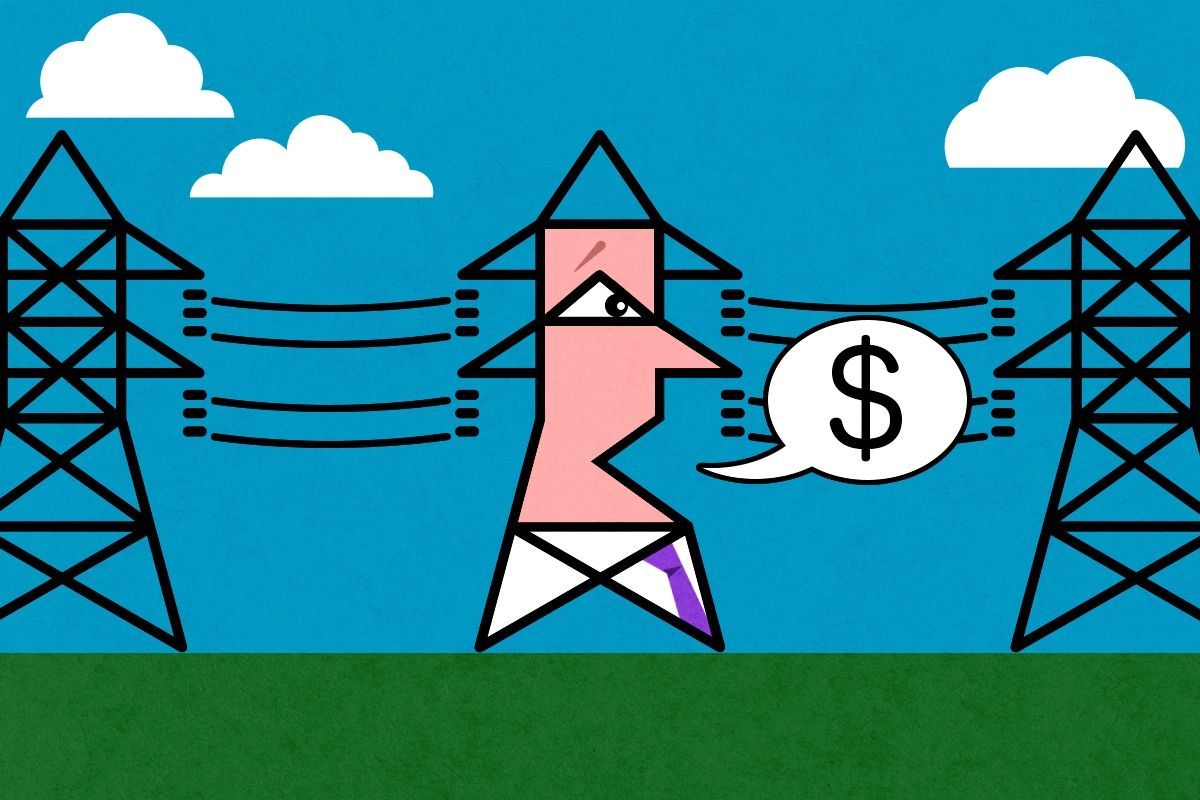
Investor-owned utilities are a funny type of company. On the one hand, they answer to their shareholders, who expect growing returns and steady dividends. But those returns are the outcome of an explicitly political process — negotiations with state regulators who approve the utilities’ requests to raise rates and to make investments, on which utilities earn a rate of return that also must be approved by regulators.
Utilities have been requesting a lot of rate increases — some $31 billion in 2025, according to the energy policy group PowerLines, more than double the amount requested the year before. At the same time, those rate increases have helped push electricity prices up over 6% in the last year, while overall prices rose just 2.4%.
Unsurprisingly, people have noticed, and unsurprisingly, politicians have responded. (After all, voters are most likely to blame electric utilities and state governments for rising electricity prices, Heatmap polling has found.) Democrat Mikie Sherrill, for instance, won the New Jersey governorship on the back of her proposal to freeze rates in the state, which has seen some of the country’s largest rate increases.
This puts utilities in an awkward position. They need to boast about earnings growth to their shareholders while also convincing Wall Street that they can avoid becoming punching bags in state capitols.
Make no mistake, the past year has been good for these companies and their shareholders. Utilities in the S&P 500 outperformed the market as a whole, and had largely good news to tell investors in the past few weeks as they reported their fourth quarter and full-year earnings. Still, many utility executives spent quite a bit of time on their most recent earnings calls talking about how committed they are to affordability.
When Exelon — which owns several utilities in PJM Interconnection, the country’s largest grid and ground zero for upset over the influx data centers and rising rates — trumpeted its growing rate base, CEO Calvin Butler argued that this “steady performance is a direct result of a continued focus on affordability.”
But, a Wells Fargo analyst cautioned, there is a growing number of “affordability things out there,” as they put it, “whether you are looking at Maryland, New Jersey, Pennsylvania, Delaware.” To name just one, Pennsylvania Governor Josh Shapiro said in a speech earlier this month that investor-owned utilities “make billions of dollars every year … with too little public accountability or transparency.” Pennsylvania’s Exelon-owned utility, PECO, won approval at the end of 2024 to hike rates by 10%.
When asked specifically about its regulatory strategy in Pennsylvania and when it intended to file a new rate case, Butler said that, “with affordability front and center in all of our jurisdictions, we lean into that first,” but cautioned that “we also recognize that we have to maintain a reliable and resilient grid.” In other words, Exelon knows that it’s under the microscope from the public.
Butler went on to neatly lay out the dilemma for utilities: “Everything centers on affordability and maintaining a reliable system,” he said. Or to put it slightly differently: Rate increases are justified by bolstering reliability, but they’re often opposed by the public because of how they impact affordability.
Of the large investor-owned utilities, it was probably Duke Energy, which owns electrical utilities in the Carolinas, Florida, Kentucky, Indiana, and Ohio, that had to most carefully navigate the politics of higher rates, assuring Wall Street over and over how committed it was to affordability. “We will never waver on our commitment to value and affordability,” Duke chief executive Harry Sideris said on the company’s February 10 earnings call.
In November, Duke requested a $1.7 billion revenue increase over the course of 2027 and 2028 for two North Carolina utilities, Duke Energy Carolinas and Duke Energy Progress — a 15% hike. The typical residential customer Duke Energy Carolinas customer would see $17.22 added onto their monthly bill in 2027, while Duke Energy Progress ratepayers would be responsible for $23.11 more, with smaller increases in 2028.
These rate cases come “amid acute affordability scrutiny, making regulatory outcomes the decisive variable for the earnings trajectory,” Julien Dumoulin-Smith, an analyst at Jefferies, wrote in a note to clients. In other words, in order to continue to grow earnings, Duke needs to convince regulators and a skeptical public that the rate increases are necessary.
“Our customers remain our top priority, and we will never waver on our commitment to value and affordability,” Sideris told investors. “We continue to challenge ourselves to find new ways to deliver affordable energy for our customers.”
All in all, “affordability” and “affordable” came up 15 times on the call. A year earlier, they came up just three times.
When asked by a Jefferies analyst about how Duke could hit its forecasted earnings growth through 2029, Sideris zeroed in on the regulatory side: “We are very confident in our regulatory outcomes,” he said.
At the same time, Duke told investors that it planned to increase its five-year capital spending plan to $103 billion — “the largest fully regulated capital plan in the industry,” Sideris said.
As far as utilities are concerned, with their multiyear planning and spending cycles, we are only at the beginning of the affordability story.
“The 2026 utility narrative is shifting from ‘capex growth at all costs’ to ‘capex growth with a customer permission slip,’” Dumoulin-Smith wrote in a separate note on Thursday. “We believe it is no longer enough for utilities to say they care about affordability; regulators and investors are demanding proof of proactive behavior.”
If they can’t come up with answers that satisfy their investors, ultimately they’ll have to answer to the voters. Last fall, two Republican utility regulators in Georgia lost their reelection bids by huge margins thanks in part to a backlash over years of rate increases they’d approved.
“Especially as the November 2026 elections approach, utilities that fail to demonstrate concrete mitigants face political and reputational risk and may warrant a credibility discount in valuations, in our view,” Dumoulin wrote.
At the same time, utilities are dealing with increased demand for electricity, which almost necessarily means making more investments to better serve that new load, which can in the short turn translate to higher prices. While large technology companies and the White House are making public commitments to shield existing customers from higher costs, utility rates are determined in rate cases, not in press releases.
“As the issue of rising utility bills has become a greater economic and political concern, investors are paying attention,” Charles Hua, the founder and executive director of PowerLines, told me. “Rising utility bills are impacting the investor landscape just as they have reshaped the political landscape.”