0
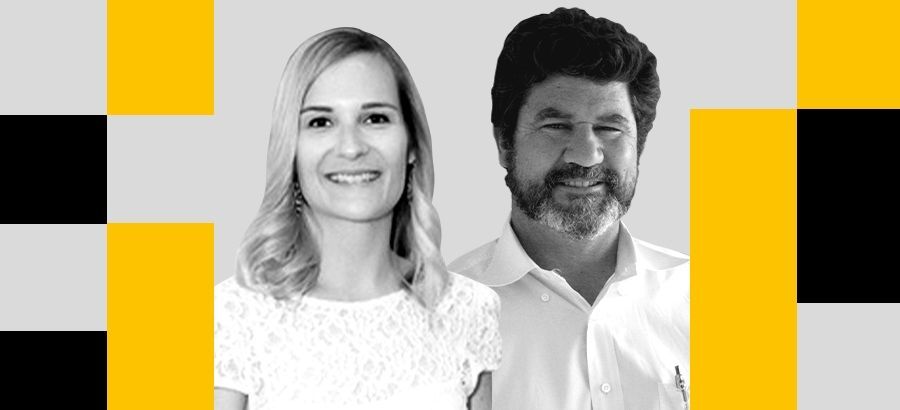
This week’s Q&A is a two-fer, featuring Noel Perry and Stephanie Leonard from the California environmental nonprofit Next10. They released a report this week in partnership with researchers at the University of Pennsylvania pitching an idea I find fascinating: Data center developers could save money and time if they just built their projects close to existing renewable energy projects that are curtailed from putting power onto the grid because of bottlenecks and capacity issues. I reached out to Next10 to chat about the proposal and how it could inform discussion not just in California, but also in other states.
The following conversation has been lightly edited for clarity.
In terms of best practices, help us understand what you’re getting at with the report.
Stephanie Leonard: Another project we do is the California Green Energy Index, and we track the state’s emissions, renewable energy deployment, and other things. One of the things we track is curtailment, which continues to rise every single year.
Curtailment is an ongoing problem for California. It’s great we’re adding so much solar to the grid, but we’re ending up with these stranded assets. A lot of the solar farms are in the southern part of the state — there’s the Path 15 corridor, which connects the southern California grid to the northern part of the state and is at overcapacity. So we wanted to look at ways to take advantage of this without expensive transmission buildout. Is there a way we can move the energy use to where the curtailment is happening, rather than build wires to energy use?
Noel Perry: Go back to November 2024, we sponsored a conference at Santa Clara University here in the Bay Area focused on the environmental impacts of data centers. Back then it actually felt early. I mean, the proliferation of data centers has taken over the world. Two years ago, this wasn’t as much of a thing. And there were three researchers there, one of whom – Ben Lee from the University of Pennsylvania – wound up making this report we’re publishing now. He came up with this idea of how excess energy capacity could be used for data centers, which sounded interesting.
How is transmission a bottleneck here, specifically?
Leonard: We do know by 2039 that Path 15 is expected to be congested for 84% of the year. That’s even with planned upgrades from [California’s grid operator]. It’s going to continue to get more and more congested, [and] we’re going to continue to have more of these stranded assets. It’s more of this cheap solar that can’t get to the population centers.
We can site data centers in congested areas — that would be a good outcome. And a lot of these projects are set to be powered by fossil fuels; I’ve seen reports that about 75% of all planned natural gas build-out across the U.S. is for data centers, specifically. Not only would this be taking advantage of offloading curtailed energy, but this would ensure new data centers are using renewable energy. The report also recommends battery storage so they can store the renewable energy, too.
Is this different from the “bring-your-own-energy” approach to data centers and energy?
Leonard: I would consider this more of a bridge solution. The report doesn’t evaluate the bring-your-own-energy model, but this is the kind of thing that can be done more quickly. The resources are already there. The infrastructure is already there.
When it comes to turning these recommendations into policy, what’s the mood in California like? Do they want to take up solutions like these?
Perry: There’s definitely interest. We would hope that this idea of putting data centers near energy that is curtailed, near where congestion is, that we hope would be looked at not only in California but other states. This idea could be a model in some fashion.
As you know, we have a lot of renewable energy – more than maybe a lot of states. So in a way, California is a better place for data centers than other places if you want them to be powered by renewable energy. That doesn’t mean all Californians want data centers to come here, but that’s an important point to make.