0
Data centers are already dominating this year’s elections. As a campaign issue, they’re primed to disrupt races across the country, big and small, right and left.
Candidates at every point of the political spectrum are being buried with questions about data centers and artificial intelligence. Interest groups are making data center support a deciding factor in whether they support a given candidate, alongside other boogeymen such as the “green new deal,” Big Tech billionaires, and Israel. In Florida and Ohio, underdog Republican candidates for governor are railing against data centers as they try to win their party’s nomination over establishment-backed candidates. In Michigan, a former GOP statehouse speaker is making the issue his biggest talking point in a bid for the governor’s mansion.
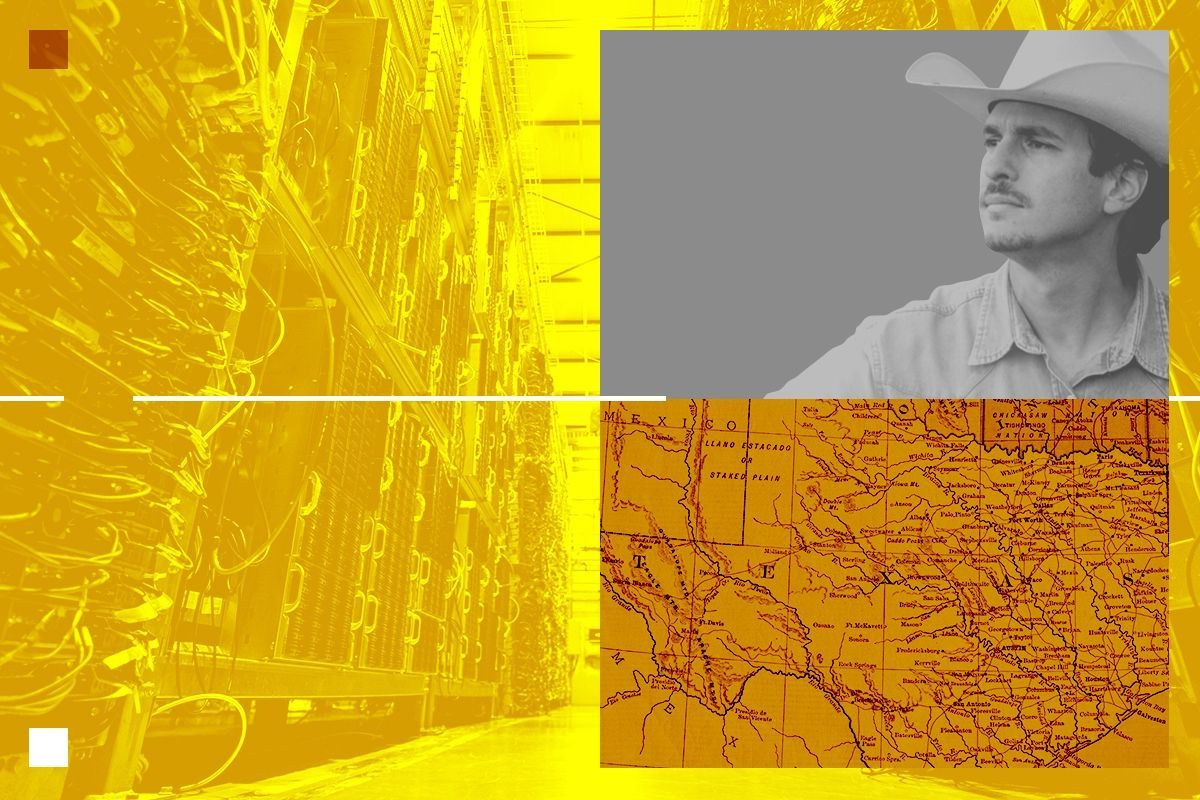
Perhaps my favorite race to watch right now is in Texas, where farmer Clayton Tucker, the Democratic nominee to flip the state’s agriculture commissioner seat, is running against the state’s data center growth. I spoke with Tucker, whose campaign focuses on how the authorities of the commission could be leveraged against data center developers. One of those ideas is to conduct “impact studies” on data centers, water, and cropland.
“To me this is an AI bubble, 2008-style. They’re not going to be used for anything important or that’s going to help society or our country,” Taylor told me. He explained how his campaign first focused on a bigger topic – monopolies like in the beef industry – before he ultimately pivoted to data center frustrations, which he groups together with other complaints farmers have about Big Business.
“It’s about being laser focused on who is the true problem, who our true enemies are: the monopolies, the tech bros, and the people who are just trying to rig everything and who are forcing these data centers down our throats.”
I chronicled how the 2025 elections in Virginia, New Jersey, and Georgia were stuffed with data center-coded rhetoric about rising electricity bills and energy costs and protecting the environment from new AI-backed industrial development. There was an unmistakable populist tinge to any and all arguments against data centers on the campaign trail back then, for sure. But let’s be honest: We were still in the infancy of the boom in data center development. The outcry over these projects has exploded even since November.
Primary voters last week in Stokes County, North Carolina ousted two county commissioners – Rick Morris and Brad Chandler – who’d voted days earlier to approve a zoning request for Project Delta, a large data center proposed by developer Engineered Land Solutions. Situated in the rural, mostly undeveloped farming community of Walnut Cove, the Project Delta proposal has become controversial over its close proximity to a river and local worries about noise, among other grievances. Nearby residents and environmental advocates filed a lawsuit yesterday against its construction.
It’s unclear whether what happened in Stokes County will matter in North Carolina come the general election this fall, or whether the issue will have the same saliency in higher-level races. The reliably red county is represented in Congress by Virginia Foxx, one of the GOP’s staunchest conservatives. The Cook Political Report rates Foxx’s congressional district a “Solid R” because Donald Trump won the presidential vote there last time by 18 points. Elsewhere in North Carolina, two congressional candidates backed by AI companies – Representative Valerie Foushee and Republican candidate Laurie Buckout – won their primary races over candidates more vocally critical of local data center projects.
In other places, though, it’s easy to see how data center fights could have a decisive impact, even at the congressional level.
Take Indiana’s 1st Congressional District, a mixture of suburban and rural communities bordering Michigan and Illinois. The 1st has seen some of the worst spikes in electricity bill costs of anywhere in the Midwest, according to data compiled by MIT researchers and Heatmap Pro. The 1st is represented by Frank Mrvan, a moderate Democrat who has previously championed the use of federal funds to support data center growth, but is now criticizing the potential ramifications for energy and farmland. Mrvan is going up against Barb Regnitz, a Republican county commissioner running a self-funded campaign who has said she would vote against any data center proposal; data center developer QTS recently withdrew plans for a large data center in the county, though it’s unclear what role if any Regnitz played in that story. The Cook Political Report finds it is “likely” that Mrvan keeps his seat, but it also also says that the seat has “all of the characteristics of a district that should be moving in Republicans’ direction.”
Other congressional races are being dominated by data centers in Indiana, which is one of the top states for data center development. Indianapolis – a hotbed for data center strife – is represented by Andre Carson, who is facing his most contested primary election since winning his seat in 2008. One of his primary opponents, Destiny Wells, is railing against data centers in the district and pledging not to take utility industry money. Another primary candidate, George Hornedo, is getting flack from the grassroots left for not fighting hard enough against data centers.
Whether data centers will decide any statewide primary elections is a bigger question. Take the GOP gubernatorial primaries in Florida and Ohio, each of which features a Republican hardliner — James Fishback and Casey Putsch, respectively — campaigning loudly against data centers; both candidates appear to be longshots at the moment. In Texas, the GOP’s nomination for agriculture commission went to Governor Greg Abbott’s preferred candidate instead of an incumbent calling to restrict data centers on farmland.
When it comes to Tucker’s race for agriculture commissioner, which won’t be decided until November, he’s not “counting his chickens before they hatch.”
“I don’t believe in that as a farmer,” he said. “I get too superstitious to be doing that.”