0
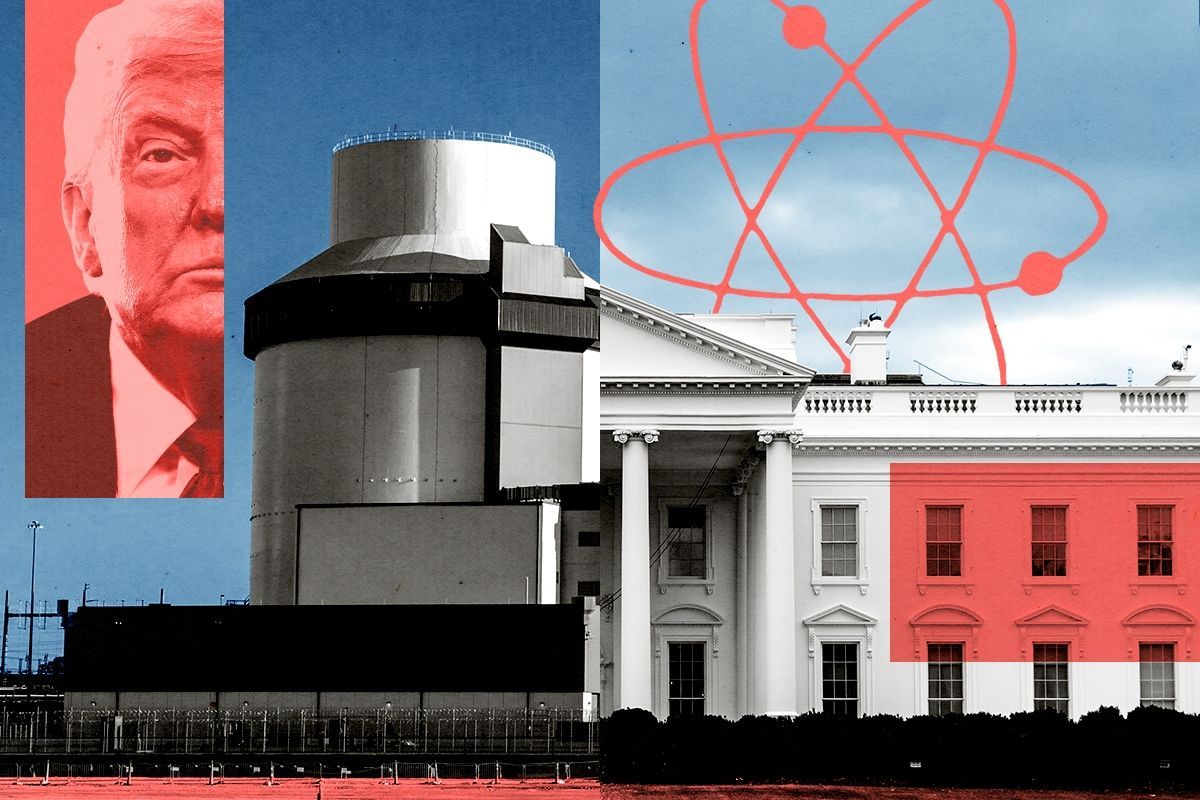
The Department of Energy and the Westinghouse Electric Company have begun meeting with utilities and nuclear developers as part of a new project aimed at spurring the country’s largest buildout of new nuclear power plants in more than 30 years, according to two people who have been briefed on the plans.
The discussions suggest that the Trump administration’s ambitious plans to build a fleet of new nuclear reactors are moving forward at least in part through the Energy Department. President Trump set a goal last year of placing 10 new reactors under construction nationwide by 2030.
The project aims to purchase the parts for 8 gigawatts to 10 gigawatts of new nuclear reactors, the people said. The reactors would almost certainly be AP1000s, a third-generation reactor produced by Westinghouse capable of producing up to 1.1 gigawatts of electricity per unit.
The AP1000 is the only third-generation reactor successfully deployed in the United States. Two AP1000 reactors were completed — and powered on — at Plant Vogtle in eastern Georgia earlier this decade. Fifteen other units are operating or under construction worldwide.
Representatives from Westinghouse and the Energy Department did not respond to requests for comment.
The project would use government and private financing to buy advanced reactor equipment that requires particularly long lead times, the people said. It would seek to lower the cost of the reactors by placing what would essentially be a single bulk order for some of their parts, allowing Westinghouse to invest in and scale its production efforts. It could also speed up construction timelines for the plants themselves.
The department is in talks with four to five potential partners, including utilities, independent power producers, and nuclear development companies, about joining the project. Under the plan, these utilities or developers would agree to purchase parts for two new reactors each. The program would be handled in part by the department’s in-house bank, the Loan Programs Office, which the Trump administration has dubbed the Office of Energy Dominance Financing.
This fleet-based approach to nuclear construction has succeeded in the past. After the oil crisis struck France in the 1970s, the national government responded by planning more than three-dozen reactors in roughly a decade, allowing the country to build them quickly and at low cost. France still has some of the world’s lowest-carbon electricity.
By comparison, the United States has built three new nuclear reactors, totaling roughly 3.5 gigawatts of capacity, since the year 2000, and it has not significantly expanded its nuclear fleet since 1990. The Trump administration set a goal in May to quadruple total nuclear energy production — which stands at roughly 100 gigawatts today — to more than 400 gigawatts by the middle of the century.
The Trump administration and congressional Republicans have periodically announced plans to expand the nuclear fleet over the past year, although details on its projects have been scant.
Senator Dave McCormick, a Republican of Pennsylvania, announced at an energy summit last July that Westinghouse was moving forward with plans to build 10 new reactors nationwide by 2030.
In October, Commerce Secretary Howard Lutnick announced a new deal between the U.S. government, the private equity firm Brookfield Asset Management, and the uranium company Cameco to deploy $80 billion in new Westinghouse reactors across the United States. (A Brookfield subsidiary and Cameco have jointly owned Westinghouse since it went bankrupt in 2017 due to construction cost overruns.) Reuters reported last month that this deal aimed to satisfy the Trump administration’s 2030 goal.
While there have been other Republican attempts to expand the nuclear fleet over the years, rising electricity demand and the boom in artificial intelligence data centers have brought new focus to the issue. This time, Democratic politicians have announced their own plans to boost nuclear power in their states.
In January, New York Governor Kathy Hochul set a goal of building 4 gigawatts of new nuclear power plants in the Empire State.
In his State of the State address, Governor JB Pritzker of Illinois told lawmakers last week that he hopes to see at least 2 gigawatts of new nuclear power capacity operating in his state by 2033.
Meeting Trump’s nuclear ambitions has been a source of contention between federal agencies. Politico reported on Thursday that the Energy Department had spent months negotiating a nuclear strategy with Westinghouse last year when Lutnick inserted himself directly into negotiations with the company. Soon after, the Commerce Department issued an announcement for the $80 billion megadeal, which was big on hype but short on details.
The announcement threw a wrench in the Energy Department’s plans, but the agency now seems to have returned to the table. According to Politico, it is now also “engaging” with GE Hitachi, another provider of advanced nuclear reactors.