0

I don’t have any AI deals to bring you this week, but luckily I can still count on fusion to generate a steady stream of announcements. This time, the funding is coming from the federal government. At its annual innovation summit, ARPA-E announced it’s committing $135 million to address key barriers to fusion commercialization — a single allocation that exceeds the total amount that the agency has previously devoted to the tech after a decade of continuous funding.
There’s also, somewhat surprisingly, still venture enthusiasm for sustainable aviation fuels. And just like last week, membrane-based industrial separations tech also secured fresh capital. Could this be one of the hottest boring industries around? On the non-venture side, the industrial waste upcycling company Sedron secured a $500 million equity investment from the decarbonization-focused firm Ara Partners.
ARPA-E Makes Record Funding Commitment to Fusion Energy
The Department of Energy’s Advanced Research Projects Agency–Energy, better known as ARPA-E, has propelled research and development efforts across a broad set of potentially transformational energy technologies, from thermal energy storage to advanced geothermal systems and — of course — fusion. According to the Fusion Industry Association, the agency has backed 69 fusion projects across 34 universities, 14 national labs, and 27 companies. Seven fusion startups have emerged directly from ARPA-E programs, including Zap Energy and Thea Energy. But ARPA-E thinks there’s still so much more it can do.
This week, ARPA-E announced an additional $135 million in funding for fusion. This exceeds the agency’s total prior cumulative commitment to the technology — which stands at roughly $134 million and has helped catalyze an additional $1.5 billion in private follow-on investment. This latest capital will target what ARPA-E describes as “the toughest technical barriers” to commercialization, including the development of low-cost plasma heating systems, advanced fuels, next-generation power conversion systems, and novel plant and component designs aimed at improving durability while lowering overall costs.
“The question is no longer whether fusion is possible. The question is how fast we get fusion-generated power on the grid, and whether America leads that achievement,” said ARPA-E director Conner Prochaska at the agency’s annual Energy Innovation Summit this week. Today, there are over 50 fusion companies globally, collectively backed by about $10 billion in private investment. The agency framed this latest announcement in terms of strengthening U.S. “energy dominance” while guaranteeing an “affordable, reliable, secure energy supply.” Perhaps it slipped their minds, but it bears mention that fusion would also be a zero-carbon energy source.
Sora Fuel Gets $14.6 Million Boost Amidst a Struggling SAF Market
At the beginning of last year, I wrote about the money pouring into the search for sustainable aviation fuels that could help decarbonize medium- to long-distance flights. Even then, however, investment levels remained well below what experts say is needed to meet the aviation sector's 2050 net-zero target — and the situation hasn’t improved. The Trump administration’s infamous One Big Beautiful Bill reduced the SAF tax credit from up to $1.75 per gallon to $1.00 per gallon, dampening enthusiasm in the sector.
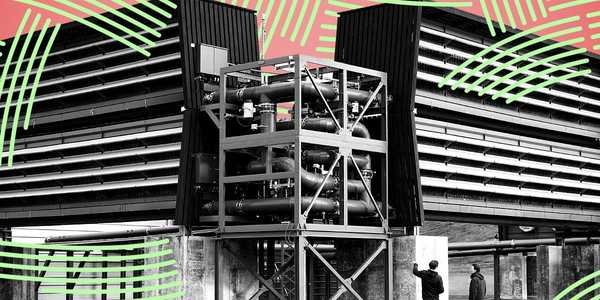
And yet there are still glimmers of momentum in the early-stage venture landscape, highlighted this week by Sora Fuel’s $14.6 million fundraise. The startup is basically trying to turn air into fuel. It’s developing a system that captures CO2 and then converts it directly into a syngas, which can then be upgraded into synthetic hydrocarbon fuels suitable as drop-in replacements for conventional jet fuel.
Unlike most DAC systems, Sora’s process doesn’t rely on energy-intensive sorbent regeneration — thermally or chemically cleaning the sorbents for reuse — which the company says allows it to avoid over 90% of conventional DAC costs. The startup claims it will be able to deliver captured CO2 at under $50 per ton — though that’s actually a substantial increase from the $20 per ton target that it cited in 2024. But if either number proves achievable at scale, that would be huge, not just for the sustainable fuels sector but the broader carbon capture market.
Sora will use the new capital to build a pilot facility, which it expects to have up and running within 18 to 24 months. "We've gone further, faster, and with less capital than anyone in the e-fuels space," said Gareth Ross, Sora’s co-founder and CEO.
MTR Secures $27 Million to Accelerate Membrane-Based Carbon Capture
Fresh on the heels of last week’s membrane funding news, which saw Via Separations raise a $36 million round, this week brought another tranche of capital into the decidedly unglamorous but essential world of industrial separations — that is, the process used to isolate specific chemicals or materials from a mixture. Membrane Technology and Research, better known as MTR, announced a $27 million Series B round led by the oil and gas-backed venture firm Climate Investment.
The startup develops membrane materials and systems for gas and liquid separations, and maintains a business division specifically devoted to carbon capture. With support from the Department of Energy, MTR is piloting its tech at a coal plant in Wyoming that it describes as the world’s largest membrane-based carbon capture system.
As I noted a few weeks ago, Climate Investment itself is flush with $450 million in new financing, having recently closed a growth fund aimed at helping decarbonization technologies bridge the “missing middle” in climate tech funding — the notorious gap between a company’s early-stage rounds and commercial deployment. The MTR investment comes out of this new fund.
Ara Partners Acquires Waste Upcycler Sedron, Invests $500 Million To Scale Its Tech
This week, the decarbonization-focused equity investor Ara Partners acquired a controlling stake in the industrial-scale waste processing and upcycling company Sedron. The new influx of capital will go towards scaling the company’s tech, which processes biosolids such as municipal sewage sludge and livestock manure into usable outputs such as clean water, fertilizer products, and supposedly renewable energy — though the company has not explained how the latter process works.
Sedron’s system combines multiple capital-intensive waste treatment steps — typically handled across separate units — into a single continuous processing platform. Sedron says this integration allows it to use 10 times less energy than conventional treatment approaches — although its own website used to claim a 30x reduction.
This new funding will go towards accelerating the company’s project development pipeline and expanding deployment across North America. Sedron is currently preparing to begin construction on a biosolids processing facility in Florida this spring, while also aiming to begin commercial operations at a large dairy manure project in Wisconsin this summer.