0
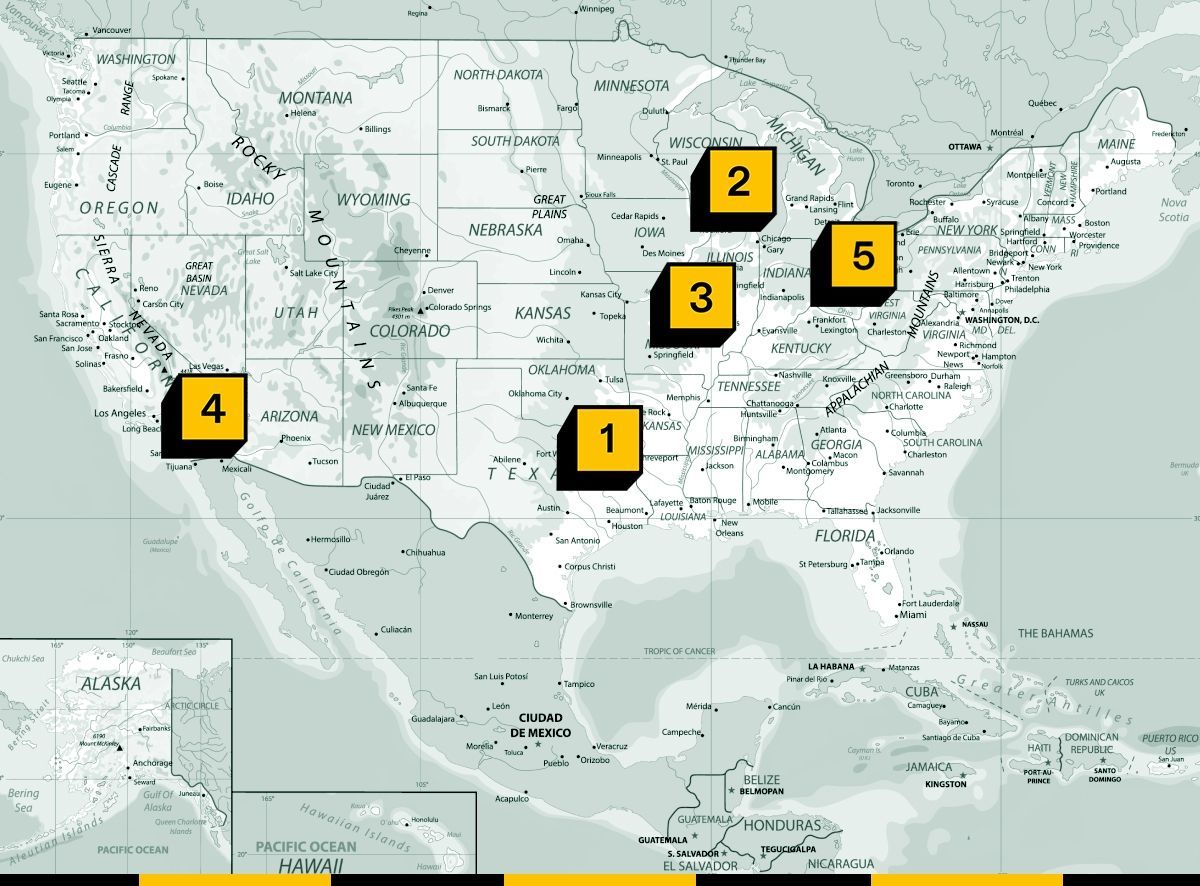
1. Van Zandt County, Texas – The Texas attorney general’s office is investigating a battery storage project by Finnish energy company Taaleri over using energy storage with batteries made by CATL, the Chinese lithium-ion giant.
- Will Wassdorf, Texas’ associate deputy attorney general for civil litigation, told lawmakers in a state Senate Business and Commerce Committee hearing on April 1 that the state is probing whether a “smart plug” for the battery facility would allow Chinese companies to “monitor” aspects of the Texas grid.
- The investigation is due to a complaint filed by Texas anti-BESS activist Nancy White to the attorney general’s office claiming the battery project posed a potential risk to the grid. Wassdorf said they’re only in the initial phases of looking into the matter and quizzing experts on grid connectivity to best understand if a real risk is even there.
- “If it’s just monitoring, that’s one thing. If it’s a level of connectivity that would provide access or control, where they could turn the batteries off, that would be another issue,” he told the committee.
- This is as far as I know the first confirmed instance of a state attorney general’s office going after a utility-grade renewable energy or battery storage facility over China ties. CATL is certainly an easy target politically, having been added to restricted businesses lists for federal military procurement. But the idea that using Chinese tech on-site could result in a regulatory crackdown independent of national defense? That’s a new one.
- Some of the impetus here is locally driven. Van Zandt County has been fighting this project for years, with residents going so far as to seek a restraining order against construction.
- Taaleri did not respond to a request for comment.
2. Ozaukee County, Wisconsin – We appear to have the first town approving an anti-data center ballot initiative, as the citizens of Port Washington approved a measure allowing them to reject future hyperscalers.
- OpenAI, Oracle, and Vantage Data Centers have been developing a massive data center campus in Port Washington, a suburb of Milwaukee. It is being promoted as going above and beyond with sustainability measures, using a closed-loop water cooling system and “100% matched zero-emission energy.”
- Port Washington residents and those surrounding the town aren’t buying it and are hopping mad. Those opposed say the town approved construction too fast for the public to be aware. Round-the-clock 24-hour construction has only amplified tensions.
- By a roughly 2-1 margin on April 7, voters approved a ballot initiative requiring future infrastructure tax abatements larger than $10 million be put to a vote. This will not stop the data center in any way, but it could set a precedent for restricting data center development in other municipalities and counties across the country.
3. Jefferson County, Missouri – Another local election worth watching happened in the city of Festus, where anti-data center activists successfully ousted incumbent city councilors for supporting a data center.
- The city council voted last week to rezone property so CRG could build what officials said would be a $6 billion AI hyperscaler campus. One week later, voters defeated the four incumbents on the council running for re-election, including two who voted against the data center but supported previous administrative decisions that allowed it to be considered in the first place.
- It’s worth noting these were low turnout elections; fewer than 500 people voted in each of the races. Like in Port Washington, the Festus elections could be a harbinger for how damaging data center support can be for local elected representatives in areas where a dedicated small group of voters can mobilize the numbers to get an anti-data center challenger to victory over an incumbent.
- “Micro to macro, that is how we hold them accountable,” tweeted Missi Hesketh, the leading Democratic candidate for Congress running to represent the state’s 7th District, which includes Festus.
- Shortly after the election, the citizens group leading activism against the CRG project filed a lawsuit challenging the city council’s decision to rezone for construction.
4. San Diego County, California – The embattled Seguro battery storage project is now dead.
- AES withdrew its application to construct the BESS facility in Escondido after a yearslong battle with residents fearful of battery fires and upset about the project’s proximity to residential homes and a local hospital. The project would’ve held more than 300 megawatts of electricity.
- In 2024 we listed Seguro as one of the most at-risk projects in the energy transition, asserting it exemplified the most difficult challenges constructing battery storage in the U.S. today. Turns out we were right about that one.
5. Franklin County, Ohio – A longshot bid to ban data centers at the ballot box is proceeding in Ohio after the secretary of state and Ohio Ballot Board approved its consideration.
- The ballot initiative would create a statewide moratorium on new data centers using more than 25 megawatts per month, which would essentially cut off future industry access to the state. If the initiative is able to receive 413,487 signatures by July 1, it’ll be considered on Election Day this fall.
- Ohio is a growing data center market with a history of regular conflicts typical of the modern industrial techlash. It’s no surprise that a place where solar and wind is neigh-impossible to permit anymore is now experiencing this degree of whiplash over data centers. But more than 400,000 John Hancocks is a lot. I will be watching this one even more closely than Port Washington.