0

This week, the fight over data centers turned violent and it has clearly spooked the sector. Extremism researchers say they’re right to be concerned and this may only be the beginning.
Life may never be the same for Indianapolis city-county councilor Ron Gibson, who voted for a controversial data center last week, citing its economic benefits, and, on the morning of April 6, woke to find 13 bullets were fired through the door of his north-east Indy home. Beneath his doormat read a note left behind: “No Data Centers.” Gibson, who did not respond to multiple requests for additional comment, told the media some of the shots landed near where he played with his child hours earlier.
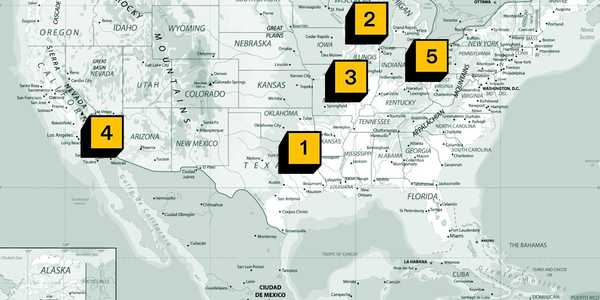
It was the third incident this year indicating the bubbling angst against data centers really does have potential to turn violent. In February, a man was arrested in Troy, Illinois, for threatening to shoot and kill employees for a data center developer working in his community. In March a California company sued activists fighting their project after they allegedly suggested people assassinate individuals involved with it, invoking infamous murder suspect Luigi Mangione, who allegedly shot and killed a healthcare CEO in 2024.
AI infrastructure boosters were quick to turn the Indianapolis shooting into a chance to broadly criticize those who oppose data centers. The AI Infrastructure Coalition, a new pro-data center D.C. trade group, blasted a statement out to press from co-chairs former Sen. Kyrsten Sinema and former Rep. Garret Graves. “Local leaders must be able to represent their community without worrying about the threat of violence,” Sinema and Graves stated. “Opponents of AI infrastructure are using increasingly heated and false language to claim that data centers threaten the wellbeing of communities. This rhetoric has consequences.”
Although I take umbrage with the claim opponents are using “false language” – data centers can bring profound environmental and cost-of-living consequences — one can easily see a powder keg forming online around data centers.
All you have to do is look at discussions of what happened in Indianapolis. News of the event posted to the “Say NO to Data Centers” Facebook group went viral, inviting mostly comments endorsing the shooting. “Good. They should be afraid of an educated and armed population,” reads the top comment, netting almost 640 likes. When I first posted about the shooting to X and Bluesky, my words went wildly viral, becoming some of the most shared content on either site about the incident. Among the most engaged-with replies to my X post: “When you realize that the only way this ends is when people start doing things you can’t post online,” read one. “If they ever caught him and I was in the jury, I’d vote not guilty,” stated another. A third declared, “MOSA - make officials scared again.”
This didn’t surprise Clara Broekaert, a Geneva-based research analyst for The Soufan Center, a nonprofit organization focused on studying global extremism and terrorist threats. Broekaert told me in an interview her organization has been doing “extensive” open-source intelligence surveys to understand the risk of violence over data centers. For the most part, while overwhelmingly negative, people are simply expressing negative perspectives. However, she said that since “early 2024, we have seen a spike in online rhetoric and activism that threatens physical actions against infrastructure and people involved in it.” Most common are comments encouraging arson and sabotage against data centers themselves but increasingly, threats are being levied against people working at development companies and politicians who support data centers. The threats stem from various root causes, she said, ranging from fears their quality of life will be dramatically harmed by data centers to frustrations about water consumption. She pays particular attention to individual county commissioners’ social media pages when conflicts over projects are going on, and hears some of the violent rhetoric crop up in public hearings.
Broekaert doesn’t think we’ll see “a huge uptick in violence against people” but is concerned that “we’ll see more physical sabotage,” especially as political organizing movements against data centers converge – the right-left horseshoe alignment I’ve previously discussed.
“You just see this bottled up resistance against data centers,” she said. “It’s very closely connected to an economic disillusionment.”
Jordyn Abrams, an extremism research fellow at the George Washington University, said there are different strains of violent anti-tech movements to track. In some ways she said these risks can be traced to longstanding histories of eco-terrorism as protest, pointing to a leftwing organization’s arson attack against a Tesla factory in Germany as just one example. On the flip side of the coin, you’ve got ecofascist ideologies warping minds against technology broadly, like what motivated the Christchurch shooting in New Zealand. Of course, there’s also your garden variety unhinged individuals venting anger in unhealthy and dangerous ways.
Irrespective of what brought someone to violence, Abrams said this trend is something anyone involved in the data center boom needs to pay more attention to. “I think there’s a concern when we’re promoting resolving things with violence,” she said, noting these online discussions can become siloed avenues for radicalization. “There’s a growing sentiment that can, in an echo chamber, become an even greater challenge.”
Once again I do not believe that most people who fight data centers are violent and many have valid reasons for their frustrations. But I believe we will likely see more attacks on structures and people involved in this nascent industrial tech boom, and I hope people take this escalating environment seriously.