0

This transcript has been automatically generated.
Subscribe to “Shift Key” and find this episode on Apple Podcasts, Spotify, Amazon, or wherever you get your podcasts.
You can also add the show’s RSS feed to your podcast app to follow us directly.
[1:10] Hello, it is Thursday, April 9, 2026. The United States and Iran have agreed to a two-week ceasefire, and thank goodness. But the terms of the truce are still far from settled. Iran has put out a 10-point peace plan that looks a lot like its pre-war demands, but it also now wants to toll the Strait of Hormuz and charge $1 for every barrel of oil that passes through the waterway. More broadly, we don’t know what each side in the ceasefire thinks it agreed to, and we don’t even know whether Israel considers itself to be bound by the agreement or not. Now Trump initially sought the ceasefire to calm down the stock market and the energy markets.
Robinson Meyer:
[1:46] And markets were initially becalmed. The S&P 500 has surged 5% in the past five trading days, and U.S. Oil prices initially fell on the news. But the energy crisis still isn’t over. Oil prices are well above their February levels. They’re actually slightly up in trading today. The liquefied natural gas market is totally scrambled. And most importantly, as you’ll hear, the Strait of Hormuz is still closed. Well, when the news came down, there was just one person I wanted to talk to. Joining us today is Rory Johnston. He’s an oil analyst and the author of Commodity Context. He’s been the indispensable voice on the Hormuz closure since the beginning. He’s also a longtime friend of the pod. I think this is his third time on ShiftKey. We’re going to talk about what could come next, why Iran doesn’t mind the new status quo, and what the ceasefire could mean for Asia, Europe, and the rest of the world. We’re also going to talk about why Illinois probably has the cheapest gasoline in the world right now.
Robinson Meyer:
[2:36] I’m Robinson Meyer, the founding executive editor of Heatmap News. It’s all coming up on ShiftKey.
Robinson Meyer:
[2:46] Rory, welcome to Shift Key. Thanks for having me back, Rob. So good to have you. So let’s just start here. We are recording this on the morning of Thursday, April 9. As of this morning, is the Strait of Hormuz reopened?
Rory Johnston:
[3:00] No. I’ll leave it simple there. No, the Strait of Hormuz is not reopened. If the goal of the ceasefire was to reopen the strait, it is thus far failing to achieve that goal. In fact, on the first day of the ceasefire, which was yesterday, we actually had a reduction in the traffic that transited the strait. By the estimates I’ve seen, only four ships were allowed to pass and none of them were tankers. So prior to the ceasefire, we had Iran allowing a larger number of ships across in the kind of like low double digits, like 10 to kind of 15. And that was the expectation. So that’s the baseline that we’re working off of. And yeah, we haven’t exceeded it. And in fact, we’ve actually kind of pulled back from those levels. Obviously, on the first day of the ceasefire, I’ve been noting that there was a lot of fire, widespread attacks by Israel against Lebanon, which Iran includes in the ceasefire, as does the Pakistani PM statement. And both Israel and the White House believe that it is not included. And there’s a whole bunch of contradictions across the board on this ceasefire across the various terms. So there’s no telling at this stage whether or not the ceasefire even holds. And obviously on the first day, Iran viewed the situation as being kind of multiple violations of the ceasefire and reacted accordingly by further throttling the Strait of Hormuz.
Robinson Meyer:
[4:32] So let’s talk about a few different branching possibilities here. I think the first that I want to focus on is like, let’s assume for the moment that the ceasefire holds for the next few days. Yeah. And so let’s just talk about kind of the immediate setting of the Strait. And then I want to zoom out and talk a little bit more about what this new status quo, or at least what a kind of continuation of the current situation could mean for Asia, could mean for energy markets around the world. But just looking right now more closely, as part of its peace proposal, Iran wants to toll the Strait of Hormuz. And we’ve heard this figure that’s maybe a dollar per barrel of oil. There’s some discussion that it could also include fertilizer or LNG or other kinds of goods that pass through the Strait of Hormuz. Just like what would that mean for other Gulf producers, for global energy markets, for, let’s say, the global oil trade as compared to especially the situation before February 27 of this year?
Rory Johnston:
[5:21] Let’s start by comparing it to the current situation, because I think it’s important to think about relative because we’re no longer in a pre, you know, in a February world.
Robinson Meyer:
[5:31] And that status quo, just to confirm is like fully gone forever.
Rory Johnston:
[5:34] Yeah, well, the status quo is basically that the Strait of Hormuz is closed. All of these countries in the Gulf cannot export their the product from their main industries. So you’re seeing basically zeroed out production across much of the Gulf. The Iraqi Basra fields, Kuwaiti production, and both Saudi and the Emiratis are also down considerably. Overall, right now, we have roughly, by my estimate, 13 million barrels a day of liquids production. So that’s between crude oil, natural gas liquids, and gas condensates shut in the region. And so long as that continues, as long as we do not get a reopening of the strait, that will persist. So that the global oil market is hemorrhaging roughly 13 million barrels of fuel every day that would have been produced if this war were not happening that is now not being produced. So when we talk about this tolling arrangement, a lot of people will, I think, very reasonably and rightfully say that such an arrangement where Iran controls the strait and charges a toll is politically impossible, therefore it won’t happen. I definitely think it’s politically unpopular. I think that, you know, you will not see the Gulf monarchies happy about it. But I think relative to the current situation, it is better for everyone. It is, you know.
Robinson Meyer:
[6:47] A dollar a barrel is not a lot in the scheme of things. It’s very expensive for a toll transit, no doubt, but it’s very cheap in the scheme of like a barrel of oil that’s currently trading for, you know, give or take $100. And, you know, that’s just part of the shipping arrangement. And that can easily be like if we were talking about an oil market that was one dollar a barrel higher, no one will be talking about the oil market. That’s not the situation we’re facing.
Robinson Meyer:
[7:10] We did the math yesterday to figure out what it would be as a carbon tax. Obviously, it’s not really a carbon tax, but what would it be on a per ton basis? The answer is $2.33, which is really a pretty negligible carbon tax.
Rory Johnston:
[7:22] Yeah, it’s de minimis, let’s just say. So I think in that situation, I could see that happening. The challenge is getting Iran to a stage where it will allow that to happen. Because the important thing here is that Iran wants to control and maintain control, because obviously it does control right now, the flow rate through the strait as well. So it wants to be able to modulate how many ships are getting through at any given moment. It knows it’s on those ships. So it knows the difference between, let’s say, a VLCC tanker carrying 2 million barrels of crude and a smaller tanker that’s carrying 50,000 barrels of jet fuel. It will charge a fee accordingly, but it wants to maintain pressure on the global economy because that is its main point of leverage in the war with the United States. And what we’re seeing now with the ceasefire is that clearly Trump wanted the strait completely reopened during the ceasefire. And of course he does.
Rory Johnston r:
[8:15] But Iran has no interest in kind of playing ball along those terms because doing so kind of, again, removes its pressure from the system. And as I think we’ve talked about before, that this is something with the closure of the strait, that the pressure builds up over time. So right now, Iran is at kind of its peak point of leverage, and arguably, it would even be in a higher or kind of greater leverage position in two weeks, so the situation remains the same. So in many ways, if we were thinking that the pre-ceasefire level of shipments was, say, like, let’s say 10 to 12 ships. And what we’re hearing now is that Iran is planning on limiting passage during the ceasefire, even once it allows passage to resume again, which again, it wasn’t yesterday, at kind of 10 to 15 ships. That’s more or less the same thing as was occurring over the prior week. And if you maintain that level, it lets a little bit of the pressure out, it lets kind of, you know, food shipments go through and kind of allow some of the humanitarian aspects to play out. But in terms of the pressure on the global system, that remains largely the same. So in some ways, a two-week ceasefire where Iran is not being bombed, but it continues to throttle the strait and continues to build pressure on the global economy is the ideal geostrategic outcome for Iran. It has a chance to catch its breath. All the while, the global economy cannot catch its breath.
Robinson Meyer:
[9:35] I saw you were just citing this kind of 12 ships a day figure before February. Yes. Regular passage to the Strait of Hormuz was 100 ships a day. Now, there’s a ton of ships that are stuck on the other side of the strait. And presumably if the strait were fully open, they would all try to basically file out at once if it was seen as safe and tenable and doable. But 12 ships a day is like 10% or even less than what it used to be.
Rory Johnston:
[10:02] That’s correct. And also, we should say this is not 12 ships that are going west to east. This includes ships that are going both directions. So, you know, it includes and many of those ships are Iranian ships, both leaving and returning. One of the bizarre aspects of this conflict thus far is that Iran has continued to produce and export its crude the entire war, which, you know, ask any oil analyst pre-February if, you know, in their world vision of a strait of Hormuz closure, would Iran be getting its oil out? And the answer would have been obviously not. We had just seen the U.S. Navy very successfully blockade Venezuela and literally chase down ships trying to escape across the ocean. They can enforce a blockade they chose not to. And I think this goes to this point that like, the White House is acutely sensitive to the energy price pressures, even though many people claim that
Rory Johnston:
[10:54] Oh, this is part of the grand plan to flex U.S. energy dominance on China or wherever else. Then no, they’ve allowed Iranian ships to continue transiting. They’ve removed sanctions on Russian floating storage that had been actually quite effective at tightening the noose around Moscow. And they’ve even officially removed sanctions on Iranian crude that was floating at sea, which enabled India to actually purchase its first Iranian oil since the scuttling of the JCPOA back in the late teens.
Robinson Meyer:
[11:23] Well, Eddie Fishman, the author of the book Choke Points, has made this point repeatedly that Iran has received more sanctions relief for closing the Strait of Hormuz than it did for giving up its nuclear program in the JCPOA. Like literally the number one thing that has resulted in Iran getting sanctions, like Iran got more sanctions relief from taking bellicose actions than it did at any point during the previous diplomatic process or any point during, you know, a Trump led diplomatic process for that matter.
Robinson Meyer:
[11:51] Okay, so we have the Strait of Hormuz right now. It’s building up pressure. The status quo at the moment increases Iran’s leverage and seems to decrease the U.S. or at least the global economy’s leverage. Can you give us a view of what’s happening in Asian oil markets and Asian energy markets right now, which up to this point have been the locus of the disaster in supply side shortages? We’ve seen spot prices there get very high. We were just talking about how ships are failing to make it out. But basically, what is the situation in Asia today? How close are things to breaking? And just play out the next two weeks for us, both in Asia and around the world, where let’s say that Iran does keep allowing, say, 12 ships a day out. The U.S. doesn’t want to resume bombing, but Iran maintains this point of leverage. What does that look like for the rest of the world?
Rory Johnston:
[12:42] Prices continue marching higher. I think immediately before the ceasefire and the belief that the strait was going to reopen, Brent Crude was trading at, and this is June futures, and this will be an important differentiating point that I’ll elaborate on in a second. Those were sitting at about $110 a barrel. And following the ceasefire announcement, they dropped to about $90. And they’re just back below $100 today. So we’re kind of at a 20% route, and we’ve retraced about half of it. I think that if this continues, we’re going to continue to see mounting scarcity across Asia and increasingly Europe. So, you know, I was mentioning that it was June futures. One of the important aspects of this conflict thus far is that by far the lion’s share of the pricing pressure and the kind of pain is being felt by spot markets of physically available supplies that are increasingly scarce. This manifests as an explosion of what we call backwardation, which is essentially, you know, a premium on near-term cargoes relative to later-term cargoes.
Rory Johnston:
[13:43] That is what we’d expect in an extremely scarce supply environment. But I think also, normally, I would really push back against claims that, like, there’s some kind of forecasting in the curve here. But I think it’s also hard to say that, like, that isn’t playing somewhat into this as an expectation that, yeah, this has to end soon. One thing I’ve been really commenting on is that the closer you are to the oil market and the more you appreciate the crisis and the consequences that we would be facing, the more optimistic you are that someone’s gonna figure out a way to avoid that happening because the consequences are just so extreme.
Robinson Meyer:
[14:20] It’s reminiscent of COVID in this way, where the closer you are to the actual bioscience or the closest you are to the actual physical thing happening, the more alarmed you’ve been or the more confident that something has to change because the reality is so bad.
Rory Johnston:
[14:33] Yeah, I think I mean, there have been a lot of kind of parallels to the kind of COVID aspect that you can see the wave like the epidemiological wave coming from Asia and then through Europe. And then like, oh, well, we’re in North America, it’ll be fine. And guess what? We weren’t. And the same thing applies here. The benefit, I think the difference here, obviously, from COVID is that while I strongly push back against the claims by the White House that, you know, the U.S. is a net beneficiary from this, I think it’s hard to argue that North America is not the single most energy secure kind of major consuming region in the world right now, that there’s the least dependence on Middle Eastern oil. There is the most domestic supply that would be hard to incentivize away, both obviously, you know, shale production in Texas and New Mexico, but also the lock in of Canadian exports, obviously, Canadian exports and pipeline politics very near and dear to my heart. But most of Canadian exports end up shipped through the U.S. Midwest, where you have arguably the least avenue or optionality for being incentivized away by desperate Asian buyers.
Rory Johnston:
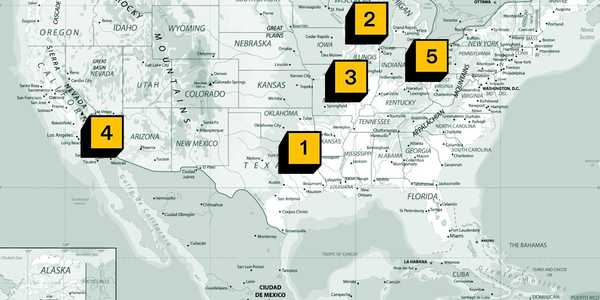
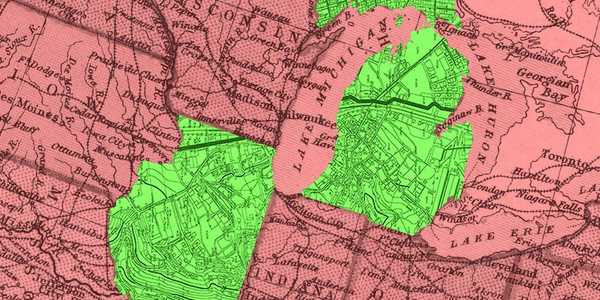
[15:42] So Canadian exporters, as an example, have shifted some additional supplies out the West Coast through the Trans Mountain Expansion Pipeline. But that was only maybe about 100,000 barrels a day of possible flex. The rest is still locked into the U.S. mid-continent market. And when you look at a map right now of where prices are in the United States, you see a massive spread between the coasts and the center of the country. And the reason for that is that, one, the center of the country is largely self-sufficient in these fuels and doesn’t need to import from external sources. And there isn’t, and they don’t face that kind of same degree of maritime pressure, or kind of seaborne trade pressure. If you’re on a coast, you’re competing functionally with everyone else on planet Earth for that cargo of diesel.
Rory Johnston:
[16:24] Whereas in the mid-continent, if you’re like around the Chicago area, well, you’ve got refineries and you’ve got stranded Canadian crude that you can refine to whatever you want. So prices overall will continue to march higher, but you will increasingly see geographic spread in the United States. And increasingly, those, you know, supply parched regions and consumers in Asia and increasingly Europe and even Africa are going to continue bidding barrels away from North America, etc. You’ve actually seen in the first kind of wave of this, the first major consuming region to run out of Middle Eastern oil because it’s the closest by destination was actually East Africa. You saw, for instance, cargos that were transiting from the U.S. Gulf Coast up towards Europe, kind of abruptly break south back around the Cape of Africa, back to basically East African importing economies, because that was the place where that physical shortage bit first, and they were so desperate to buy it, they would pay, you know, an arm and a leg to incentivize that tanker to bail on its planned Europe trip. That’s the kind of thing we’re going to keep seeing around the world until that pricing pressure kind of equilibrates at a level that everyone is getting what they can at the prices that they can afford. But the final thing I’ll stress here is that with enough time, if this normalizes, if we’re talking about this situation for months and months and months or a year, God help us.
Rory Johnston:
[17:47] That is the situation where I do not think that the majority of the Western advanced economies are going to see material shortages.
Rory Johnston:
[17:55] It will just see extremely high prices. The kind of the burden of the necessary demand destruction, again, we’re talking about if again, if we don’t reopen Hormuz, we’re talking about 10 plus million barrels a day, 10% plus of the global demand base needing to be shed. So you don’t break the oil market. That burden will be largely borne by poor economies in the global south. That is just the kind of really tragic and vicious logic of the way that the system is going to solve itself.
Robinson Meyer:
[18:24] One dynamic that you’ve just really described well is the way that very high prices and shortages can be hard to distinguish. That being said, it sounds like we’re beginning to see true shortages appear in East Africa. Are there other places in the world or other refined products where we’re seeing either spot prices so high that it’s impossible to see it as anything other than a shortage or true like places are supposed to have oil, they’re supposed to have some kind of refined product and they don’t right now?
Rory Johnston:
[18:54] Yeah, I think it’s important to differentiate between the kind of short and medium term effects here. Because as an example, Europe, Europe gets a decent chunk of jet fuel from the Middle East. Rather than crude oil, it actually just directly imports the jet fuel because of that 20 million barrels a day that exits Hormuz, roughly 15 million barrels a day of that is crude oil and 5 million barrels that is refined and kind of in products. So about half of that 5 million is middle distillates like diesel and jet fuel. And the other half is natural gas liquids, condensates, et cetera, that go into petrochemical processing. Those shipments of jet fuel that would be going to Europe, once they stopped, those can be filled theoretically by pulling and kind of incentivizing stealing, in a way, those barrels from other regions of the world with higher prices. But that takes time so in the interim, the short-term logistical air bubble that’s hit us, the air pocket that is manifesting as shortages in Europe already — you’ve already seen, for instance, Italy last week was announcing that at various airports they were beginning to ration jet fuel to, say, long haul flights versus short haul flights that are by definition less fuel efficient because so much of the fuel is used in takeoff, as well as kind of like prioritizing air ambulances and other kind of emergency air travel. That is something that we will continue to see. You’ve seen in Asia, which was the epicenter of this initially, you saw, you know, large scale flight cancellations, route reductions, and all manner of government policies that all kind of feel very COVID-esque, meant to reduce mobility, meant to reduce consumption. Because for those other economies, and again, the other aspect of this that’s interesting is that.
Rory Johnston:
[20:33] For a lot of emerging markets, again, these areas that would be hit hardest by this, they also typically end up having some of the highest fossil fuel subsidies for, let’s say, pump prices. So if the governments don’t relax those subsidies, this transforms in the initial phase from a consumer crisis of disposable income erosion, kind of recessionary pressure, to a full-blown governmental fiscal crisis as the pressure gets borne by public balance sheets. So I imagine that as this continues, you’re going to see governments increasingly need to roll back these subsidies, even though all the political incentives are going to go the other way, but no one’s going to afford it. So I think it’s another thing we need to watch.
Robinson Meyer:
[21:11] When you talk about these countries having very high consumer subsidies, what countries are we talking about? Because the countries I think about as having the highest oil side consumer subsidies are the Gulf states. Is that kind of what you’re thinking about? Gulf states, but also, for instance, like, you know, India and Bangladesh have controls on petrol prices that are meant to kind of shield consumers from the volatility in these markets. And whether or not that’s allowed to continue that, you know, you’re going to need to allow price signals to do their work. Otherwise, you’re just going to not allow the system to kind of heal itself. And that’s how you in the same way as like if we rewind our memories back to the 70s, when Nixon instituted price controls on gasoline. That was the main reason that you ended up getting gas lines was that these markets weren’t able to incentivize the necessary barrels to where they were going.
Robinson Meyer:
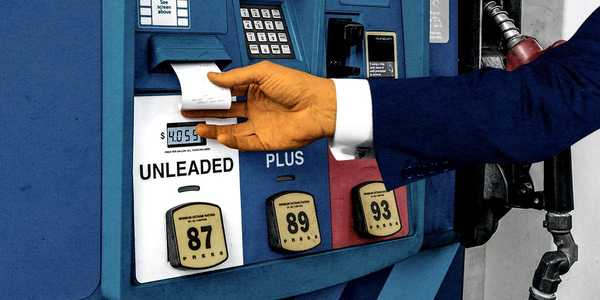
[22:02] In North America, the fuel that we’ve seen the most pressure on is diesel so far. Diesel prices are extremely high in a way that gasoline prices are high, but they’re not that bad. It’s funny, going back to your previous comment, I have been looking at maps and thinking, I wonder if Iowa or Illinois has the cheapest gasoline in the world right now. And it sounds like it actually does. Pretty close. But with diesel, we’re beginning to see really eye-watering prices. And one comment I’ve heard from people in the oil industry is it’s kind of surprising the Department of Energy hasn’t started to at least talk about plans for rationing this yet because we are getting to a price level where you would see physical shortages or at least diesel not making it to places where it would normally be making it. Do you think that it’s premature to be talking about the federal or Canada national response to these high diesel prices? Or should we actually be starting to plan for what a continued world of very high diesel prices that requires some degree of rationing and some degree of kind of physical allocation to certain geographies looks like?
Rory Johnston:
[23:07] Yeah, I mean, it’s an interesting question. Just going to give some of the numbers here. So we typically think about diesel or refined product pricing generally in terms of what we call the crack spread or the difference between crude oil and the refined product. You know, at the beginning of the year, a barrel of diesel in New York Harbor was trading roughly $30 above a barrel of Brent. So that’s a crack spread of roughly $30. At the peak in, what was this? This was March 23. We hit $90 a barrel diesel crack spreads. And currently they’re sitting at about $72 a barrel. So they’ve come down a little bit. Again, there’s a lot of hope in the market that this is almost over. But that has been where the middle distillates, diesel, gas, oil, jet fuel, have been the epicenter of the crisis in the product space.
Rory Johnston:
[23:54] And that’s actually been something that’s been pretty consistent since at least 2022. That since the crisis then, we also saw the most pricing pressure on diesel. And basically, anytime something goes haywire in the oil market right now, diesel is kind of leading the charge higher. So that’s just the fuel that we have the least of relative to still strong demand. If you think about it from an energy transition perspective, you’ve had a lot more energy transition, demand erosion in gasoline.
Robinson Meyer:
[24:20] It totally makes sense. Yeah, I mean, it makes sense. We see all the demand destruction in light vehicles, right? Exactly, exactly. And you haven’t seen the same thing. There’s been an increase in online shipping in retail, right? And kind of broad freight traffic across the country. All of that. It, totally. When you think about the two big trends in the economy. Yeah, totally makes sense.
Rory Johnston:
[24:38] And even on the supply side, because if you think about where the majority of supply has come from recently, it’s been coming from the United States and the shale patch, which produces very light grades of crude, and which yield much higher natural volumes of gasoline relative to diesel. So basically, if you’re thinking about the crack spreads right now at $72 a barrel, and you’re thinking at Brent at about $100, what you’re really talking about is $170 a barrel for diesel at the pump. I have a hard time believing that, you know, explicit rationing or other kind of policies like that would have the desired effect, because it’s gonna be really hard to figure out exactly where should have the most diesel in the first place. And I understand that there’s going to be arguments around equity around regional distribution.
Rory Johnston:
[25:21] But I do think that relative to say the 1970s, our economies are so much less oil intense. Now, I think there is a high degree of kind of spending power in particularly Western markets, and that they can handle much higher prices without things really breaking. Now, yes, this is going to be a regressionary tax, and all the normal things we kind of worry about in these moments. But overall, I think the price mechanism is something that we can at least reliably, passively trust to allocate the fuel in a way that doesn’t result in shortages. As soon as you begin rationing, as soon as you begin, I mean, what we’ve learned from government through many of these crises is that governments are kind of bad at working through the fast moving dynamics of these markets. As an example, things are changing daily right now. The government doesn’t work that fast. And we saw that through 2022. We’ve seen that through everything that it takes a long time to get a policy going. And even after it’s going, like we saw with the SPR release in 2022.
Rory Johnston:
[26:19] By the time it was really going, it was barely needed. And they weren’t able to stop it because like, well, we just spent so much effort getting this thing going. It’d be a shame to turn it off. And I feel like that same thing I see consistently across the market now. So I’m very skeptical that’s going to be the way to fix it. I think much more realistically, you know, all that same pressure and all that same energy should be just turned into trying to facilitate a reopening of the strait. Right. And again, those high prices are also needed to begin. Like, let’s say in a world where this thing lasts a long time, we still need the price signals to incentivize additional supply from elsewhere or, again, kind of demand destruction. I think it’s, it should be up to consumers to decide when they cut back.
Robinson Meyer:
[27:04] Let’s cast our eyes forward. So right now, the strait remains closed. Of course, we’re kind of dancing around it a little bit, but Iran has won a massive strategic victory in at least being allowed to even having the possibility of a permanent toll on the strait being under consideration. It’s a massive change from the pre-war status quo. It puts the IRGC in a much stronger position maybe than it was previously. And it also, I think, would be the first time a country would be allowed to toll a natural waterway like this. You’re kind of allowed to toll a canal like the Suez or Panama, but you’re not supposed to be allowed to toll a straight. It’s an international waterway, right? Exactly. And yet here, Iran seems like it’s going to do it. So yesterday, the S&P 500 was up about 2.3%. Today, it looks like it’s down maybe 26 basis points so far.
Robinson Meyer:
[27:55] But one reason the market has reacted really jubilantly to this is that it’s basically taking the signal that Trump is going to do whatever it takes to reopen the strait. And that we’re not going to see a massive escalation in Iran in a way that would really imperil the strait and keep it closed for longer. Let’s just play out some different possibilities here. It’s in Iran’s advantage, as you were saying, to keep the strait closed for as long as it can because its leverage increases throughout that process. Give us a few different ways that this ends. One possibility seems to be that Iran begins to toll the strait and allow a greater number of vessels every day. And as the ceasefire persists, global pressure on Iran, which could come from India, which could come from China, which could come from the Southeast Asian countries, increases to the point where Iran feels like it needs to raise the number of ships that it allows through the strait. There’s another world, though, where Iran doesn’t really ever open the strait, at least for the next few weeks. And the U.S. says it’s observing a ceasefire, but the strait remains closed. What does that world look like? And how do you kind of map out the possibilities here?
Rory Johnston:
[29:11] Yeah, I mean, we’re deep, deep in the kind of like speculative scenario world because there is no base case right now. I think it’s anyone that has a really confident base case. I wish I had their confidence. But yeah, so let’s work through the world of what that looks like. I think the important thing for Iran is that it will, it’ll want to maintain pressure through the strait as long as the war is continuing to go on. Now, the ceasefire is tenuous. It’s kind of precarious. I think we haven’t even talked about all of the various disputes around the kind of conditions, whether it’s about domestic enrichment or the status of Lebanon or the status of the strait itself. There are many, many, many, many points of disagreement, many of which are actually the same points of disagreement that Washington and Tehran could not agree on in mid-February before the war began. So we really haven’t moved a lot in terms of the diplomatic stance.
Robinson Meyer:
[30:01] And kind of crucially, what’s happened since then, right, is that the U.S. Has discovered it can degrade, but perhaps not destroy without some kind of ground operation, Iranian missile production. Iran has won this massive strategic victory in gaining an upper hand on cross-strait traffic. And we’ve discovered the U.S. seemingly has no domestic political appetite for a sustained war in Iran. Yeah. Even though there were all these political points of pressure in February, it does seem like Iran is in a much stronger position than it was, you know, two months ago.
Rory Johnston:
[30:35] I would agree. I think particularly coming out of Israel’s very successful obliteration of much of Iran’s proxy network in the region over the past couple of years, and then following the 12-day War last year, it increasingly seemed externally that Iran was a paper tiger. And I think this is kind of, you know, pushed back on that pretty, pretty strongly and pretty clearly. I think going into this war, Tehran’s only primary strategic objective was survival. And I think they’ve proven that they have survived, there will be no regime change, despite what the White House says is the same government. It’s, it’s literally, it’s literally the Ayatollah has the same last name, right? I think it’s like, it’s, it’s about as clearly the same regime as it could be with just different people at the top, which is like, that doesn’t mean this. That wasn’t going to be a bad thing for Trump, as we saw in Venezuela the last time we chatted in early January. But I think that that is something that kind of has to be a part of this.
Rory Johnston:
[31:31] And then, you know, but rather than just survival, now I think that Iran is trying to figure out a way to kind of benefit geostrategically coming out of this. And that’s where the strait comes in, is that, you know, they had always teased about closing the strait historically, threatened it. But there was a lot of skepticism, very frankly. I was even fairly skeptical that they would be able to successfully close it. I was more skeptical that any U.S. President would kind of attempt to call the bluff because of the risks. But as we’ve seen, that has now been done. And it wasn’t a bluff. They were able to successfully close the strait. But now going forward, they want to figure out a way to maintain that. I think that they will maintain a kind of a tight grip on flow and a limited, restricted kind of pressure building stance, as we kind of currently see, as long as the threat of war continues. I think what Iran’s trying to find is some kind of way to get a guarantee that it won’t be bombed as soon. Because in a world ... let’s say Iran just opens the strait, right? Right?
Rory Johnston:
[32:26] They’re not being attacked. They open the strait and it’s basically oil prices come back down. The global economy heals over like two months. And then and then Israel and the United States just bomb them again. It would for them take them another month, six weeks or more to build back to this level of pressure in the system. So this is the moment they have the maximum leverage. And if with, Hormuz is the tool, I agree that, you know, after the war ends, they have an interest in normalizing, you know, at least maybe not the exact full pre-war levels, because again, you’ve also seen a lot of diversions. I think Saudi Arabia will continue shipping out the Red Sea just because of the kind of strategic kind of optionality it provides. But yeah, they’re going to want to, you know, reestablish ties with India. And again, part of these 10 points, one of the conditions is removing all sanctions, U.S., international, that have ever basically been imposed on Iran, which would allow Iran to, for instance, reestablish its natural trading relationship with India, which is which was used to be one of the largest importers of Iranian oil until the JCPOA was was scuttled and heavy blocking sanctions were imposed.
Robinson Meyer:
[33:34] That is a way I think that Iran want this to go, but it would want it to go that direction under kind of control of the IRGC and the strait. Then we end up in a situation where I guess that’s not a situation that prevents Iran from restarting its nuclear program. And it’s going to get a lot more money from these tolls as part of that process. I mean, a lot of estimates have kind of indicated that Iran could be earning under this type of arrangement as much money from tolls as it does from its entire oil trade.
Rory Johnston:
[34:00] That’s a lot of money. And the money buys a lot of missiles and nuclear enrichment program and everything else. I’ve been describing that situation as vastly preferable to the current status quo in terms of like the humanitarian cost that the current status quo will continue to rot if this continues. But it’s not an end. It is an interim unstable situation that is prone to blow up again. That if in February you had asked me, even as you were building up pressure in the Strait of Hormuz. I would have said that the probability of like an actual close of the Strait of Hormuz was so remote that I wasn’t even in like, it wasn’t even included in my major scenarios. Now going forward, Iran has a taste for closing the strait. It knows how effective it can be. That will be part of its strategic arsenal going forward in the same way that drones and missiles and proxies have been.
Robinson Meyer:
[34:54] And I think crucially, it was able to close the Strait of Hormuz without really a conventional Navy or a conventional air force in any kind of sense. It was able to close it basically with drones and missiles, which can be produced at scale, underground, or in covert locations, such that a lot of assumptions about the kind of firepower that Iran would need to close the strait proved wrong, in part because it was able to do it with these relatively mobile, in some cases, electric, in the case of drones, technologies.
Rory Johnston:
[35:25] I like the transition in there. That’s good. Let me just say that, while I have said that the current status quo is inherently unsustainable and, if it continues, will result in economic and human calamity, that is not to say it’s the worst the situation can get. Very concerning. And I think one of the things that makes this an even worse scenario, and we just discussed the scenario where Iran is allowed to open the strait under its control, and even though it’s geopolitically untenable.
Rory Johnston:
[35:54] You end up in a situation where the immediate kind of crisis maybe abates. There’s a situation where let’s say this weekend we we get to and you know i can’t keep track anymore of when the meetings are taking place or who’s delayed or whatever but initially they’re gonna be friday now they’re looking like they’re gonna be saturday these negotiations but let’s say those fail which again nothing has changed really about the two sides negotiating positions so i don’t know how they’re going to succeed so we will see again we hope they have i guess the one thing that’s changed is they have a better sense of the kind of mutually assured destruction They do. But on the flip side, like, let’s say two days ago, Trump had $110 June Brent futures. And on that same day that the ceasefire was announced, we had dated Brent crude or spot Brent crude in the North Sea had an all time high of more than $144 a barrel. So it was pretty, I think, serendipitous that yeah, yeah, not inflation adjusted. Yes, nominal nominal dollar barrel. But I mean, the fact that we printed an all time high price on the day that the ceasefire was announced, I think is indicative of the type of pressure the White House was facing, and now prices have fallen back. So there’s this classic paradox of every time Trump jawbones the market lower, it reduces pressure on the White House to reach the policy conclusion that the market was selling off on in the first place. And I think that same thing applies here. So I agree that the awareness of Iran’s capability has changed.
Rory Johnston:
[37:24] But Trump is still deeply in the mind that he can basically kind of, you know, zone of kind of, you know, bamboozlement, convince the market that this is all fine. And that’s honestly, he’s been very successful at this thus far. Futures continue to trade well, well, well, well, well below where the spot markets are trading. And most people in terms of establishing a political narrative and based on you can just read some of the replies to me on Twitter to kind of get a picture of this. They think that this is working. They think there’s no crisis in the oil market, because if there’s a crisis in the oil market, why is Brent below $100 today? June Brent. So I think that that’s been very successful. But let’s say that those fail, those talks fail this weekend.
Rory Johnston:
[38:03] And then we end up in a situation where we do start to get boots on the ground. We do, you know, the U.S. Does try and seize Kharg Island, the major staging island for most of Iran’s oil exports. Then you begin seeing a cascading series of facility attacks. And Iran’s been very clear and very transparent about its escalatory logic. And you saw this two, two and a half weeks ago when Israel struck the South Pars gas field in Iran, and Iran immediately retaliated by Iran.
Rory Johnston:
[38:34] Obliterating a large part of the LNG facility in Qatar at Raslofen. And that the Qatar Energy CEO was quoted by Reuters is saying, reduced Qatar’s LNG export capacity by 17% for up to five years. And I think right now we’re talking about that 13 million barrels a day of production that shut in through the Gulf. I’m modeling that right now as recovering over a period of weeks to months, kind of 70% recovery over the first month and kind of trailing out after that. Pretty fast recovery rate. I think the market’s also seeing those same estimates and believing they can look through this, that it’s bad, but you can see the other side. If, say, you start having those same types of headlines where there’s a 20% reduction in Kuwaiti exports for five years.
Rory Johnston:
[39:26] Well, that’s something you don’t look through anymore. That’s basically eternity from the perspective of the spot market. So that’s when this gets worse. So I think that we’re trending right now towards some kind of middle ground that obviously the United States was not able to defeat Iran and reopen the strait on its own terms. This week, at least, we’ve reduced the odds of the truly calamitous boots on the ground spiraling, you know, facility attacks across the Gulf. And we’re kind of in this middle ground now, which is better, but still kind of unstable and prone to blow up. That I think is better, but we could have the situation coming out this weekend where things get much worse again. I think it’s ultimately in the hands of Trump.
Robinson Meyer:
[40:06] And what I’m hearing from you also is that the broader energy crisis here is not yet over.
Rory Johnston:
[40:11] No, I think, you know, at the very least, I had mentioned earlier, this is an air pocket that kind of travels to the system, depending on how far you are away from the Gulf. Basically, we’re not going to feel the last tanker from Hormuz hit the U.S. until probably early next week. But by the same token, it takes that long to refill, if you will, envisioning kind of refill the the pipeline on water that even if if ships started you know even if Hormuz was open today it would take weeks to clear the current backlog log of ships in the strait and you need other ships coming back in to the into the gulf which i’m not sure many people are going to be jumping over themselves to have the honor of being the first ship first non-iranian ship or say whatever that goes to refill um those are the situations that we need to kind of see re-established and that’s going to take months to do at kind of a minimum. So we’re, you know, even if this ends, maybe the peak is away from us, but we’re going to be bumpy and I could easily see a situation where let’s say oil prices sell off on the political headline of ceasefire.
Rory Johnston:
[41:15] Only to kind of grind higher thereafter as all of those pinch points are actually realized through the global system. And that’s kind of what I’m expecting to say.
Robinson Meyer:
[41:24] When that happens, we’ll have you back on the show. We’ll have to leave it there. Rory Johnston, it’s so good to talk, as always. Thank you so much for joining us. I know you have a very busy day. Thank you so much for having me, Rob.
Robinson Meyer:
[41:36] And that will do it for us in this episode and for this week. We’ll be back next week at the usual time with a new episode of Shift Key. If you love this episode, if you hated it, you can always let me know. You can find me on LinkedIn or Blue Sky or X, all at Robinson Meyer. Until then, Shift Key is a production of Heatmap News. Our editors are Jillian Goodman and Nico Lauricella. Multimedia editing and audio engineering is by Jacob Lambert and by Nick Woodbury, who both worked overtime to get this episode out today. So thank you so much to Jacob and Nick. Our music is by Adam Kromelow. Thanks so much for listening. Remember to stick around for a special message at the end of this show from our sponsor, Lunar Energy. Hi, my name is Mike Munsell, and I’m the Vice President of Partnerships with Heatmap.
Robinson Meyer:
[42:21] Last week on the show, I chatted with Lunar Energy’s Sam Wevers about the rise of distributed energy. And today, we dig into utilities and rate design.
Sam Wevers:
[42:30] My name is Sam Wevers, and I’m Director of Product at Lunar Energy.
Robinson Meyer:
[42:34] Let’s talk about policy. What does good policy look like for home solar and batteries?
Sam Wevers:
[42:40] It’s a very complex area, but if I picked a couple of themes, I’d say one is price signals, and the other is even playing fields.
Sam Wevers:
[42:48] So these technologies, you know, solar and batteries in particular, can bring a lot of value to homes and to the grid. But for that to happen, they really need price signals. that is, you know, electricity that costs different amounts at different times of day based on supply, demand, physical constraints in the market.
Sam Wevers:
[43:08] And when there are those price signals, batteries and the software that controls them can automatically charge or discharge to reduce customer load and customer costs at the exact time that the grid needs lower demand. And so it’s that kind of just almost automated response and load shaping that you can achieve. The other thing I mentioned was level playing fields. And this is really about ensuring that the rules that determine how homes and the assets in homes participate in the grid are really treating the different potential technologies that could participate on an even and sort of equivalent basis. That is to say not having market rules that assume that it’s a big gas peaker plant is the only thing that can participate in a service but getting into the weeds of performance and telemetry requirements that are appropriate minimum megawatt clip sizes that are appropriate those sorts of things are really important to make sure that all these tens and tens of thousands of residential assets and millions of assets that get deployed they can not only provide savings and resilience to customers, but they can provide services on the distribution grid or play in wholesale power markets.
Mike Munsell:
[44:20] There’s often this tension between distributed energy and utilities, but is there a win-win solution for both utilities and for homeowners?
Sam Wevers:
[44:28] Oh, absolutely. I mean, this is really core to our sort of philosophy of how power markets should be here at Luna. It’s very easy to focus on one side of the ledger when you look at a home battery to say, I’m going to use this battery to provide bill savings to the customer, or I’m going to use this battery to provide grid services into the utility.
Sam Wevers:
[44:50] But our view is very much that if you’re not considering things holistically, if you’re not co-optimizing, as we say, between bill savings and the potential value out in the market, then you’re leaving value on the table. It’s like having an amazing vintage car and sort of leaving it parked in your driveway. And so we’ve built a software platform that can actively co-optimize for multiple objectives at the same time, like customer bills and VPP revenue, to sort of grow the pie as much as possible. And once you grow that pie, then you can make commercial decisions about how it gets sliced up and shared around. But certainly, if utilities want to get access to fast, reliable flexibility that is not only available in bulk, but also available at very discrete points in the network where they might need help with some distribution constraints, then we have to make it a win-win for utilities and homeowners.
Sam Wevers:
[45:43] The other thing that is probably worth flagging here, though, in terms of the relationship between sort of utility objectives and homeowner objectives, and I touched on it briefly before when I was talking about price signals, there’s a really important relationship between rate design and VPP programs. And we talk about this sometimes as implicit flexibility, which is flexibility that emerges because of a price signal, and explicit flexibility, which is flexibility that comes because somebody has a VPP contract. And it’s really important to consider those things holistically, because if you don’t, then you can essentially have assets responding to price signals or rate plans in a way that is maybe counterintuitive or at odds with the goals of a VPP program in that area. And so it’s really important to sort of, when we think of market design, to think of both sides of the coin there when thinking about rate design and VPP program design.
Mike Munsell:
[46:39] And can you talk about how Lunar is working with utilities today?
Sam Wevers:
[46:43] Yeah, so we’re delivering meaningful power into the grid is the first point to note, right? So we’ve delivered over nine gigawatt hours of residential flexibility into the American power grid over the past few years, dispatching VPPs made up of various OEMs devices on behalf of our clients. And that’s enough energy to power San Francisco homes for two days, as an example. So this is real grid scale stuff. We worked with PG&E and with Sunrun on a project called SAVE, which was really interesting, where we took hundreds of residential third-party ESS that we then grouped under various substations and essentially provided very temporally and locationally specific grid services per substation on a day-by-day basis, which is really exciting because it shows the sorts of value that these assets can bring to the power grid. We are also, with our software, GridShare, delivering DERMs, or distributed energy resource management services, to multiple community choice aggregators here in California, helping them shape their customers’ load curve in order to reduce the amount of resource adequacy that they need to buy in the market. But on the more sort of policy side, you know, we are actively engaging with regulators, both directly and through industry bodies like CALSA. And I’d say that just overall, you know, we are well aware that different regulatory models will emerge for different, you know, political and economic contexts.
Sam Wevers:
[48:07] With our grid share platform, we’ve delivered services in, I mean, easily over 20, 25 jurisdictions around the world. So we’ve seen how markets can be formed and shaped. and we essentially see our role as providing insights from our experience in those different markets to help inform policy choices and then once those policy decisions have been made to essentially maximize the value of those residential assets for homes and the grid in that particular market context.