0

Current conditions: A third storm could dust New York City and the surrounding area with more snow • Floods and landslides have killed at least 25 people in Brazil’s southeastern state of Minas Gerais • A heat dome in Western Europe is pushing up temperatures in parts of Portugal, Spain, and France as high as 15 degrees Celsius above average.
THE TOP FIVE
1. Energy Department gives Southern Company its largest-ever loan
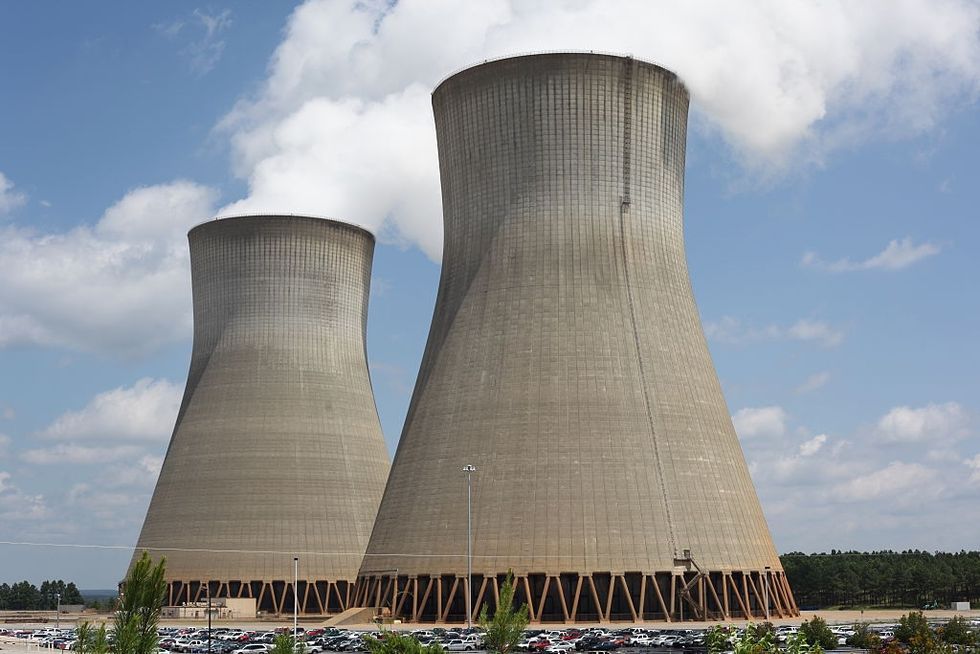
The Department of Energy’s in-house lender, the Loan Programs Office — dubbed the Office of Energy Dominance Financing by the Trump administration — just gave out the largest loan in its history to Southern Company. The nearly $27 billion loan will “build or upgrade over 16 gigawatts of firm reliable power,” including 5 gigawatts of new gas generation, 6 gigawatts of uprates and license renewals for six different reactors, and more than 1,300 miles of transmission and grid enhancement projects. In total, the package will “deliver $7 billion in electricity cost savings” to millions of ratepayers in Georgia and Alabama by reducing the utility giant’s interest expenses by over $300 million per year. “These loans will not only lower energy costs but also create thousands of jobs and increase grid reliability for the people of Georgia and Alabama,” Secretary of Energy Chris Wright said in a statement.
Over in Utah, meanwhile, the state government is seeking the authority to speed up its own deployment of nuclear reactors as electricity demand surges in the desert state. In a letter to the Nuclear Regulatory Commission dated November 10 — but which E&E News published this week — Tim Davis, the executive director of Utah’s Department of Environmental Quality, requested that the federal agency consider granting the state the power to oversee uranium enrichment, microreactor licensing, fuel storage, and reprocessing on its own. All of those sectors fall under the NRC’s exclusive purview. At least one program at the NRC grants states limited regulatory primacy for some low-level radiological material. While there’s no precedent for a transfer of power as significant as what Utah is requesting, the current administration is upending norms at the NRC more than any other government since the agency’s founding in 1975.
2. Even with tax credits, building new nuclear plants will prove tricky
Building a new nuclear plant on a previously undeveloped site is already a steep challenge in electricity markets such as New York, California, or the Midwest, which broke up monopoly utilities in the 1990s and created competitive auctions that make decade-long, multibillion-dollar reactors all but impossible to finance. A growing chorus argues, as Heatmap’s Matthew Zeitlin wrote, that these markets “are no longer working.” Even in markets with vertically-integrated power companies, the federal tax credits meant to spur construction of new reactors would make financing a greenfield plant is just as impossible, despite federal tax credits meant to spur construction of new reactors. That’s the conclusion of a new analysis by a trio of government finance researchers at the Center for Public Enterprise. The investment tax credit, “large as it is, cannot easily provide them with upfront construction-period support,” the report found. “The ITC is essential to nuclear project economics, but monetizing it during construction poses distinct challenges for nuclear developers that do not arise for renewable energy projects. Absent a public agency’s ability to leverage access to the elective payment of tax credits, it is challenging to see a path forward for attracting sufficient risk capital for a new nuclear project under the current circumstances.”
3. Trump’s Bureau of Land Management nominee waffles on federal land sell-off
Steve Pearce, Trump’s pick to lead the Department of the Interior’s Bureau of Land Management, wavered when asked about his record of pushing to sell off federal lands during his nomination hearing Wednesday. A former Republican lawmaker from New Mexico, Pearce has faced what the public lands news site Public Domain called “broad backlash from environmental, conservation, and hunting groups for his record of working to undermine public land protections and push land sales as a way to reduce the federal deficit.” Faced with questions from Democratic senators, Pearce said, “I’m not so sure that I’ve changed,” but insisted he didn’t “believe that we’re going to go out and wholesale land from the federal government.” That has, however, been the plan since the start of the administration. As Heatmap’s Jeva Lange wrote last year, Republicans looked poised to use their trifecta to sell off some of the approximately 640 million acres of land the federal government owns.
Sign up to receive Heatmap AM in your inbox every morning:
* indicates required
Email Address *Our Privacy Policy & Terms Apply.
4. America’s tech giants sign onto Trump’s data center pledge
At Tuesday’s State of the Union address, as I told you yesterday, Trump vowed to force major data center companies to build, bring, or buy their own power plants to keep the artificial intelligence boom from driving up electricity prices. On Wednesday, Fox News reported that Amazon, Google, Meta, Microsoft, xAI, Oracle, and OpenAI planned to come to the White House to sign onto the deal. The meeting is set to take place sometime next month. Data centers are facing mounting backlash. Developers abandoned at least 25 data centers last year amid mounting pushback from local opponents, Heatmap's Robinson Meyer recently reported.
5. Fusion company raises $240 million to pursue nuclear waste recycling
Shine Technologies is a rare fusion company that’s actually making money today. That’s because the Wisconsin-based firm uses its plasma beam fusion technology to produce isotopes for testing and medical therapies. Next, the company plans to start recycling nuclear waste for fresh reactor fuel. To get there, Shine Technologies has raised $240 million to fund its efforts for the next few years, as I reported this morning in an exclusive for Heatmap. Nearly 63% of the funding came from biotech billionaire Patrick Soon-Shiong, who will join the board. The capital will carry the company through the launch of the world’s largest medical isotope producer and lay the foundations of a new business recycling nuclear waste in the early 2030s that essentially just reorders its existing assembly line.
THE KICKER
Vineyard Wind is nearly complete. As of Wednesday, 60 of the project’s 62 turbines have been installed off the coast of Massachusetts. Of those, E&E News reported, 52 have been cleared to start producing power. The developer Iberdrola said the final two turbines may be installed in the next few days. “For me, as an engineer, the farm is already completed,” Iberdrola’s executive chair, Ignacio Sánchez Galán, told analysts on an earnings call. “I think these numbers mean the level of availability is similar for other offshore wind farms we have in operation. So for me, that is completed.”