GLOBALVARS
0
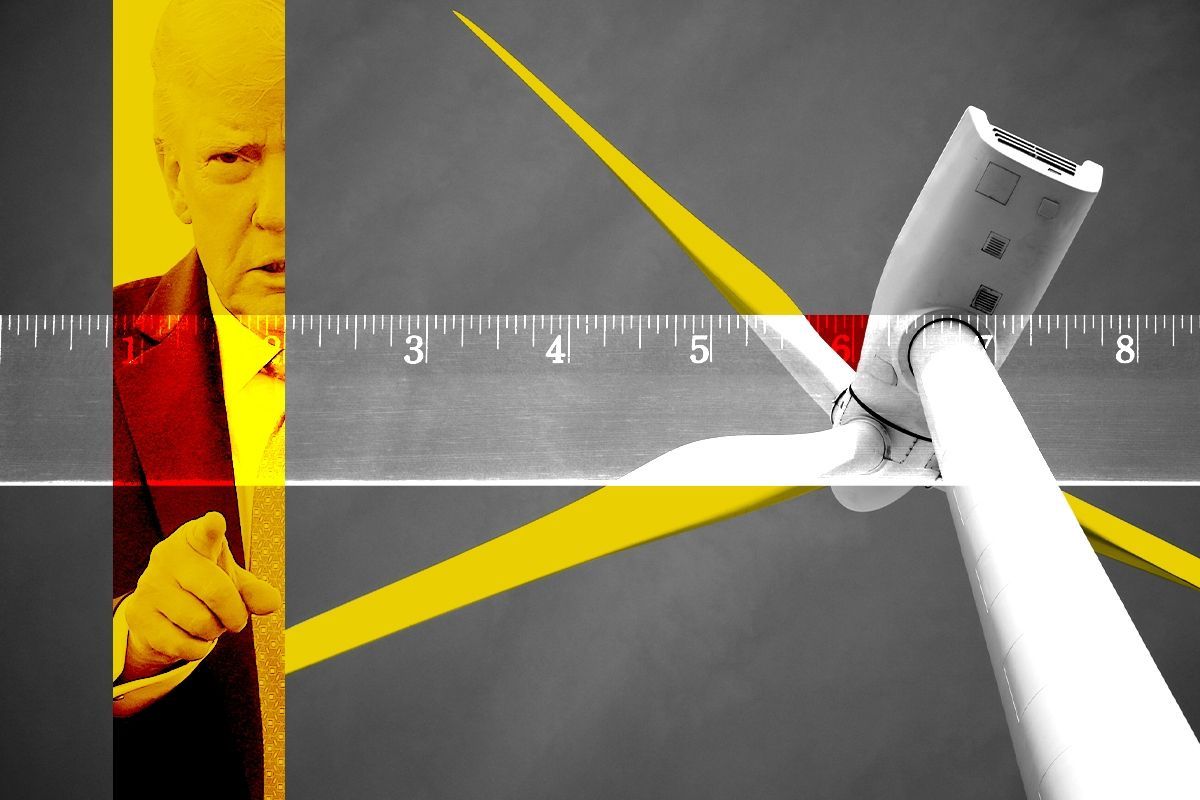
Major energy developers are going all in against the Trump administration in court, in what appears to be the first time many are publicly challenging the president in spite of any potential risk of retaliation.
As I chronicled, Trump is now effectively blocking any new wind projects in the U.S., utilizing federal authority over American aerospace to stop what was once a run-of-the-mill approval process for the height of turbines through the Federal Aviation Administration. They’ve done this by using the Defense Department to gum up the interagency review process, with the Pentagon holding up bureaucratic machinations citing vague, alleged national security concerns. Earlier this month, regional renewable energy trade groups filed a lawsuit against the Pentagon and FAA seeking a judicial order akin to what they’ve already won against the Interior Department’s anti-renewables permitting freeze. The case argues Trump can’t hold these routine processes up because, well, they’re mandated by law to ultimately clear things if they meet basic specifications. It arrives as the Trump administration appeals a separate lawsuit against the Interior Department’s de facto permitting freeze, which was formally filed today.
Last week, the renewables trades filed a motion to immediately end this de facto national freeze. Attached to this motion: a murderer’s row of on-the-record statements from senior executives for large U.S. energy developers seeking to build their wind projects. I’ve honestly never seen anything like it – declarations railing against the Pentagon from top personnel for Pattern Energy, Apex Clean Energy, EDP Renewables, Triple Oak Power, Bordas Renewable Energy, Nova Clean Energy and Palmer Capital.
The declarations describe each company’s individual experiences struggling to get these routine height clearances. Adam Clark of Pattern Energy said the Pentagon’s inaction has “jeopardized committed capital, threatened project viability” and “delayed or blocked local and state permitting.” Thomas LoTuro at EDP Renewables said the military’s behavior “effectively halted” a “substantial portion of [EDP] North America’s project portfolio,” stalling some proposals for so long that it risks violating existing local road agreements for construction.
Some of these executives – such as those for Invenergy, Bordas, and Triple Oak – only describe themselves as representatives of the subsidiaries or LLCs developing individual wind projects affected by the freeze. Those filings do not make any reference by name to their parent companies. But quick background checks revealed each of these individuals holds broader development or management roles at the parent companies and I understand from conversations with individuals involved in this litigation that their statements were a significant step not taken likely.
“You are very observant,” one senior renewable energy industry insider told me when I asked about the executives’ statements.
This insider – who has firsthand knowledge about the litigation – told me the companies going on the record are largely doing so because of the extent they’re at risk. Often the height clearance for turbines is one of the final procedural steps before starting construction, and the incoming sunset of tax credits under the Inflation Reduction Act has made construction start dates key to projects’ budgets. Wind development has been drastically undermined by Trump’s permitting freezes. American Clean Power has said turbine orders halved in the first half of 2025, reaching their lowest levels since the COVID-19 pandemic lockdowns.
There’s also the sheer magnitude of the freeze. Before the Pentagon ruined the lives of wind developers, the Trump renewable permitting freeze was an obstacle companies could design around by avoiding wetlands, species habitat, and federal lands. It should’ve been a relief, for example, that the Trump administration dropped its legal defense of the president’s Day 1 executive order going after wind permitting. But the military’s hold on approvals had nothing to do with that and its scope reaches further than just the federal government, as height clearances are often needed for state, county, and municipal permits too.
Ultimately the Pentagon wind freeze represents an existential threat to renewable energy developers’ businesses and reputations in the investment community. Sean Stocker, head of development for Apex Clean Energy, stated in a declaration submitted in the Pentagon wind litigation that more than $133 million in project costs incurred were at risk of being lost, including over projects that had already been determined “do not pose an unacceptable risk to national security.” This has resulted in “impacts and losses” that are “not fully recoverable” even if the companies win in the litigation because of the damage to wind energy’s reputation.
“If Apex is forced to cancel projects as a result of DoD inaction, the resulting economic, reputational, and business losses could irreparably harm the company,” Stocker stated.
Since the start of Trump 2.0, wind energy developers have been skittish to publicly challenge the president in any way for fear of retribution. Trump could hypothetically make wind energy life hell in fresh new ways. Like for example, targeting energy companies critical of the administration in an ongoing crackdown on bird deaths at operational wind farms. A reasonable fear! “Companies are still risk averse and they’re afraid. The knock-on business impacts could hypothetically be worse than the loss on the wind project itself,” said the industry insider, who requested anonymity because they did not have permission to speak on the record about the litigation.
Based on the statements submitted in court, it appears energy companies are now emboldened after winning myriad legal battles against the administration via trade group campaigns and lawsuits filed by supportive Democratic attorneys general. Time will tell whether putting all their chips onto the table will work out in the end.
A representative for the groups involved in the litigation did not respond to a request for comment.