GLOBALVARS
0

Current conditions: Temperatures in the United Kingdom should break 100 degrees Fahrenheit this week • Heavy rain and thunderstorms are forecast to hit the East Coast later today, potentially affecting World Cup matches in Philadelphia and New Jersey • Thousands were left without power after storms in Oklahoma.
THE TOP FIVE
1. U.S. and Iran agree to ‘avoid incidents and miscommunication’ over Strait of Hormuz
In the early hours of Monday morning in Switzerland, mediators from Pakistan and Qatar announced that talks between the United States and Iran had ended after making “encouraging progress.” Now, a “High Level Committee” will attempt to iron out the specifics of a deal over the next 60 days, covering tense issues such as nuclear enrichment, sanctions, and Israeli military actions in southern Lebanon. The statement also said that a “communication line” had been set up “to avoid incidents and miscommunication with the aim of safe passage for commercial vessels through the Strait of Hormuz.”
The agreement followed several days of confusion over the state of the waterway. While Iran declared the strait closed over the weekend in protest over Israeli actions in Lebanon, a U.S. military spokesman told The New York Times, “Iran does not control the Strait of Hormuz. Traffic continues to flow, and U.S. forces are monitoring the situation to ensure this remains the case.” Meanwhile, Iranian officials have said their own exports are receiving waivers from sanctions, and that a U.S. blockade is no longer in effect. “Oil and petrochem exports are waived, blockade lifted, some frozen assets released, and major reconstruction & development plan launched for Iran,” Iran’s foreign minister Seyed Abbas Araghchi posted on X Sunday evening.
2. Pro-oil candidate wins Colombia’s presidential election
Initial results in Colombia’s presidential election showed Abelardo de la Espriella, the right-wing candidate allied with Donald Trump, winning office against his leftist opponent, Ivan Cepeda, an ally of outgoing President Gustavo Petro. While the campaign largely revolved around issues related to drugs and crime, de la Espriella has also pledged to support the country’s fossil fuel industry, including support for fracking and expanding overall oil and gas production. Petro, by contrast, “sought to wean the Andean nation off fossil fuels by halting new drilling licenses and seeking to ban fracking,” Bloomberg reported. Petro’s environmentalist bent chilled outside investment in the oil and gas sector, which is still Colombia’s No. 1 exporting industry.
3. China slaps U.S. rare earths with export controls
China’s Commerce Ministry targeted two favored U.S. rare earth companies with export controls on Monday, Bloomberg reported, adding American mineral producers MP Materials and USA Rare Earth to its export control list. The two companies were among 10 added to the list, Chinese state news agency Xinhua reported. “Organizations and individuals from any country or region are prohibited from transferring or providing dual-use items originating in China to the above-mentioned entities. Relevant ongoing export activities shall be immediately halted, according to the statement,” Xinhua said. Earlier this month, the Pentagon added several Chinese companies to its own list of companies known to support the Chinese military. These included tech giants Baidu and Alibaba, as well as the electric vehicle company BYD. This designation comes with restrictions on the companies’ commercial relationships with the Department of Defense.
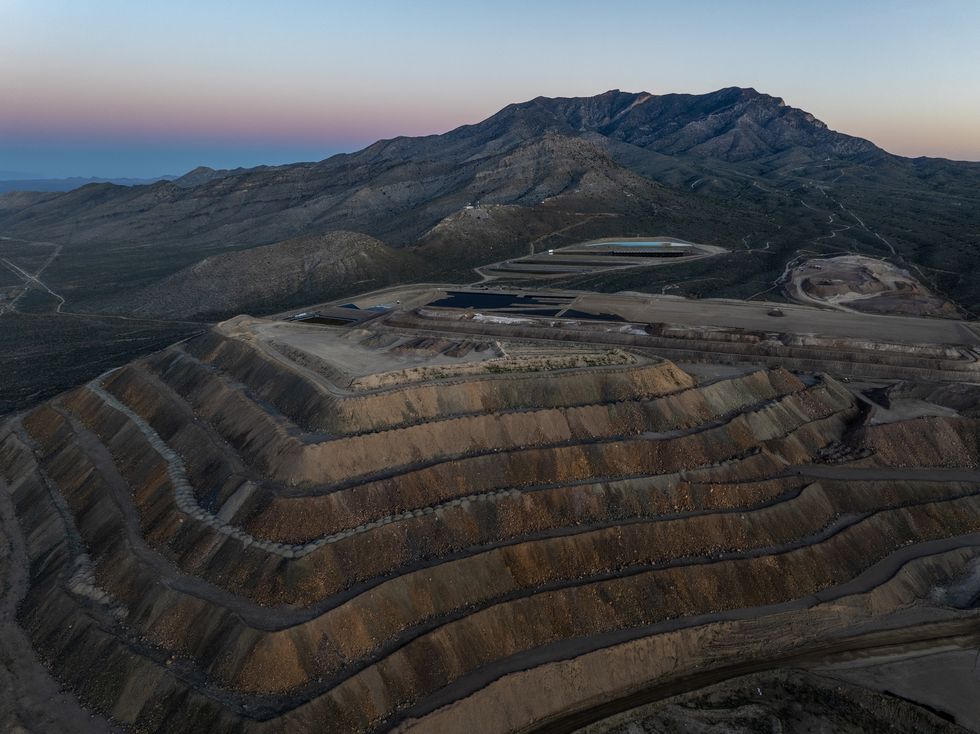
The two companies have been the recipient of billions of investment and largesse from the federal government as the U.S. seeks to build up a rare earths mining and processing industry that’s no longer reliant on China, which dominates the sector. MP Materials has received a combination of direct investment, financing, and purchase commitments for its neodymium-praseodymium production and output. While the Trump administration has shown little interest in catalyzing the wind and electric vehicle sectors (both of which use neodymium-praseodymium oxide in their electric motors), the defense industry is a major customer of MP Materials’ rare earths products. USA Rare Earth has received over $1 billion in federal investment.
Sign up to receive Heatmap AM in your inbox every morning:
* indicates required
Email Address *Our Privacy Policy & Terms Apply.
4. 70% chance of a ‘Super El Niño’
It’s not just the risk of a West Coast hurricane — the return of the El Niño weather system could portend a “mini-Dust bowl” in the Midwest. AccuWeather forecasters warned over the weekend that there’s a 70% chance already-present El Niño conditions in the Pacific Ocean could develop into what’s known as a “Super El Niño,” characterized by ocean surface temperatures 2 degrees Celsius hotter than average. Though El Niño is notorious for sending extreme rain into the southern U.S., it can also cause drier conditions further north. Combined with the extremity of this year’s projected temperature anomaly, that could lead to a multi-year drought in the Midwest. “The stronger the upcoming El Niño conditions get, the longer it takes for weather patterns to return to their historical average,” AccuWeather senior meteorologist Paul Pastelok explained. Already several Plains and Mountain West states are in “extreme drought,” and the El Niño could set the table for even more dry weather to come.
5. Bloomberg announces $285 million of support for renewables
Michael Bloomberg, founder of financial news service Bloomberg LP and a prolific climate philanthropist, announced a $285 million commitment on Sunday “to help clean energy scale fast enough to power the world’s energy systems,” according to a press release from his charitable organization, Bloomberg Philanthropy. The gift is aimed at accelerating wind and solar deployment both in developed and emerging markets, with the goal that the two technologies should “generate more than half” of electricity in countries responsible for 70% of global emissions. The money will support trade groups for the wind and solar industry, data collection and analysis efforts to demonstrate wind and solar’s capabilities and costs, technical assistance to set up electricity markets in a way that encourages wind and solar deployment, and working with investors and financial institutions to “help unlock private capital for clean energy infrastructure.”
The substantial gift toward two mature technologies stands in contrast to other climate and philanthropic investment approaches (like, say, Bill Gates’) that focus on “breakthrough” technologies that are not currently widely deployed, or may not even exist at all. Bloomberg’s gift comes after Gates closed his main climate giving vehicle’s advocacy and policy shops early last year, and later issued a memo outlining a “strategic pivot” to focus more on global public health and extreme poverty.
THE KICKER
Developer Elementl says it will build a new 1.5-gigawatt nuclear plant 100 miles outside Columbus, Ohio. The twist: It’ll be powered by small modular reactors. The proposed plant would features several BWRX-300 SMRs made by GE Vernova Hitachi Nuclear Energy, a design that has also been favored by Ontario Power Generation at its first-on-the-continent SMR facility. Elementl said in a press release Friday that it expects to hear back from PJM Interconnection later this year about interconnection, which would set up the facility to be in service by 2034.
Editor’s note: This article has been updated to correct the location of a potential “mini-Dust Bowl.”