GLOBALVARS
0

I’m writing from Washington, D.C., today, after having the privilege of watching (and moderating) Heatmap’s second Energy Entrepreneurship Summit this morning. We heard from folks leading in a variety of technologies — geothermal, batteries, fusion, conventional nuclear — but I was struck by a few common themes.
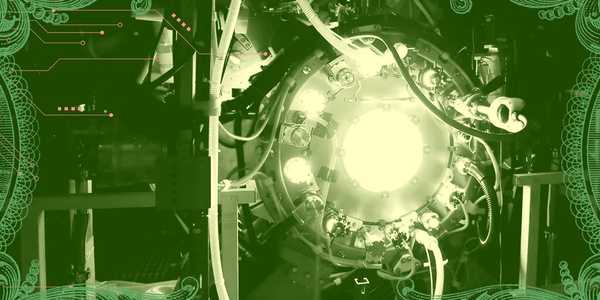
The first was the new wave of excitement about fusion energy and how, in some ways, the artificial intelligence boom has reinvigorated the fusion conversation. Much like fusion, AI was a long-prophesied technology that made steady, iterative improvements over time — and then, one day, delivered a transformative product in the form of ChatGPT. I’m not sure if fusion has yet had a raw technological improvement on par with the transformer, the neural network innovation that preceded today’s AI chatbots and agents, but fusion startups have reported significant improvements in recent years. The industry believes — as do some fusion-pilled policymakers — that they will have commercial reactors on the grid by the mid-2030s.
The second is the degree to which surging electricity demand is pushing forward clean energy across the board. Although many (but not all) hyperscalers prefer to buy clean energy, the raw demand for power is fueling confidence among energy developers and technologists of all stripes. It’s great to make a commodity whose price is rising. At some point, this link between AI and electricity may become turbulent for developers — but we’re not there yet.
The final note is the degree to which U.S.-China competition now dominates conversations around the energy industry and the economy more broadly. I can remember a time when it was somewhat peculiar to point out that some forms of energy prowess strengthened the country’s national security — and that if the U.S. did not work those muscles, then China would. There was little overlap between the clean energy and security conversations. Now, the rise of globally competitive Chinese “electrotech” firms such as BYD, Xiaomi, and CATL has almost united the two discourses.
There is a growing recognition, too, that America will have to reindustrialize to compete. Policymakers sometimes talk about how the U.S. should use its (for now) still strong R&D apparatus to develop “leapfrog” technologies that can surpass Chinese products. But as America has by now repeatedly discovered, simply inventing a new technology is not enough. Creating an export industry — not to mention a business — actually requires commercializing that technology and scaling it. And that will entail the rudiments of an advanced industrial economy: more hardware factories, a larger grid, more manufacturing and process engineers.
These concerns over basic competitiveness colored discussions of even the most advanced technologies. Jackie Siebens, a vice president at the fusion startup Helion, said she was worried that fusion is going to “follow a story we’ve seen before,” where the United States demonstrates fusion first, “but China scales much more broadly.” Representative Don Beyer, a Democrat from Virginia who champions fusion, brought up a more fundamental concern: China is graduating hundreds of nuclear PhD engineers every year, he said, while America is only graduating a few dozen.
If affordability makes up one half of our new energy era, then these questions around competitiveness might be the other half. We’ll explore them, I’m sure, in the future. For now, thanks, as always, for reading.