GLOBALVARS
0
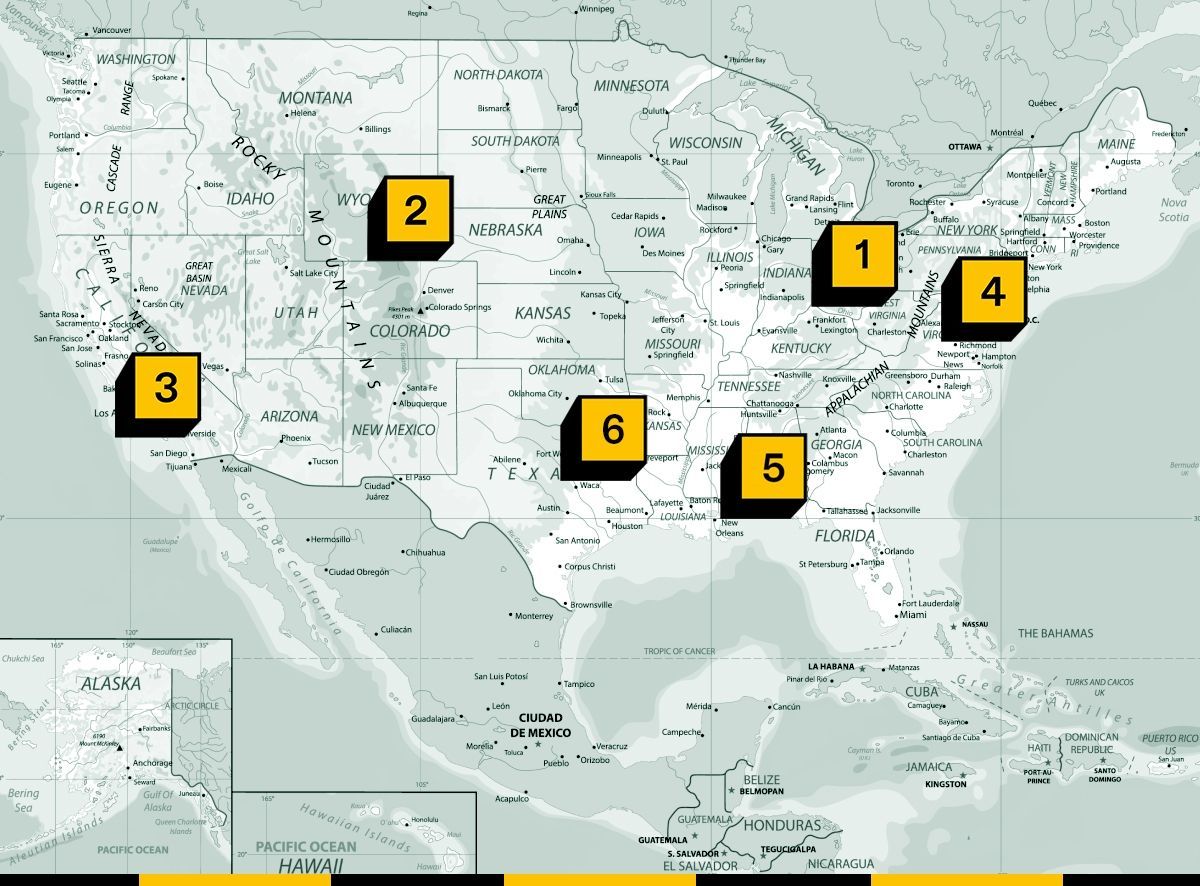
1. Ohio — This state might just be the most important flashpoint in the national fight over advanced energy and tech infrastructure.
- Ohio is now home to one of the fiercest retaliatory strikes against the data center sector from a statewide elected Republican. Last week, Governor Mike DeWine said he was pausing access to the state’s tax exemption request program for all data centers (sans two projects that squeaked in under the wire).
- In the state legislature, a new select committee on data center development got an earful from aggrieved anti-data center voices this week at their only hearing for public comment. Legislation and regulation feels all but inevitable. As lawmakers debate potential legislation, grassroots organizers opposed to development are gathering signatures in hope of landing a moratorium vote on the ballot this November.
- Meanwhile, the state Supreme Court struck down permits for the biggest solar project in the state: Oak Run, a large agri-voltaics project backed by a Shell subsidiary.
- As I previously wrote, the court challenge against Oak Run was a potential harbinger of the extent local opposition would be considered a proxy for “the public interest,” a legal term of art crucial to state energy and power permitting.
- In a decision overruling the Ohio Power Siting Board, justices wrote the board’s “rationale” on this public interest question “misses the mark” because it failed to include photos or sketches addressing visual concerns raised by locals. The board will now have to reconsider Oak Run and compel new analysis specific to surrounding sightlines.
- Conflict over large industrial development in Ohio was eminently predictable. Heatmap’s polling and modeling has consistently shown an Obama-Trump voting flip like the one Ohio landed in 2016 as a predictor for potential opposition to building renewable energy. Same goes for the fight over development on farmland — and Ohio is flush with prospective ag property. Knowing renewables-hostile areas are harder for data centers, this would be a likely no-go zone for developers if it wasn’t for existing fiber-optic cable networks.
2. Laramie County, Wyoming — The Cowboy State’s capital city is one of the few to reject a data center moratorium. But tech companies. don’t get your hopes up too high.
- The city of Cheyenne is starting to see serious data center development growth thanks to ample power access and the lax regulatory environment typical of an energy state. Along with this growth, we’re seeing the same ol’ community backlash in Cheyenne.
- Yet the city council voted against a moratorium, batting away public demands in favor of a case-by-case approach to project development.
- But it’s not all sunshine and roses for Big Tech though, even here. City planners are pushing back on Microsoft’s plans to expand existing facilities in the community plainly on the grounds of size; one city planning commissioner claimed fears it would mean the company’s campus would “overtake” the city.
- Perhaps this is why Wyoming Governor Mark Gordon stepped into the fray yesterday, issuing an executive order entitled “Data Centers the Wyoming Way.” It’s a set of principles and instructions to agencies for fostering AI data center development in the state while aiming to maintain a stable, affordable electric grid. There were no new requirements for companies, which does sound like the Wyoming way.
3. Los Angeles County, California — Elsewhere, we saw the first city in California vote to ban data centers … once and for all.
- You read that right: By a more than 50% margin, voters in the L.A.-area community of Monterey Park voted to permanently ban any new data centers. Some media reports indicate this may have been the first city in the U.S. to make such a declaration at the ballot box; I haven’t been able to confirm that finding, but it sounds plausible. The only other vote of note was a referendum earlier this year in Port Washington, Wisconsin, but that was not a full-on ban.
- Campaigns for a ban began because of a data center proposal that was withdrawn back in April due to objections from the city. The developer, an Australian company called HMC StratCap, has said ot will not challenge the ballot measure’s results, so this history-making fight may very well be over.
4. Charles County, Maryland — This populous county south of D.C. is now out of reach for data center development.
- In a unanimous decision Wednesday, the Charles County Planning Commission recommended the county reject proposed zoning changes that would’ve allowed for hyperscale data center development. This will now go before the full county commission, which will decide whether to accept or send back the planners’ recommendation.
- Charles County is prime jurisdiction for data center problems, sandwiched between rural farm-heavy southern Maryland and a D.C. metro area already anxious about data center growth in northern Virginia. Encapsulating the salience of this issue there, Heatmap Pro’s database shows that the county scores a 99 data center opposition risk but has a substantially lower clean energy risk.
5. Baldwin County, Alabama — There will be a vote at the end of this month on whether to ban solar in the county whose opposition nearly prompted a statewide moratorium on development.
- Last month, opponents of Silicon Ranch’s Stockton Solar got enough signatures for a referendum petition teeing up a vote on a 180-day moratorium on development within the project’s zoning district at the end of this month. Should the referendum be approved, it’s unclear whether active construction will cease on Stockton Solar, or whether Silicon Ranch will contest impacts of the result on their project.
- Media coverage indicates a growing movement against large-scale solar in this rural county south of Birmingham occurring in tandem with the upset at data centers in neighboring Escambia County. I don’t expect any of this to die down anytime soon, and may get noisier in the meantime.
6. Hopkins County, Texas — I have one last update related to a large data center legal fight we’ve been covering closely.
- In November, I reported that Texas attorney general Ken Paxton was attempting to pressure the utility company Vistra into breaking a legal agreement for land conservation so a data center could be constructed in the small town of Sulfur Springs.
- A big update for you is that the developer of that project — MSB Global — is bailing amidst the court drama. Sulfur Springs mayor Tyler Law told residents this week an unnamed company would be scooping up the development and powering forward, but MSB would no longer be involved. Apparently existing agreements will be passed along to the new company.