GLOBALVARS
0
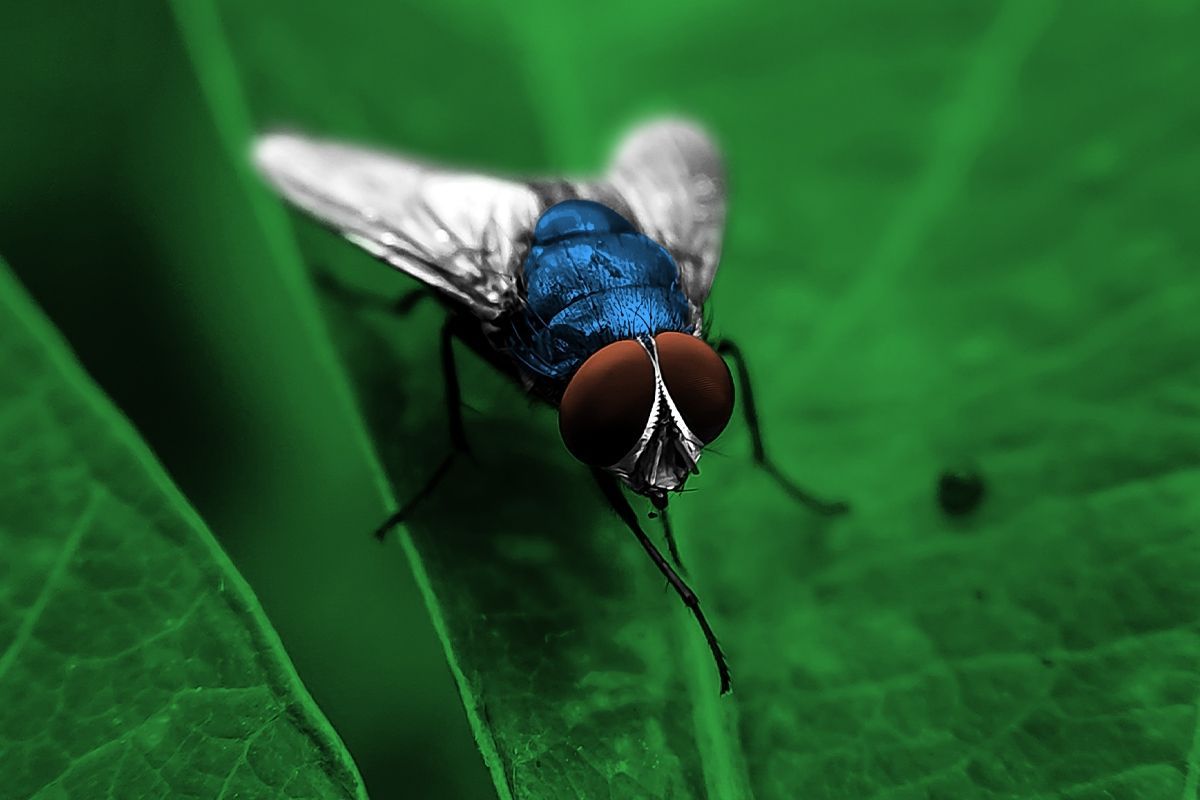
The U.S. Department of Agriculture confirmed on Wednesday that a New World screwworm — a flesh-eating fly that feeds on cattle, livestock, and other mammals — was found in a 3-week old calf in southern Texas. The screwworms aren’t dangerous to people, but they are a serious health risk to cows, and they are likely to drive already record-high beef prices even higher.
The finding reflects the defeat of what was, up until recently, one of my favorite “unknown” government programs. For decades, the United States government paid to breed millions of male screwworms, blast them with radiation to make them sterile, and then drop them from planes into the rainforest at the narrowest stretch of the Panama peninsula. (Sarah Zhang, the bravura science writer at The Atlantic, wrote the ultimate story about this project back in 2020, which is how I learned about it in the first place.) These sterile male worms mate with female screwworms but produce no larvae, creating a biological border in Central America across which screwworms cannot pass, at least in theory.
That border was breached in 2022 — perhaps via infected livestock smuggled across the Darién Gap — and since then screwworms have been inching toward Mexico and the United States. They were hundreds of miles from the border last summer; now they seem to have crossed it. Once they’re inside the country, the screwworms will be difficult to cordon given that livestock move travel regularly as they move from ranch to slaughterhouse.
The U.S. government is on it — sort of. Brooke Rollins, the agriculture secretary, announced efforts last July to open a new factory in Texas capable of producing 300 million sterile screwworms. Regardless, re-eradicating the worms is going to be much harder than keeping them under control — the U.S. established the bio-wall in that narrow strip of Panama because it was most efficient, but eliminating the bugs at first required enormous air drops across the southern United States and the entirety of Mexico. That will require a bigger bug factory.
Screwworm isn’t the only historic pest that the American government has lost control of: Our measles eradication status is now also under review. New pests threaten, as well, such as the alpha-gal tick and Lyme disease.
I would highlight that the screwworm is a lesson about the reality of good governance. State capacity is not so different from managing the electricity system or, for that matter, cutting carbon emissions, in that there is little political reward for getting it right. Voters do not thank politicians when something bad doesn’t happen — except in the most obvious cases — and they broadly do not notice when difficult systems work. (Nor do journalists — or, for that matter, the algorithmic feeds that have partially replaced us.)
The screwworm may also point to the virtues of taking a more muscular — a more openly protean — approach to environmental engineering. For decades, the U.S. government really did succeed in squashing the screwworm, and while the ecological effects of the widespread and cheaper cattle farming that resulted are perhaps best left to another discussion, it does make me wonder: Should we consider trying the same thing for ticks? Mosquitos?