GLOBALVARS
0

Current conditions: The southwest monsoon known as “hagabat” has started in the Philippines, dumping up to 4 inches of rain on the archipelago • A strong geomagnetic storm, ranked just two levels below the most powerful type of event of this kind, is underway, threatening radio signals, GPS, and other human instruments that are sensitive to shifts in the Earth’s magnetic fields • San Antonio, where the glorious New York Knicks defeated the Spurs last night, is bracing for rain through the weekend.
THE TOP FIVE
1. U.S. oil stocks drop to the lowest level since 2004
To put it in terms a movie lover could understand, President Donald Trump’s Iran War is drinking the U.S. government’s milkshake. Federal stocks of oil have dropped to their lowest level since 2004. Commercial crude stocks fell by 8 million barrels to 433.7 million last week, according to The Wall Street Journal. Unless the Strait of Hormuz reopens soon — which looks less likely now that Iran has called off negotiations with the U.S. and Israel — prices could hit $200 per barrel by summer, said Bob McNally, president of the Rapidan Energy Group consultancy and a former White House adviser. “You start to raise the risk of spillover into other sectors, the economy and financial system … it detonates fragilities in the broader economy and financial system,” he told the Financial Times.
2. Spurned by Trump, Oklahoma’s attorney general sues to block aluminum smelter
Oklahoma Attorney General Gentner Drummond has filed a lawsuit to block construction of the United States’ first new aluminum smelter in half a century over concerns about the project’s ties to the United Arab Emirates and risks it poses to the state’s cattle industry. Century Aluminum had planned to build the smelter with $500 million from the Biden administration. But in January, as I told you at the time, the company overhauled the deal to partner instead with the Abu Dhabi-based Emirates Global Aluminum, which said it became interested in the project after Trump slapped 50% tariffs on the metal. The move comes after Trump endorsed Drummond’s opponent in this year’s Republican primary for Oklahoma governor.
In the 12-page litigation, the state’s top cop alleged that the smelter, planned for a site 30 miles east of Tulsa, would “leach air and water pollutants that would injure the health, comfort, repose, and safety of the people in the region,” Mining.com reported. “A primary aluminum smelter does not belong in a community’s backyard and its emissions do not respect property lines,” Drummond wrote in the lawsuit, which asks the court to block the project. His lawsuit also refers to the UAE, a close ally of the U.S. and by far the most liberal of the Gulf Arab kingdoms, as an “Islamic foreign monarchy.”
3. Texas’ grid operator puts forward major data center rules
The Electric Reliability Council of Texas, the state’s grid operator, approved what E&E News called two “landmark sets of rules of rules” this week that would “shape the future of data centers in the state if finalized.” One package sets up new criteria and processes for bringing big electricity users onto the grid by reviewing them in batches. The other requires data centers and crypto mining operations to remain online during brief grid disruptions in a bid to avoid the cascading outages that downed the electrical system during 2021’s deadly Winter Storm Uri.
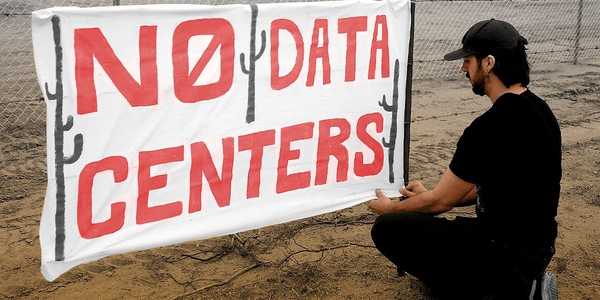
The changes come as opposition to data centers reaches critical new heights. Seven in 10 Americans now oppose server facilities built near their homes, according to a new Heatmap Pro released a poll this week that my colleague Robinson Meyer wrote up here. The backlash has grown so severe that former Representative Ben McAdams, a Republican from Utah, is facing serious pushback from his Democratic opponent for the state’s new 1st Congressional District over his small stake in the renewable energy component of a proposed data center in the area, according to the Salt Lake Tribune.
Sign up to receive Heatmap AM in your inbox every morning:
* indicates required
Email Address *Our Privacy Policy & Terms Apply.
4. Taiwan’s government pushes ahead with geothermal
Taiwan, if you’ll forgive the pun, is in dire straits. The self-governing republic that has functioned as an independent country since the losing side of the Chinese Civil War fled there in 1949, is almost entirely reliant on imported fossil fuels to keep the lights on and semiconductor fabricators churning out the hardware that makes the island so valuable to the global economy. That reliance only grew last year when the ruling Democratic Progressive Party, which has opposed atomic energy since its founding in the 1980s, completed the country’s nuclear phaseout, shutting the last of the island’s three functioning plants. The government in Taipei is now considering starting back up at least one of the old nuclear plants. But, as I told you earlier this year, it’s also looking to geothermal to make up the difference. On Wednesday, the Ministry of Economic Affairs announced the first government-led tender for geothermal, Think Geoenergy reported. The six-month process is meant to develop geothermal zones in Taitung County, on the island’s southeast coast.
5. Hybrid sales are surging
The Iran War isn’t just draining America’s crude stockpiles. It’s also spiking gas prices — and spurring a hybrid boom. Sales of hybrid vehicles revved 33% in May compared to the same month last year, according to a Wall Street Journal analysis of Motor Intelligence data. “The hybrids have been a godsend,” Mark Politte, the dealer principal at Stanley Subaru in Ellsworth, Maine, told the newspaper. They are “hotter than the non-hybrids.” While new vehicle sales are down 4.4% overall this year through May, hybrid sales are up 17% compared with 2025.
Meanwhile, autonomous electric vehicle company Waymo announced a deal on Thursday to recycle batteries from its nearly 4,000 operating robotaxis into battery storage for electric grids in California and Texas. Waymo’s fleet is made up mostly of Jaguar I-Pace EVs, which have 90-kilowatt-hour batteries. “Put a little haircut on that in terms of degradation and the effective capacity that would be left in those batteries when they’re suitable for repurposing, and we’re still talking about pretty significant capacity per battery,” Freeman Hall, CEO of B2U Storage Solutions, Waymo’s partner in the project, told Ars Technica.
THE KICKER
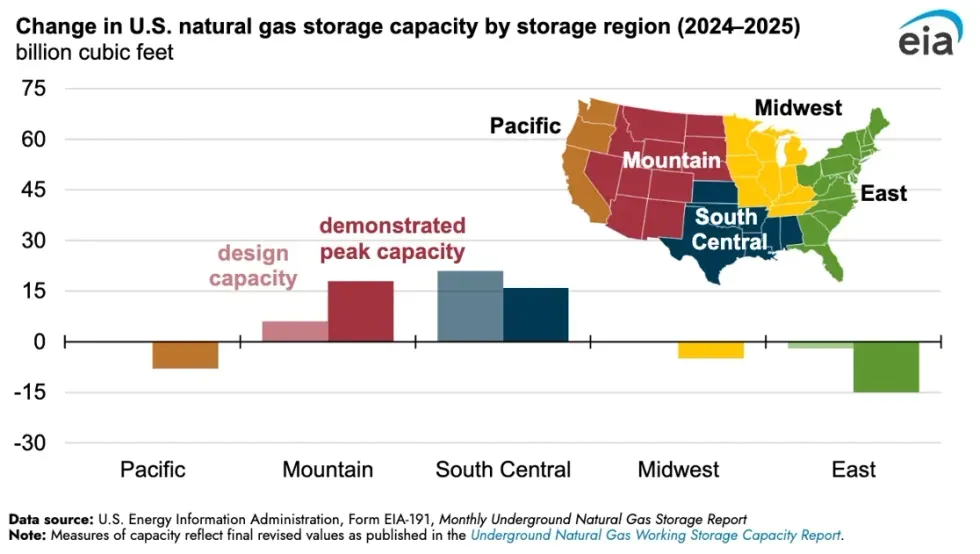
The U.S. may be depleting its oil stockpiles, but it has increased its storage capacity for natural gas in the future. Underground storage capacity in the Lower 48 states increased slightly in 2025, growing mostly in the South Central and Mountain West regions, according to new data from the Energy Information Administration. “Underground natural gas storage provides a source of energy when demand increases, balancing U.S. energy needs,” analyst Jose Villar wrote. “We calculate natural gas storage capacity in two ways: demonstrated peak capacity and working gas design capacity. Both increased in 2025.”