GLOBALVARS
0
A few times a year, Heatmap News surveys a few thousand Americans on the biggest questions driving the world of energy, environment, and climate change. We’ve spent the past few days writing up the results of our latest poll, which was in the field in late May and which I thought was particularly striking.
It’s worth taking a step back to look at the biggest results together, because the American view of data centers is essentially in free fall:
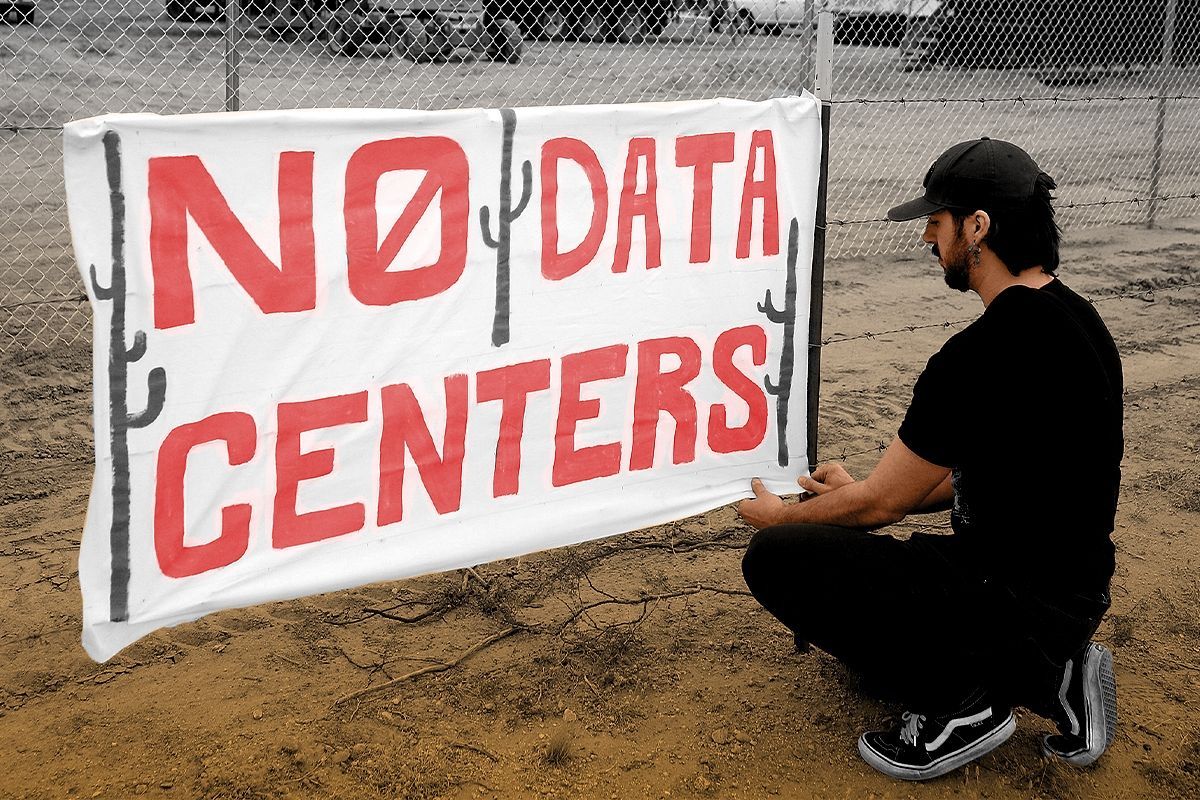
- As I wrote on Tuesday, Americans have swung en masse against local data center development. As recently as August, Americans were split on whether they would support a new data center built where they live; now, 70% would be against it.
- My colleague Emily Pontecorvo followed up by highlighting that the share of Americans blaming data centers for rising electricity costs has almost doubled since last August. Some 28% of Americans said new data centers helped drive up power prices back then; now, it’s 53%.
- Nor are Americans optimistic about the technology that data centers represent. My colleague Jeva Lange revealed that 45% of Americans are “pessimistic” about AI’s effect on their lives— and 55% are downbeat about its effects on “society as a whole.”
- Young people are particularly downcast. In virtually all of our polls, American adults younger than 34 stood out for being opposed to data centers and AI. Meanwhile, the only group that’s outright optimistic about AI’s effect on their lives? Men older than 65.
- These feelings are driving policy: As my colleague Jael Holzman wrote today, an outright majority of Americans told us they would support a nationwide data center moratorium in some form. Fully 40% said they would “strongly support” a temporary pause.
The upshot of these findings: The public‘s turn against artificial intelligence and AI infrastructure is real, widespread, and cross-partisan. It doesn't matter whether Americans started out tolerating data centers or having no opinion about them; they now seem to resent them en masse.
These results also suggest Americans see little distinction between data centers as energy users and data centers as the physical embodiment of AI and Big Tech. At Heatmap, we can be a wonky and energy-focused bunch, and so we tend to think about data centers primarily as large-scale electricity users. I think most approaches to come up with “data center policy” do the same. We know data centers are distinctive in some ways, of course — an AI data center might require more on-site batteries or power generation than, say, an EV factory — but fundamentally it is just another air polluter, large-scale power user, and light-industrial land user.
But the public does not see things this way. Americans understand data centers in the context of the much broader AI policy conversation about jobs, growth, alignment, and even human extinction. And so, I should add, do politicians: Senator Bernie Sanders has framed his data center moratorium proposal as a response to rapid AI development as much as anything having to do with energy affordability. For that reason, I wonder how long the distinction between these two policy conversations — data centers here, and AI policy over there — can persist.
One last thought on this topic: Is the public’s resentment starting to affect the AI boom overall?I think it might be.It was hard for me not to think of our polling results — or our analysis of canceled data center projects — as I read about a recent JPMorgan analysis that found America’s data center boom is “falling way behind schedule,” in the words of The Wall Street Journal. More than 60% of the data center capacity that is supposed to come online next year has yet to break ground, according to the bank; another 7% is “delayed.”
That’s partially due to equipment and labor shortages, but it also might be what a siting-and-permitting bottleneck would look like. Much like renewable developers or venture capitalists, data center developers work by picking a number of sites and trying to develop on all of them. If only a few sites work out, they’re still in the money. But if a falling share of projects are working out — if building anything, anywhere, is getting harder, everywhere — then it might materialize as delays.