0
The United States and Iran have agreed to a 10-day ceasefire, and thank goodness. Israel, the third combatant in the conflict, was reportedly informed late about the ceasefire and isn’t happy about it.
The tentative agreement brings to end, at least for now, a destructive and strategically inept war that has weakened Trump’s political position and strengthened China’s solar, battery, and electric vehicle industries. The conflict paused soon after Trump fantasized about committing genocide against Iran.
The monthlong war has changed the global state of play for the oil industry. Until late February, the Strait of Hormuz was an open shipping lane through which 20% of the world’s crude oil — and even more of its liquified natural gas and jet fuel — passed. But Iran closed the strait during the war’s early phases, threatening to blow up ships with drones or missiles and commencing the worst global energy crisis since the 1970s.
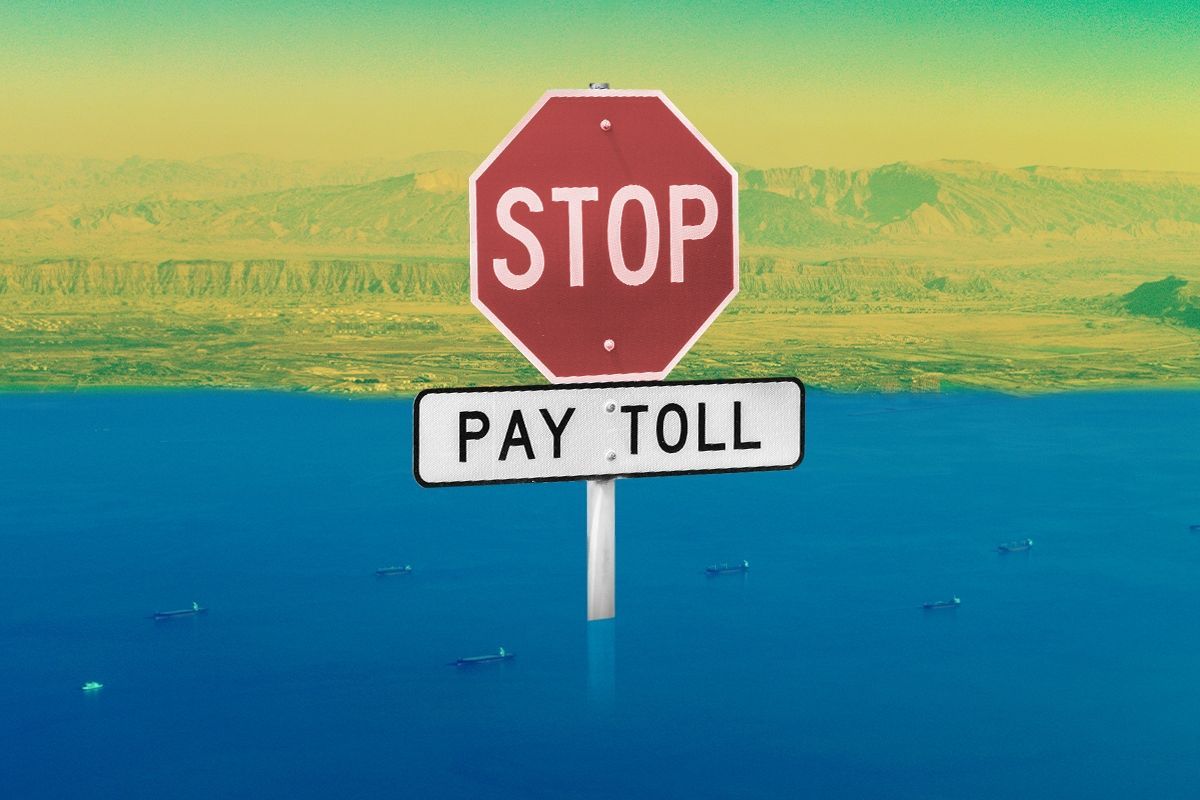
Now, as part of its peace proposal, Iran has pledged to take joint control of the waterway with Oman. It wants to set a toll of roughly $1 per barrel of oil on every ship that passes through the strait, along with as-yet-unspecified fees on food, natural gas, and refined products. The toll will reportedly need to be paid in Chinese yuan or stablecoins so as to circumvent American sanctions.
One of the enjoyable ironies of this state of affairs is that the Iranian regime seems to appreciate a good tariff just as much as President Trump does. But another irony is that this fee — imposed, as it would be, on just under a quarter of the world’s fossil fuels — would amount to a de facto carbon tax.
Naturally, we had to know: How significant a carbon tax would it be?
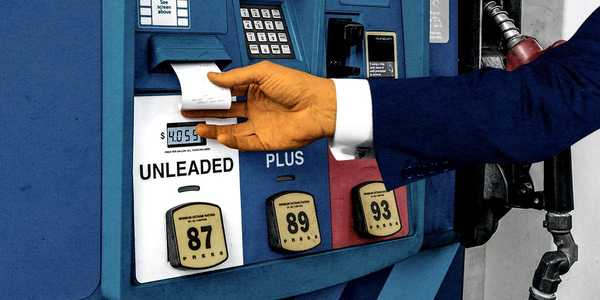
The answer: Not very big. The Environmental Protection Agency estimates that every barrel of oil produces 0.43 metric tons of carbon dioxide emissions. Divide the new $1 per barrel fee by that figure, and it comes to a tax of roughly $2.33 for every ton of emissions. If you figure that some oil barrels coming out of the strait are more carbon-intensive than others — Basrah Heavy from Iraq is especially dirty, whereas Saudi Arab Light is much cleaner — then the effective carbon tax can flex up or down by about 20 cents. But for even the cleanest fuels, the mooted Iran fee would be about $2.50.
That isn’t very big, as these things go. Nearly a decade ago, a group of former Republican statesmen proposed a $40 per metric ton carbon tax. That was below the $50 per ton social cost of carbon preferred by the Obama administration. It’s closer to what Trump has floated — during his first term, officials suggested a much smaller $2 per ton fee. Of course, all those figures would be much larger today given robust post-pandemic inflation.
(Yes, we know that the “social cost of carbon” isn’t quite the same thing as a carbon tax, but in theory you would set a carbon tax at the social cost of carbon, so as to internalize the emissions’ environmental harms.)
Of course, any future HormE-ZPass system won’t really resemble a carbon tax at all. Because it will only be levied on some of the world’s oil supply, any Iranian tariff will predominantly be paid by Persian Gulf drillers, not by international energy consumers, according to the European think tank Breughel. (And to the degree that the rest of the world can switch to non-oil-burning alternatives, such as electric vehicles, Gulf producers will bear even more of the burden.) Most importantly, the revenue collected by the tariff will go to fund the Islamic Revolutionary Guard Corps, not to decarbonizing the economy or paying down the federal deficit.
But it’s still going to increase the cost of shipping oil out of the Persian Gulf. The kind of tanker that predominates in the strait — aA Very Large Crude Carrier, or VLCC — holds roughly 2 million barrels of oil. That’s a roughly $2 million per ship fee.
A year ago, I joked that Trump seemed to be pursuing a crash decarbonization agenda — cutting off global trade, raising oil and gas drilling costs, and pursuing an energy policy that encouraged countries to switch to batteries, renewables, and electric vehicles. Call him “Degrowth Donald,” I said. Never in my wildest dreams did I envision that Donald would actively consider a carbon tax — and especially an Iranian one, paid in yuan. The president continues to astound.