0
Current conditions: A tropical disturbance is forming southeast of Guam and the Northern Mariana Islands, while on the other side of the American Pacific, Hawaii's Maui is facing up to 8 inches of rain this week • A slow-moving storm is drenching drought-parched Florida with as much as 6 inches of rain • Severe flooding in the remote Russian republic of Dagestan killed at least six people and disrupted life for as many as 1.5 million people.
THE TOP FIVE
1. Trump agrees to a two-week ceasefire with Iran
President Donald Trump has put plans for a Russian-style assault on Iran’s civilian power plants and desalination facilities on pause. Less than two hours before his 8 p.m. EST deadline for Iran to reopen the Strait of Hormuz, Trump announced a two-week ceasefire deal. “For a period of two weeks, safe passage through the Strait of Hormuz will be possible via coordination with Iran’s Armed Forces,” Seyed Abbas Araghchi, Iran’s foreign minister, said in an English-language statement Trump shared on Truth Social.
The ceasefire deal allows both Iran and Oman to charge a toll on ships attempting to navigate the strait, according to the Associated Press. A 10-point peace proposal previously submitted to the U.S. by Iran, using Pakistan as an intermediary, includes a provision for a $2 million fee, The New York Times reported Monday. In a separate post on Truth Social, Trump called the proposal a “workable basis on which to negotiate,” though Oman’s transit minister has since rejected the idea of a toll. Oil prices plunged in response to the news, falling below $100 per barrel in after-hours trading.
2. EPA finalizes changes to Biden-era methane rule
The Environmental Protection Agency has finalized its changes to the last administration’s methane standards for oil and gas operations. The EPA had first proposed what Heatmap’s Emily Pontecorvo called the nation’s “strongest methane rules yet” back in December 2023. In a statement, EPA Administrator Lee Zeldin accused his predecessors of trying “to regulate the oil and gas industry out of existence,” and called the changes “another step to fix those mistakes while proving we can both protect human health and the environment and grow the economy at the same time.”
E&E News described the regulatory changes as “minor” and “tweaks.” But the Sierra Club said the overhaul would allow producers to waste more gas by burning it at oil wells, a heavily polluting process known as flaring. “The Trump EPA’s move to loosen restrictions on gas flaring at oil wells is a massive step backward for public health, the climate, and economic common sense,” Mahyar Sorour, the Sierra Club’s policy director for the Beyond Fossil Fuels campaign, said in a statement. “Allowing more flaring will drive up harmful emissions, worsening smog and soot pollution in already overburdened communities while accelerating the climate crisis. At the same time, while families across the country are struggling to afford their energy bills, EPA is making it even worse with this action.”
Sign up to receive Heatmap AM in your inbox every morning:
* indicates required
Email Address *Our Privacy Policy & Terms Apply.
3. American oil majors pay far more in foreign taxes in the U.S.
Founded in California 147 years ago, Chevron built an oil empire from the United States. But the giant, which recently relocated its headquarters to Houston, is expected to contribute nearly 13 times more in tax dollars to the Canadian government than the American Treasury for its 2025 operations. It’s set to pay 11 times as much to Australia, five times as much to Kazakhstan, and four times as much to Saudi Arabia and Nigeria each. In total, just 2% of the tax dollars Chevron is shelling out for 2025 are going to the U.S. government. For Exxon Mobil, that figure was just under 9%. A little over 22% of ConocoPhillips’ tax payments, meanwhile, are headed to Washington. That’s all according to a new analysis by the Financial Accountability and Corporate Transparency Coalition, a nonpartisan nonprofit that tracks money flows. Overall, the three American supermajors are on pace to pay an average tax rate of just 6.1% on their domestic income in 2025, “a dramatic decrease” from the 10% average rate for those same companies between 2018 and 2024 and less than a third of the statutory 21% corporate tax rate, the report found.
4. India’s first fast-breeder reactor goes critical
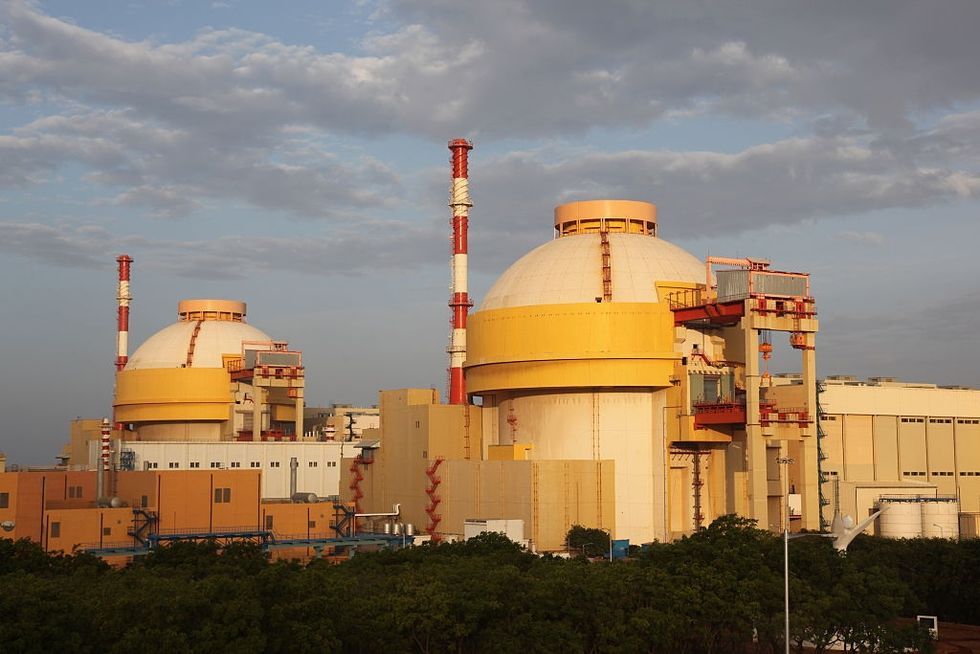
Since commissioning its first nuclear power station in October 1969, India has dreamed of atomic autonomy. Of the two dozen reactors New Delhi built at more than half a dozen plants, the vast majority were pressurized heavy water reactors that could run on raw uranium, eliminating the need for enriched fuel. With few uranium deposits on the subcontinent, India laid plans in the early 2000s to eventually transition its fleet to running on thorium, a more abundant but never commercialized fuel. In between, the government decided to follow a pathway the U.S. walked back in the mid-20th century: fast breeder reactors. Such machines generate plutonium through the atom-splitting process, producing or “breeding” more fuel than the fission consumes. On Monday, India’s Prototype Fast Breeder Reactor split atoms for the first time, following more than two decades of construction work. The Indian reactor is designed to transmute thorium-232, which is plentiful in the country, into uranium-233, which can be used as fuel. Once operational, the reactor would be one of just two commercial fast breeder reactors worldwide, following the first in Russia. “Today, India takes a defining step in its civil nuclear journey, advancing the second stage of its nuclear program,” Prime Minister Narendra Modi said in a statement, according to World Nuclear News. “It is a decisive step towards harnessing our vast thorium reserves in the third stage of the program. A proud moment for India.”
China, meanwhile, has poured the first concrete for its latest nuclear reactor. The state-owned China National Nuclear Company announced that construction is underway on Unit 2 of the Jingqimen nuclear power station in Zhejiang province, NucNet reported. CNNC plans to build six gigawatt-sized Hualong Ones, China’s leading indigenous reactor design, at the site just south of Shanghai. In a sign of just how quickly things move in China, the National Nuclear Safety Administration issued a construction license for Units 1 and 2 at Jingqimen in February 2025. First concrete was poured for Unit 1 in August 2025.
5. German rule change could smother the country’s small hydropower sector
Not content with what its leaders admit was the “historic mistake” of killing off nuclear energy, Germany is poised to adopt a policy change that could hurt yet another source of clean firm power. A planned amendment to the Renewable Energy Sources Act to end support for projects of up to 25 kilowatts aims to phase out subsidies for small-scale solar farms. But the tweak will also affect more than half of the country’s roughly 7,300 hydropower plants, according to BDW, a trade association representing the dam owners. “This measure, which is actually aimed at avoiding fluctuating feed-in, makes no sense at all for hydropower,” BDW president Hans-Peter Lang told Renewables Now. The trade group called for the German government to not only scrap the proposal but add a new subsidiary to support hydropower plants below 100 kilowatts.
THE KICKER
Most of the world is struggling with soaring petrochemical prices as the main ingredients in all kinds of chemical components — oil and gas — surge amid the most severe shock in modern history to global hydrocarbon flows. Not China. Joining a distinguished club that includes Nazi Germany and Apartheid South Africa, Beijing has maintained its domestic supply of chemicals by forging an enormous sector around converting coal into chemicals. Over in Bloomberg, columnist Javier Blas quantified just how big the coal-to-chemicals sector is in China. On its own, the sector is larger than the entire U.S. coal market.