GLOBALVARS
0
I believe life should be a little bit silly, which is why I’m a sucker for a gimmick. A hotel just for napping? Sign me up. A “convenience store” full of items made of felt? I now own a bag of inedible Fritos. Hot sauce packaged to look like dynamite? Cute, add to cart.
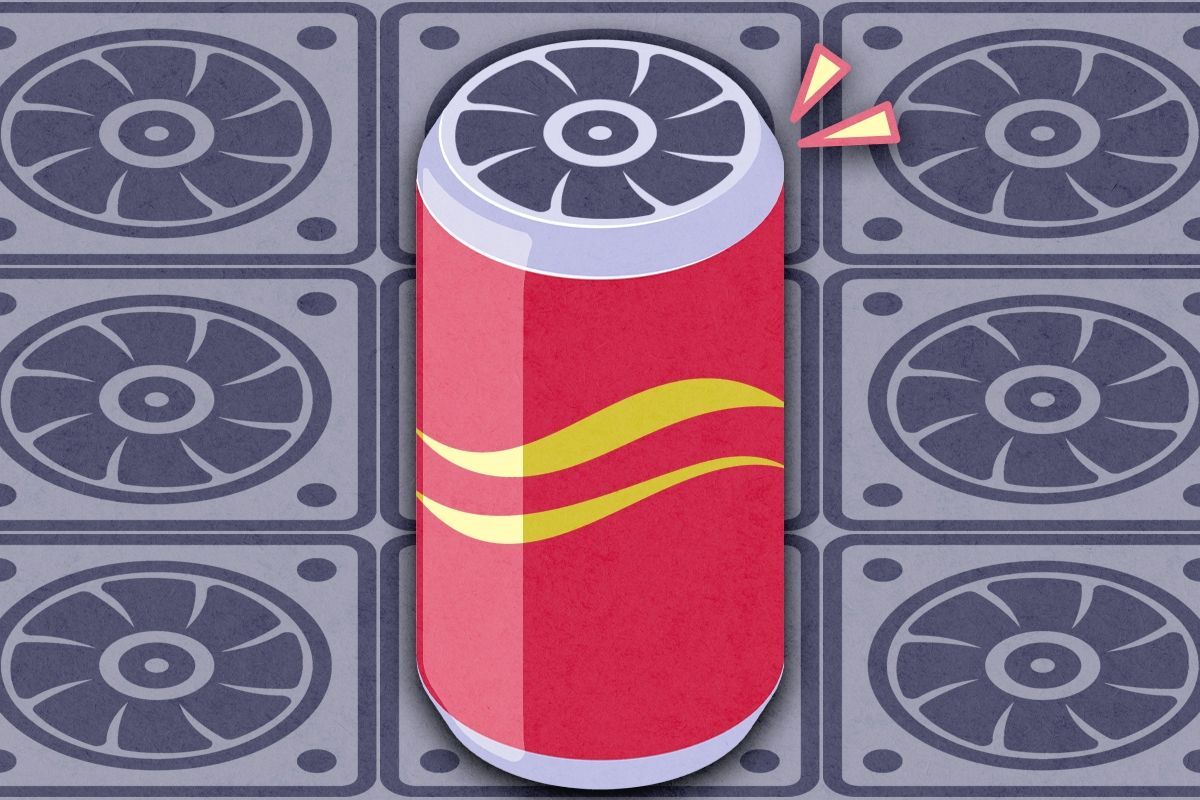
And when I found out that you can buy soda carbonated with CO2 obtained via direct air capture, I said, Take my sixteen American dollars and put it on ice.
Misan Lychee (which yes, only comes in lychee flavor “at the moment”) represents the distant hopes and dreams of DAC. Currently, there isn’t demand for carbon dioxide at direct air capture prices; it’s much, much cheaper just to buy the concentrated byproduct of, say, natural gas- and coal-fired ammonia plants to carbonate your soda than to go through the trouble of sucking the 0.04% of the air that is CO2 out of the atmosphere for a few bubbles. That’s why the carbon removal industry is propped up by offtake agreements and credits, at least until Brutalism comes back in a big way and dramatically increases the demand for concrete manufactured with stored CO2.
Still, that hasn’t stopped companies from trying. You can buy carbon-sequestered beer, DAC vodka, CO2-captured perfume, and recycled-emission yoga pants. But unlike other consumer products that are, in many cases, made from waste gas captured during industrial processes rather than from true atmospheric CO2, Misan claims on the can to be made from “some” carbon dioxide pulled “directly from the air using a technology called direct air capture.” The bottle sports the logo of Bay Area-based AirMyne, a DAC start-up, which, on further investigation, turns out to own Misan.
My order arrived rattling around in a cardboard box, with three of the cans having popped loose from the six-pack in transit. As someone with no impulse control (which, upon reflection, might be related to my love of gimmicks), I immediately opened a can. Over my laptop. We both got drenched by the resulting geyser. CO2’s presence: confirmed.
What happened next was, admittedly, also user error. I took a sip and immediately went, “Yuck, what?” That’s because after a summer of drinking my way through every Waterloo flavor, I was expecting Misan Lychee to be a seltzer, too. Despite its website describing it as a “climate-forward sparkling water,” it is not, and you can taste all 14.6 grams of its added sugar. It has a moderately cloying, perfumy flavor that my dad described as “strawberry, but disturbing?” when I asked him to do a blind taste test. I think it’s perhaps closer in taste to pear, and I remain optimistic that someone who has more free time than me could come up with a recipe to turn it into a “sustainable” spritz.
Actually, to that point — is it sustainable? It notably doesn’t claim to be, and it has its skeptics. Richard Waite of the World Resources Institute pointed out on Bluesky that carbon dioxide is only “sequestered” until it leaves our metabolic system the usual way, via exhalation or burps. Still, his questions about the energy source of AirMyne’s direct air capture — and thus the carbon-emitting or -removing properties of the soda — generated lots of good puns in the replies. “Run out of polar before we run out of Polar” comes to us courtesy of Costa Samaras.
The second Misan Lychee I cracked also soaked me, although I was prepared this time and at least opened it out of range of electronics. I also paid more attention to the can, which has an unusual but not unpleasant matte feel. The list of ingredients on the back seems surprisingly long for the supposed golden age of “gut sodas” that advertise such things as the inclusion of “plant fibers.” Rather than prebiotics, Misan contains “xanthan gum” and an ominous concoction identified as “cloudy agent.”
If Misan isn’t healthier for me or the planet, then what is it for, exactly? I returned to the six lines of all-caps text printed on the front of the can:
Some of the CO2 in this can was pulled directly from the air using a technology called direct air capture (DAC). If scaled, DAC could do more than just carbonate your water. It could remove millions of tons of CO2 from the atmosphere, fighting climate change.
Gimmicks are, ultimately, ways to sell you something. Water gets packaged to look more “manly;” you might buy a Coca-Cola instead of a Pepsi if it has your name on it. But Misan isn’t ultimately selling itself with the promise of bubbles brought to you by DAC. It’s the other way around: Misan is the marketing vehicle for AirMyne. They want you to drink the DAC Kool-Aid.
Will I buy Misan Lychee again? Not likely: I have De La Calle! Mango Chili Mexican sodas to drink, made from the fermented rind of pineapples — BYOCO2, if you will.
Then again, never say never. If I learn about the existence of Misan Chikoo or Misan Pistachio-Rosewater during a weak moment, I’ll probably be down another $16. But I’ll open it over the sink this time.