GLOBALVARS
0
This is an edition of Heatmap Daily, an evening review of the day’s news written by our executive editor. Sign up for it here.
You know it, and I know it: The United States struggles to build certain kinds of large-scale energy infrastructure. That presents a challenge for people who, say, want to decarbonize the economy, because decarbonizing will require replacing the stock of fossil fuel-consuming power plants and pipelines with new clean alternatives. Even carbon-intensive industries, such as data centers, have started to hit bottlenecks.
Yet there is at least one energy industry that’s pulling off year-over-year, double-digit growth rates in the United States right now — and it’s not data centers.
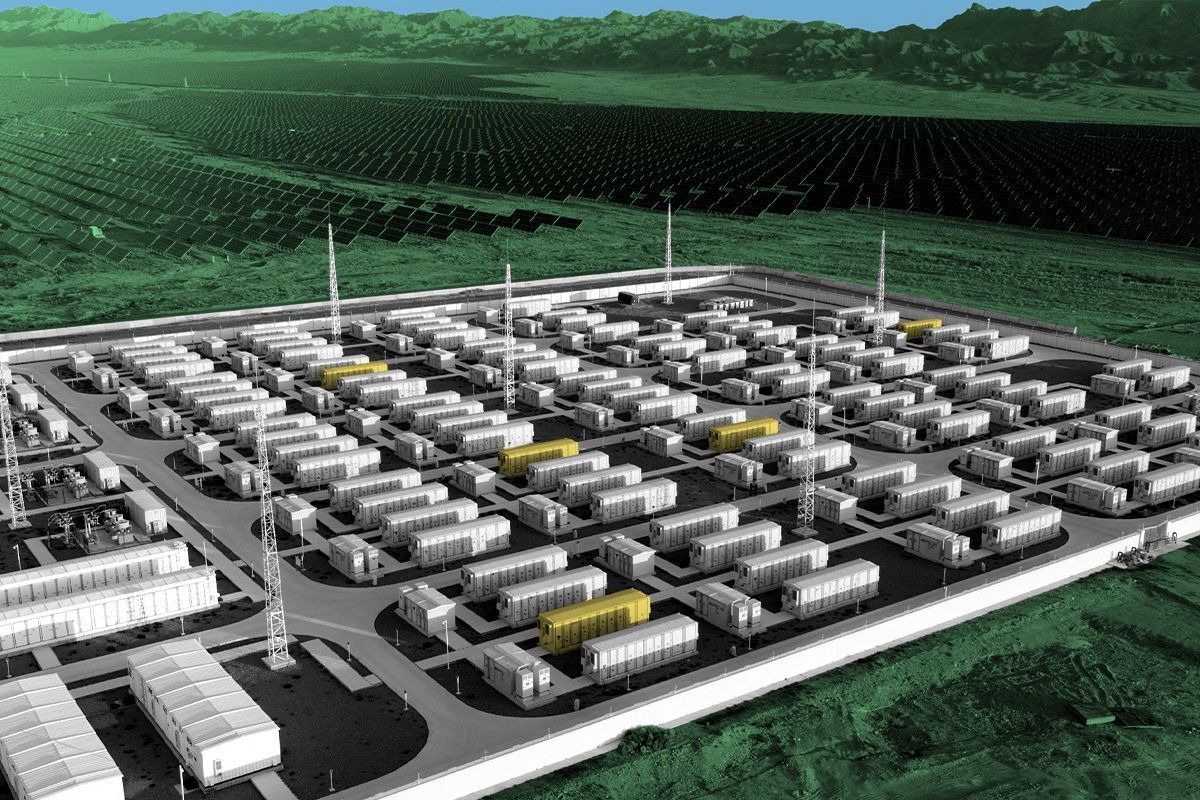
It’s batteries. The battery storage industry is booming across the country, according to new data from the Energy Information Administration. The amount of utility-scale battery storage capacity has grown by an average of 70% over the past three years, according to a recent EIA article. Developers and utilities have added 8.3 gigawatts of capacity just in the first six months of this year, and the agency says that we could add another 14 gigawatts by the beginning of 2027.
Our nerdier readers will understand this, but this battery boom is changing the nature of electricity itself. Until recently, the easiest way to store electricity was to keep a stash of unused fuel on the same site as a power plant, usually in the form of coal, natural gas, diesel, or uranium. There were other ways to store power — perhaps by building a pumped storage hydropower facility — but they weren’t particularly easy, cheap, or modular, and their constraints only made them suitable for some sites.
But lithium-ion batteries have allowed developers to quickly build out battery storage facilities across the country. I recently came across such a site while hiking in Harriman State Park, 40 miles north of New York City, where the local utility had built grid-scale batteries near a substation to help stabilize the grid. (It was like meeting a celebrity.) And while batteries are not necessarily clean, per se — they can technically save any “type” of electricity for later — solar farms are building larger batteries than any other type of power plant, the EIA says.
It helps that the Inflation Reduction Act’s tax incentives for grid-scale battery construction survived President Donald Trump’s partial repeal last year. The battery boom has stabilized other parts of the clean energy economy. Ford and General Motors have invested in grid-scale battery technology or retooled what were once EV production lines to make grid-scale batteries instead.
None of this, to be clear, is to say it's always easy to develop batteries. There are now 74 gigawatts of pending battery projects across the country, according to Heatmap Pro data. About 34 projects — totaling at least 6.1 gigawatts — have been canceled over the past few years, our data shows.
Yet our data — and the EIA’s — also shows that dozens of battery projects have overcome public opposition and successfully gotten built. I expect we'll see even more power on in the future.