GLOBALVARS
0
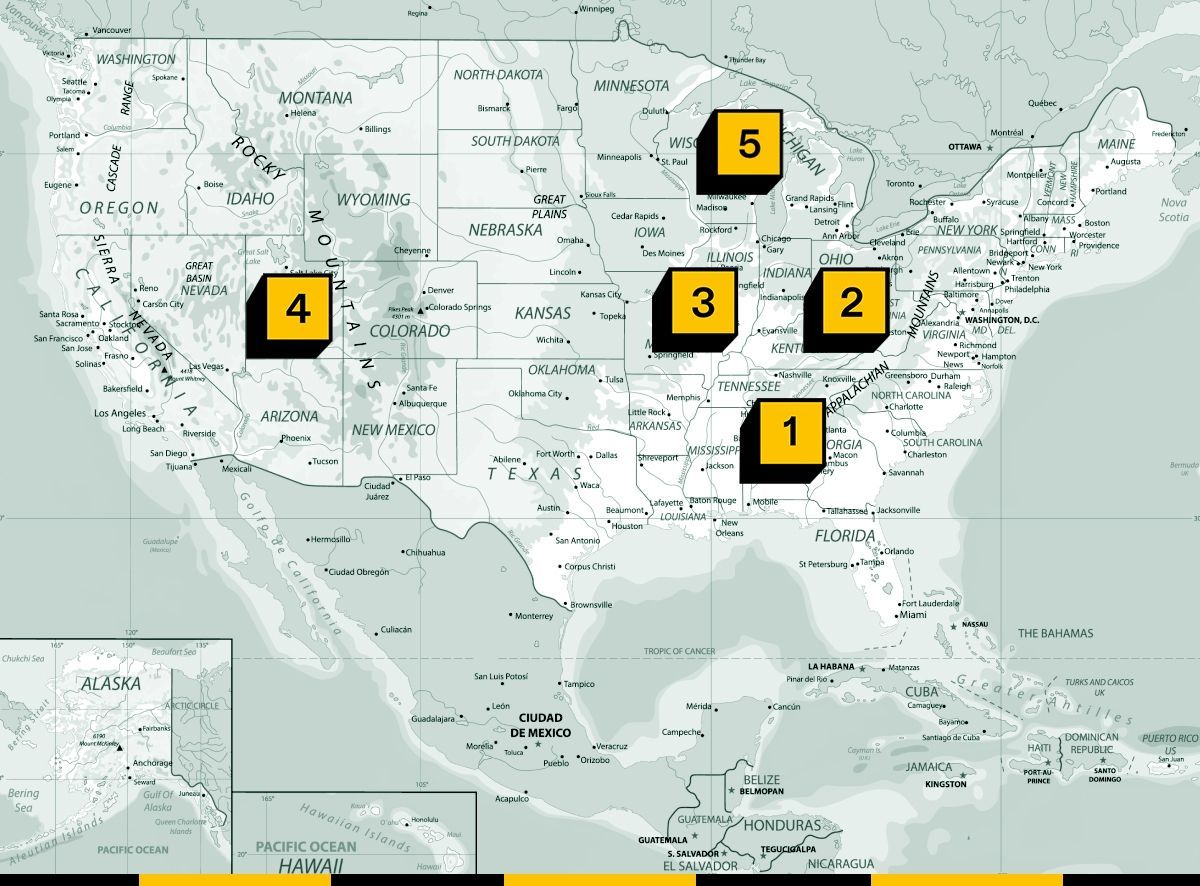
1. Jefferson County, Alabama – A law firm is alleging that police in the city of Birmingham retaliated against a woman for suing developers of a data center. It might just be a wake-up call for data center developers.
- Earlier this month, two individuals each with homes next to a proposed 300-megawatt data center in Birmingham filed a class action lawsuit against developer Nebius and the city of Birmingham. The lawsuit alleges “multiple independently fatal zoning violations” rooted in the city’s decision to let Nebius’s project move forward while also finalizing a moratorium, and claims the city has granted approvals in violation of the existing moratorium.
- On May 18, days after the lawsuit was filed, lawyers for one of the individuals – Madelyn Greene – wrote the Birmingham Police Department stating officers pulled her over while driving through the proposed project site without any lawful reason. According to the letter, which I obtained and was first reported by AL.com, the officers claimed she was harassing police and started filming her while in her car. When she took her own phone out, the officers “abruptly broke off contact, returned to their vehicles, and left the scene.”
- The letter concludes the traffic stop “timing and location are not coincidental.” It warned that any additional attempts by city police to “stop, detain, surveil, follow, photograph, intimidate, or otherwise harass” people involved in the lawsuit will result in requests for restraining orders.
- Situations like these vividly illustrate the problems around security forces and large infrastructure projects. Activists fighting the Thacker Pass lithium mine in Nevada were monitored for years. Conflicts between police and oil pipeline protestors are common and complaints about surveillance abound.
- I feel compelled to say that data center developers and large tech firms would be wise to coordinate with local police on matters such as these – not just for their own benefit but for that of the public. It’s one thing when protesters are arrested at a hearing, but wholly another when members of the public are concerned voicing dissent will lead to retaliation. All that’ll do is aggravate the opposition further.
- Nebius did not respond to a request for comment.
2. Mason County, Kentucky – This county is the site of yet another eminent domain debacle and I suggest you pay attention to it because it’s now represented by an outgoing congressman with nothing left to lose: Thomas Massie.
- On Friday, the Mason County Fiscal Court formally approved rezoning roughly 30 properties in and around the small town of Maysville for an undisclosed Fortune 500 company that may transform it into a data center. Footage of the Fiscal Court hearing posted online by local media displays a sea of red t-shirts and “VOTE NO” signs in the room – hardly representative of development welcomed.
- Apparently, this project will also involve takings and removing people living in the project area. A residents’ rights organization, We Are Mason County, are suing the county and its planning commission.
- Mason County is represented in Congress by Rep. Thomas Massie, who recently lost his Republican primary to a Trump-backed challenger. As I’ve previously chronicled, it’s usually the case that federal lawmakers take up the causes and frustrations of project opponents who lose to developers locally. (See: Rep. Chip Roy, who also just lost a GOP primary.)
- I am now going to be watching Massie, a critic of the data center sector, closely. That’s especially urgent as he vacations with another ousted GOP lawmaker-turned-AI cynic, Marjorie Taylor Greene. Maybe data center fights are their populist pathways back to relevance?
3. Montgomery County, Missouri – A Google data center project celebrated by the White House is facing harsh local backlash.
- Last week Google announced a $15 billion investment in a data center campus outside the small town of New Florence (there’s fewer than a thousand people). This is the second major AI project in the area after Amazon proposed its own $35 billion data center project on a large adjacent plot of land.
- Shortly after Google’s announcement, the Trump administration proudly touted the project and defended its environmental impacts. In a tweet, the White House’s rapid response press arm said the project would create “thousands of construction jobs & hundreds of permanent jobs.” The White House also quoted a local news report that claimed it won’t raise energy bills or impact the water supply because it’ll be made with “air cooling technology.”
- I’m watching this town closely because Missouri is a keystone for cultural conservative political leadership on all sorts of issues, including energy and tech policy. Southeast of New Florence in Festus, half the town’s leadership was voted out for approving data center construction. Missouri Sen. Josh Hawley, a Republican, has responded to frustrations like these to become one of the fiercest critics of the data center boom in Congress.
4. Iron County, Utah – Yet another county is banning data centers and solar energy.
- The county’s action this week to temporarily halt data centers and large solar projects was prompted by the backlash to a large data center the county previously approved. The so-called Pronghorn data center near Cedar City, Utah, is unaffected by the moratoria, per media reports.
- I saw chatter this week that people believed this moratoria was prompted by the fight over Kevin O’Leary’s now-infamous megaproject. Interestingly enough, Iron County is on the total opposite side of Utah on the southwestern edge, compared to Box Elder in the far north. So even though this is still Utahns getting upset, it’s worth recognizing this is not a proximal spillover.
5. Oconto County, Wisconsin – At least one developer is definitely thanking their lucky stars for state primacy over renewable permitting in the Badger State.
- Last week, the Wisconsin Public Service Commission approved a NextEra utility scale solar farm in this county, which has an incredibly high opposition risk rating in Heatmap Pro. Predictably the solar project’s host town of Morgan doesn’t wantthe solar farm and neither do its neighboring property owners.
- I’ve seen no chatter on the opposition’s primary Facebook page about litigation or appealing the decision. But this is the space I’ll be watching.