GLOBALVARS
0
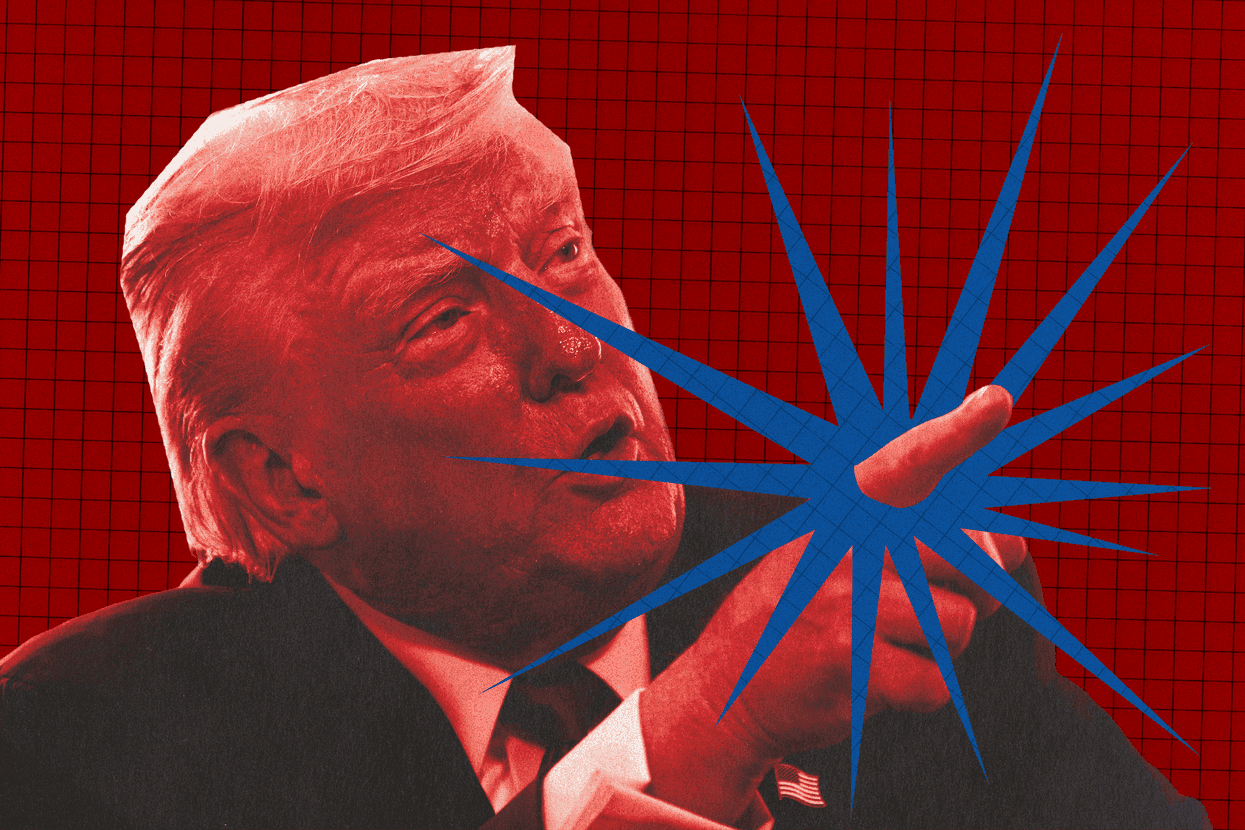
The Supreme Court on Monday morning effectively OK-ed the firing of commissioners at independent agencies with no showing of cause, overturning a 90-plus-year-old precedent and granting the president seemingly vast powers to reshape the federal regulatory state. That likely includes agencies crucial to energy planning and governance, including the Federal Energy Regulatory Commission and the Nuclear Regulatory Commission (though not, notably, the Federal Reserve Board of Governors).
Harvard Law School professor Ari Peskoe argued in an amicus brief for the case alongside a bipartisan gaggle of 11 former FERC commissioners that deciding in the president’s favor on this case “would bulldoze the structural supports that Congress built into ratemaking commissions to protect its price-setting power from abuse,” protections that “foster regulatory stability for industries investing in essential infrastructure.”
So what’s left of that stability following the Supreme Court’s decision? “It’s been 3+ hours and the President has yet to fire a FERC Commissioner. So no immediate effect,” Peskoe told me in an email.
The case stemmed from Trump’s firing of Rebecca Slaughter, a member of the Federal Trade Commission, because her presence on the Commission would, he said, be “inconsistent with my Administration’s priorities.” Slaughter sued to be reinstated under a precedent established in the 1935 case Humphrey’s Executor v. the United States, in which the Supreme Court ruled that the Constitution did not give the president “illimitable power of removal” over government officials. On Monday, the court disagreed, deciding instead that the President should have wide discretion over the composition of agencies like the FTC, which “unquestionably exercises executive power and must therefore be controlled by the Chief Executive,” Chief Justice John Roberts wrote in his opinion for the majority.
In her dissent on the decision, which split 6-3 along the usual partisan lines, Justice Sonia Sotomayor listed FERC and the NRC as among the “dozens of independent commissions are now likely to become purely executive agencies, shifting tremendous power over broad swaths of American life into the President’s hands.”
Agencies like FERC tend not to be as explicitly politicized or partisan as, say, the Environmental Protection Agency, which is led by a single administrator who serves at the pleasure of the president, or the National Labor Relations Board or Federal Election Commission, which oversee areas of law and policy with stark partisan and ideological stakes. This is partly because FERC justifies decisions on electricity and natural gas policy with reference to “technical expertise,” Peskoe’s fellow Harvard Law School professor and former Obama White House official Jody Freeman told me. (If you have any doubt about this, go read through some 1,000-page-plus FERC orders.
FERC also tends to be more collegial than most other independent agencies. Meetings often include encomia to the agency’s chair for being consensus-oriented, and to its staff, who serve commissioners from both parties. Its recent “show cause” orders directing regional electricity markets to prove they’re taking steps to speed up grid interconnection for large new sources of demand garnered a 5-0 majority, with both Democrats on the Commission voting along with their Republican colleagues.
And FERC chairs do occasionally defy the presidents who have appointed them, most notably in Donald Trump’s first term, when then-Chair Neil Chatterjee dismissed Secretary of Energy Rick Perry’s request to support coal and nuclear power plants able to store fuel on site, thus propping up struggling electricity generators.
Interestingly, Chatterjee, who signed the amicus brief to the court, was relatively relaxed about Monday’s decision’s implications for his former agency about. He observed to me in an email, “given that the commission just voted 5-0 on the WH’s biggest priority before FERC I don’t see it being an issue in the near term.”
In other words, FERC and this White House, at least, already see eye to eye.
But that’s no coincidence. Since the beginning of this term, the White House has set out to rein in and control independent agencies, FERC among them. Though Trump initially tapped sitting Republican Commissioner Mark Christie to lead the commission, he ultimately declined to re-nominate Christie for a second five-year term, leading to Christie’s exit from the commission last August.
In his place, the president installed Laura Swett, who has allowed little daylight between the commission’s and the White House’s positions. Both have attempted to keep the focus on balancing the buildout of data centers to serve artificial intelligence while keeping a lid on consumer electricity prices.
While it’s not foreordained that FERC chairs will agree with the presidents that appointed them, even if they’re both members of the same party, Monday’s decision makes disagreement more dangerous for current and future FERC chairs to consider.
“There’s a bigger risk that they’ll have to ultimately yield to political pressure because they’ll have this very overt threat that they’ll be fired,” Freeman told me. “We’re going to see decisions that look more political, that look less expertly driven, and they probably will wax and wane with every new administration, which undermines stability.”