GLOBALVARS
0
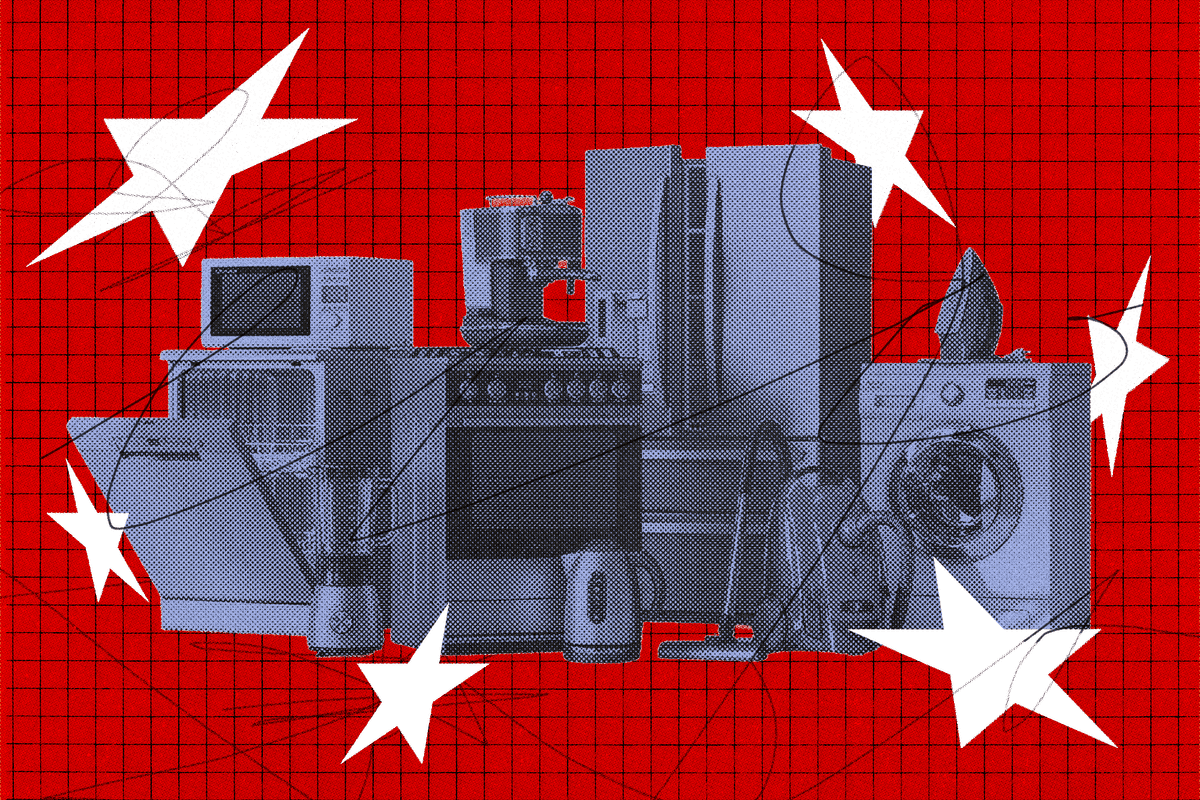
The Department of Energy proposed sweeping changes to its rules for updating efficiency standards for household appliances on Thursday. If finalized, they would hamstring future administrations from issuing tighter standards that would save consumers money as higher-performing air conditioners, stoves, washing machines, refrigerators, and the like hit the market.
While the agency portrayed the move as bringing an end to appliance standards writ large, that is not, in fact, what it is doing. The proposal would update the DOE’s so-called “Process Rule,” which governs how the agency develops standards, adding onerous requirements that will make it much more difficult to make any changes at all.
Under the Energy Policy and Conservation Act, the DOE is generally required to review existing standards every six years and assess whether recent technological advances warrant raising the bar for efficiency for any given product category. Updating the standards involves extensive technological and economic analysis, including looking at the cost to manufacturers and payback periods for consumers, as well as several rounds of public comment. After a new standard is issued, products that fail to meet that level of efficiency have to be taken off the market.
The new proposal delivers on the appliance industry’s request that President Trump restore the process he finalized during his first term, which Biden swiftly reversed. The changes include raising the minimum energy savings required to issue a new standard, adding several more steps and requirements to the rulemaking process for new standards, and using industry-developed test procedures to measure the efficiency of new products.
“This obstacle course of restrictions would hinder the department from carrying out its congressional mandate to protect consumers,” Andrew deLaski, executive director of the Appliance Standards Awareness Project, said in a statement. “We have products that keep getting more efficient and we need to embrace these technological advances, not reject them, especially as data centers strain our electric grid.”
Manufacturers welcomed the announcement. “AHAM applauds the Department of Energy for acting swiftly and delivering a proposed Process Rule that reflects years of constructive engagement with manufacturers, consumers, and other stakeholders,” Kelly Mariotti, the Association of Home Appliance Manufacturers’ president and CEO, said in a statement. The Air-Conditioning, Heating, and Refrigeration Institute also told me it “strongly supports DOE’s review” of the rules, although both groups said they were still working through the proposal.
The Energy Department issued a request for information last April seeking comments on potential changes to its procedures for revising energy conservation standards. At the time, the industry’s biggest trade groups urged the agency to “return to the 2020 version of the Process Rule.”
Trump has long been sympathetic to the industry’s ire over ever-tightening standards. He’s complained about dishwashers and heating systems that no longer work and showers that slow to a trickle. Now, Energy Secretary Chris Wright has joined in, grumbling about clothes dryers that run for multiple cycles.
The Process Rule changes threaten the potential to create significant consumer savings, however, according to the Appliance Standards Awareness Project. The group estimates that based on recent technological advances, the DOE’s next round of standard updates could save the average U.S. household $160 per year on their utility bills, and businesses a collective $15 billion in annual operating costs over 20 years. The group also projects that updated standards have the potential to reduce summer peak electricity demand 34 gigawatts by 2040, which would be like taking New York City off the grid. There are climate benefits, too, of course — an estimated reduction of 800 million metric tons of carbon emissions through 2050.
Even if finalized, Trump’s changes to the Process Rule will not be irreversible, and could continue to ping pong back and forth between administrations, “creating the kind of uncertainty and instability that makes it difficult for manufacturers to plan, invest, and innovate with confidence to the benefit of American consumers,” according to Mariotti of AHAM. The industry’s hope is for Congress to amend the underlying Energy Policy and Conservation act to “lock these reforms into statute,” she said. One such effort, the Don’t Mess With My Home Appliances Act introduced by Republican Representative Rick Allen of Georgia, passed the House in February.
The DOE’s proposal follows a memorandum of agreement the agency reached with the Environmental Protection Agency in March to take over as the lead agency running the EnergyStar labeling program, which identifies the most efficient appliances in a given category. The Process Rule changes will not affect EnergyStar, however.
The DOE is accepting public comments on its proposal for 30 days and will hold a public meeting on July 15.