GLOBALVARS
0
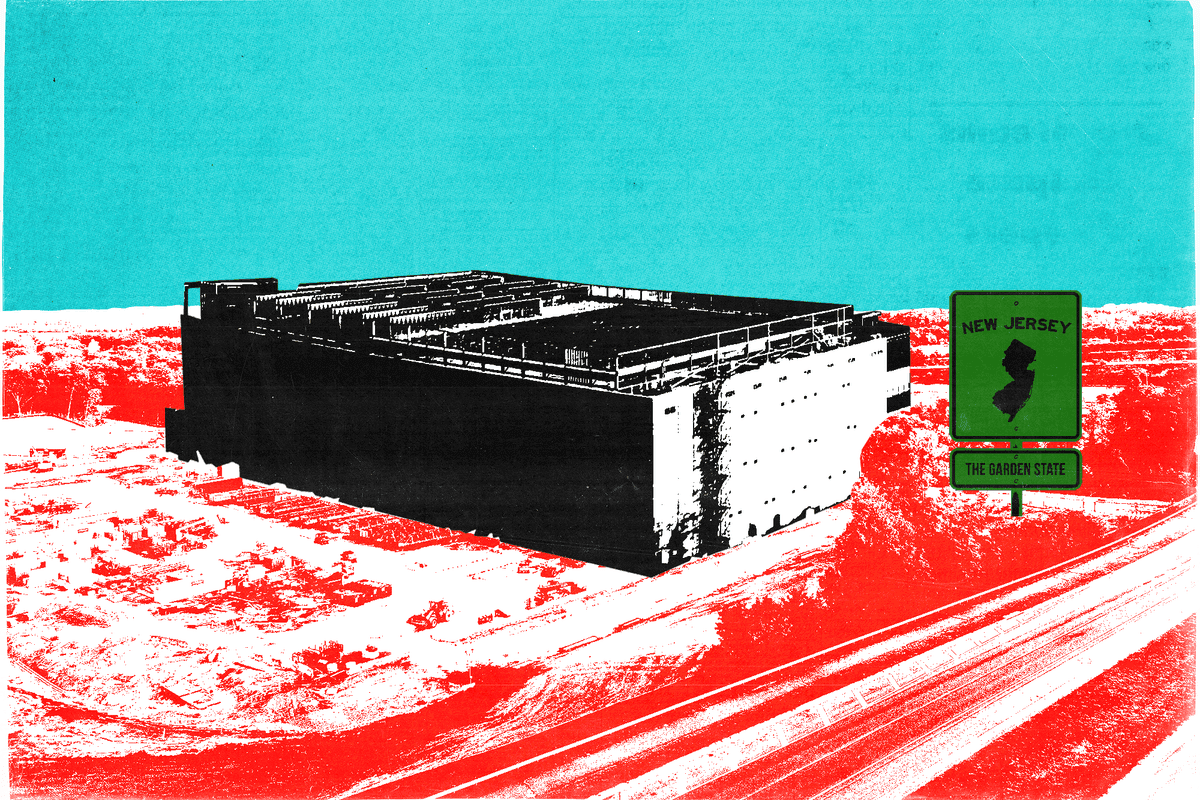
Data center politics are continuing to evolve rapidly, and almost always in the direction of increasing costs and restrictions for data center development.
In New Jersey, which has become ground zero for the political backlash to high electricity prices, a gaggle of bills relating to data centers and electricity prices just hit the desk of newly elected Governor Mikie Sherrill, including a large load tariff bill, a water and energy reporting bill, and a bill to scale back tax credits available to data center projects.
All of these pieces of legislation are consistent with national and local trends (federal regulators are encouraging regional electricity markets to come up with large load tariffs, for example), with tax credits getting an especially close look in statehouses across the country.
Thirty-eight states have “ dedicated tax incentives for data centers,” according to an April study by the National Conference on State Legislatures. These often include exemptions from sales taxes for data center equipment like servers and routers, or property tax abatements for newly constructed data centers.
In Virginia, which last year elected Sherrill’s former House colleague Abigail Spanberger as governor, the sales tax exemption has become a hot issue of political contestation, as powerful Virginia State Senator Louise Lucas has come out in opposition to it. A budget deal recently reached in the state’s General Assembly included a tax on data center electricity consumption, while the data center tax exemption question will be kicked to a working group for now, according to the Virginia Mercury.
The New Jersey bill currently on the governor’s desk targets a tax credit program called Next New Jersey, which has some $500 million to disburse for tax credits. Half of that has been allocated for a CoreWeave data center project on the site of an existing laboratory, State Senator Joseph Cryan told me. The remaining $250 million would be used to bolster a number of existing state programs.
“The reason for eliminating it was, frankly, because people are outraged over the amount of money CoreWeave got,” Cryan said.
CoreWeave did not respond to a request for comment. A Sherill spokesperson didn’t comment on the record about when or whether the bills would be signed.
New Jersey and Virginia’s examination of tax credits comes after another state with a Democratic governor, Illinois, paused tax incentives for data centers that had been worth almost $1 billion in the first five years of this decade.
The turn against tax incentives for data centers comes as the public is increasingly wary of the latter and their perceived effect on electricity prices. This turn in sentiment has forced governors — like, say, Indiana Governor Mike Braun — to pivot away from their typical cheerleading for new businesses.
“States are very focused on attracting industries of the future, attracting jobs for their residents, attracting business,” Justin Balik, a former economic development official in New Jersey and vice president for states at the climate group Evergreen Action, told me. But, he asked, “Does the economic development strategy for a state reflect its other policy priorities?”
New Jersey itself is an example of how quickly the politics of economic development can turn. When the bill establishing the Next New Jersey program passed in 2024, then-Governor Phil Murphy trumpeted the bill for “capitalizing on this moment to ensure we establish ourselves as a frontrunner in generative AI innovation.”
“AI has already started to revolutionize our everyday lives, and New Jersey is capitalizing on this moment to ensure we establish ourselves as a frontrunner in generative AI innovation,” Murphy said in a statement typical of the more boosterist era of, uhhh, two years ago. “AI will be a transformative industry that will change lives and grow our economy and New Jersey is ready to take the lead.”
That was in July 2024. Now it’s July 2026. Electricity bills in New Jersey have gone up from $108 per month in May 2024 to $140 this past May, according to the Heatmap-MIT Electricity Price Hub, while rates have gone up some 38%. And while it’s often difficult to attribute electricity rate hikes directly to data center development — or even determine whether data centers raise rates at all — New Jersey, which is part of the PJM Interconnection electricity market, is almost certainly seeing hikes due to data center construction. PJM has struggled to bring on new generation or adequate transmission, and its own market monitor said in March that “data center load growth is the primary reason for recent and expected capacity market conditions, including total forecast load growth, the tight supply and demand balance, and high prices.”
The conditions have forced lawmakers to reconsider their typical bias toward economic development, Balik told me. “I think we’re seeing a moment where there’s a reckoning with the energy affordability conversation,” he said, “Where folks are rightly saying, hey, we care about clean energy in some cases, and in a lot of cases we care about energy affordability. Does our economic development strategy match those priorities, or are these two things at odds with each other?”
Cryan, the state senator, put it more bluntly: “The reason for doing it was to show the public that we hear their outrage and can do something about it,” he said. “The governor and the legislature have heard the voices of the people of New Jersey.”