GLOBALVARS
0
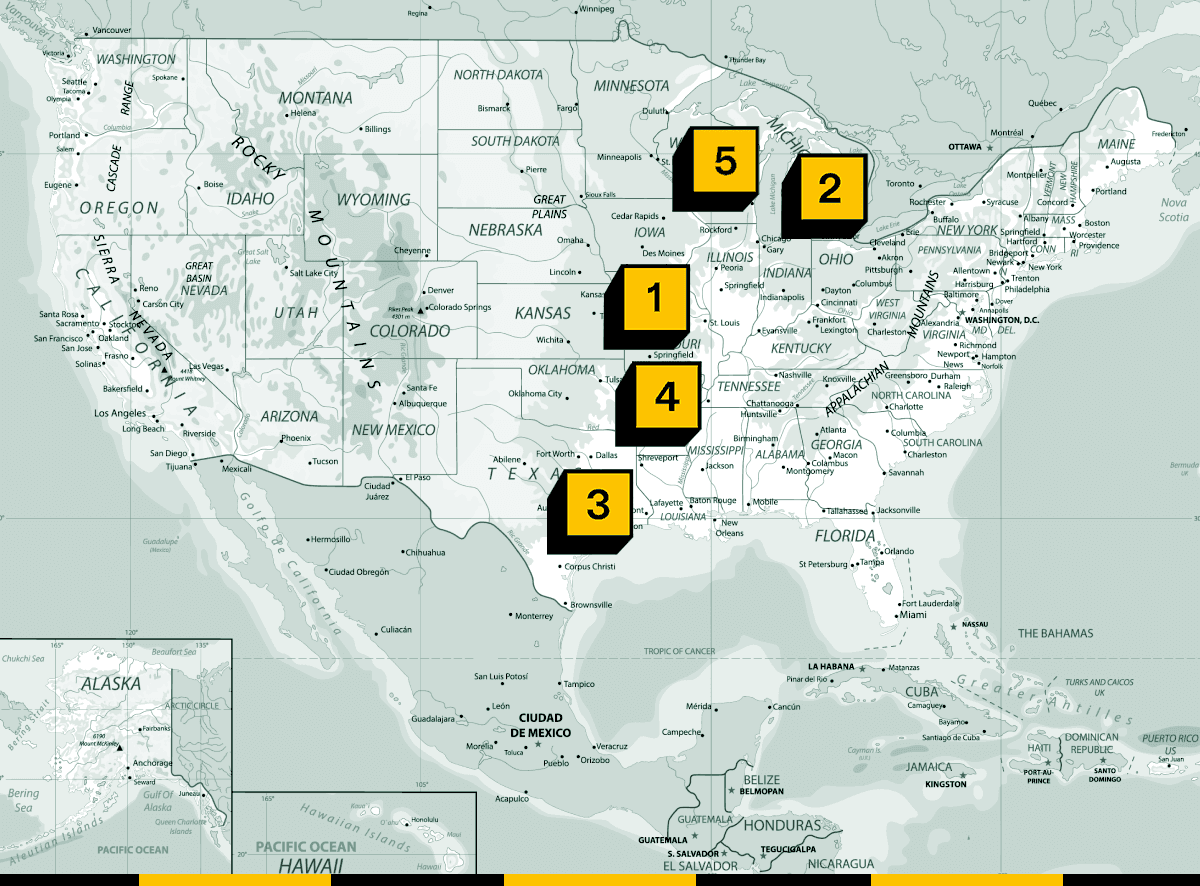
1. Kansas City, Missouri – Data centers are so toxic that politicians are using them as boogeymen in totally unrelated policy discussions.
- All week I’ve been thinking about Missouri, where a widely-screened TV campaign ad is airing screeds against AI hyperscale projects to sell a constitutional amendment initiative up for a votein this year’s November elections. “That hum is the sound of Big Tech making money on online gambling, for porn,” says a nameless man in the ad. “Amendment 5 makes Big Tech pay so you don’t have to. Yes on Amendment 5.”
- What does Amendment 5 do? Based on the ad, you would think it was focused on tax exemptions for data centers. But no – a yes vote supports cutting the state income tax, a proposal backed by Republican Gov. Mike Kehoe.
- The ad is misinformation and a mind-blowing use of a confusing conversation around tech infrastructure most were unfamiliar with before this year. Per reporting by the Missouri Independent, the state’s existing tax exemptions for data centers would stay in place if the amendment was adopted.
- My gut tells me this is only the beginning of the data center industry’s transformation into an election year villain.
2. Ingham County, Michigan – We have our first major anti-data center candidate in a Democratic congressional primary.
- Meet Will Lawrence, whose first TV ad is entirely centered around fighting data centers in his district. The ad is about project development in the small city of Mason, where residents are up in arms about hyperscalers and surrounding townships are rejecting related land sales. The biggest concern, as has been the case, is converting farmland for new uses. You can watch the must-watch ad here.
- Lawrence is running for Michigan’s 7th congressional district. He’s a cofounder of the Sunrise Movement, endorsed by Sen. Bernie Sanders and running neck and neck with more moderate Democratic primary candidates. Oh, and he supports a national data center moratorium.
- Interestingly, Lawrence also appears sympathetic to anti-renewables sentiments in his district, which is largely ag-based and skews left in part because of college town voters. In comments published the same day the campaign ad went public, Lawrence maintained he generally supports renewable energy projects but sees a similarity between renewable energy and data centers. “The pattern that I see that is similar with the data center issue is people don’t feel that they have control over the future of their own community. That is fostering backlash. Then they have people who mostly live in cities lecturing to them and saying. ‘Don’t you understand? This is the price of progress.’”
3. Nueces County, Texas - The Longhorn State is on a bull run towards data center hostility.
- The Texas Democratic Party adopted a new party platform at their convention last week in Corpus Christi calling for a statewide data center moratorium. The platform says the moratorium should be “temporary” but has no time limit, opting instead for the pause to remain in place until standards are set by the state legislature. This is a similar model to the national moratorium bill authored by Sanders and Rep. Alexandria Ocasio-Cortez.
- It only makes sense Texas Democrats did this in Corpus Christi, where water concerns have rendered data center development politically toxic. I wrote about Corpus Christi in my recent breakdown on data centers and water usage.
- We haven’t seen whether Senate candidate James Talarico is going to support the moratorium proposal and he didn’t discuss the measure in his speech at the convention. Talarico’s campaign site focuses on holding data centers accountable in other ways, like requiring companies to pay for their own power. The Talarico campaign did not respond to a request for comment.
4. Pulaski County, Arkansas - We have yet another municipal employee losing their job over helping a data center.
- According to the Arkansas Democrat & Gazette, Hamilton Kemp, an attorney for this Arkansas county, resigned their post after telling the county quorum court — its legislative body — there was litigation risk if they enacted a data center moratorium. The county instituted a one-year moratorium in May but officials faced backlash for exempting a single large AVAIO hyperscaler project, partially because they listened to Kemp’s warnings about litigation.
- Pulaski County is home to the city of Little Rock and is this deep red state’s most populous county. There’s a separate, ongoing fight over Google’s attempt to build a data center in Little Rock, which will require dredging federal wetlands. That proposal is currently under U.S. Army Corps review.
5. Marathon County, Wisconsin - Yet again rural residents are poised to lose against state permitting primacy laws benefiting renewable energy.
- Marathon County is in the top percentile of clean power opposition risk in the Heatmap Pro database. But it is exceedingly challenging for people in the county to block new large-scale renewable energy projects because under state law, the Wisconsin Public Service Commission decides whether facilities will be built – not counties. In other words, Wisconsin is like a legal hybrid of Texas and Michigan.
- Opposition cropped up this week to a new Alliant wind farm known as Hub City, but the county is reportedly already warning campaigners that any choice is out of their hands. I’m assuming it’ll be a similar case to the PSC approving the Fox Solar project in May, where rural complaints are disfavored.
- I expect energy-related local control to become a hot potato in the Wisconsin state legislature thanks to cases like these.