GLOBALVARS
0

Current conditions: Des Moines, Iowa, is bracing for thunderstorms through Thursday night • Temperatures in Touggourt, in northern Algeria, are soaring north of 103 degrees Fahrenheit • European forecasters expect the brewing El Niño conditions forming now could become the strongest ever recorded.
THE TOP FIVE
1. Federal court tosses out Trump’s strict limits on solar and wind tax credits
Last August, the Internal Revenue Service issued strict new rules for solar and wind developers hoping to tap the federal tax credits known as 45Y, for the production of carbon-free electricity, and 48E, for investment in green generating assets. For years, the U.S. government had required companies to invest 5% of the total cost of the project by a certain deadline to qualify for the rebates. But last summer, the Trump administration eliminated the 5% threshold and instead mandated that projects over 1.5 megawatts in capacity show evidence that physical construction has begun to be eligible for the writeoffs. In all, the new rules “could have been so much worse,” Heatmap’s Emily Pontecorvo wrote at the time. But requiring construction to start narrowed the scope of how many turbines and panels could be built before the two tax credits are phased out this July 4. With less than a month to go before the credits go away, a federal court has intervened to restore the original 5% rules. On Saturday, the U.S. District Court for the District of Columbia overturned the Internal Revenue Service’s strict new rules. The decision found that the Trump administration had repeatedly failed to back up its justifications for eliminating the 5% provision, consider reasonable alternatives, or demonstrate that the policy change wasn’t motivated by discriminatory views of the wind and solar sectors. “Evidence in the record leaves substantial doubt that the proffered explanation sincerely accounts for the agency’s decision,” the ruling reads. “A thorough review of the record undercuts the conclusion that the defendants made a reasoned decision to eliminate the 5% safe harbor for wind and large-scale solar projects based on concerns about stockpiling.”
While significant, the decision — which was effective immediately — doesn’t change the Trump administration’s restrictions on using tax credits for projects made with Chinese imports. And Crux Climate, the tax credit marketplace, cautioned that few developers may be able to spring into action to seize on the ruling in the next 26 days before the rebates officially end.
2. New York lawmakers pass one-year data center moratorium
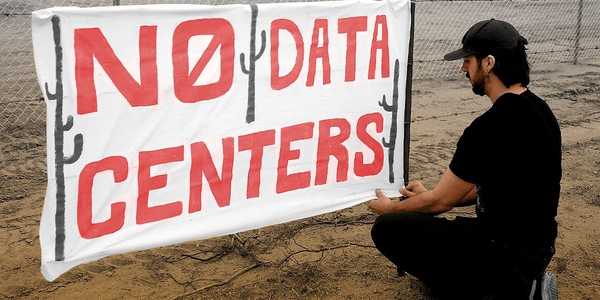
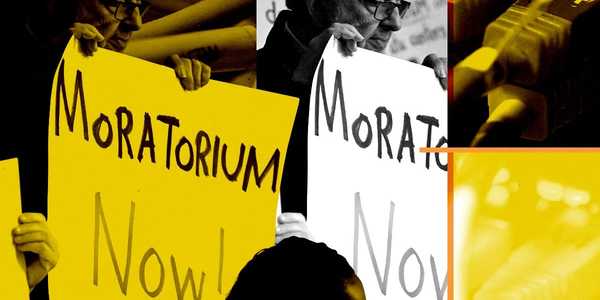
New York State lawmakers passed a one-year moratorium on new data center construction that would pause permits on the facilities and require the state to create new rules on energy use, community investment, and labor standards for server farms. But News10, Albany’s ABC affiliate, warned that Governor Kathy Hochul, a Democrat, had not yet indicated whether she would sign the bill.
The move came as NBC News reported that Illinois Governor JB Pritzker, another Democrat, outlined plans to temporarily halt tax breaks to data centers ahead of a call to state lawmakers to come up with a new framework for how the facilities should be developed. The data center backlash, as Heatmap’s Robinson Meyer wrote, is becoming impossible to miss, with roughly 70% of Americans now opposing server farms built near their homes. More than 60% of Americans now support placing a moratorium on data center construction.
3. Arizona and Nevada could trade for desalinated Pacific Ocean water
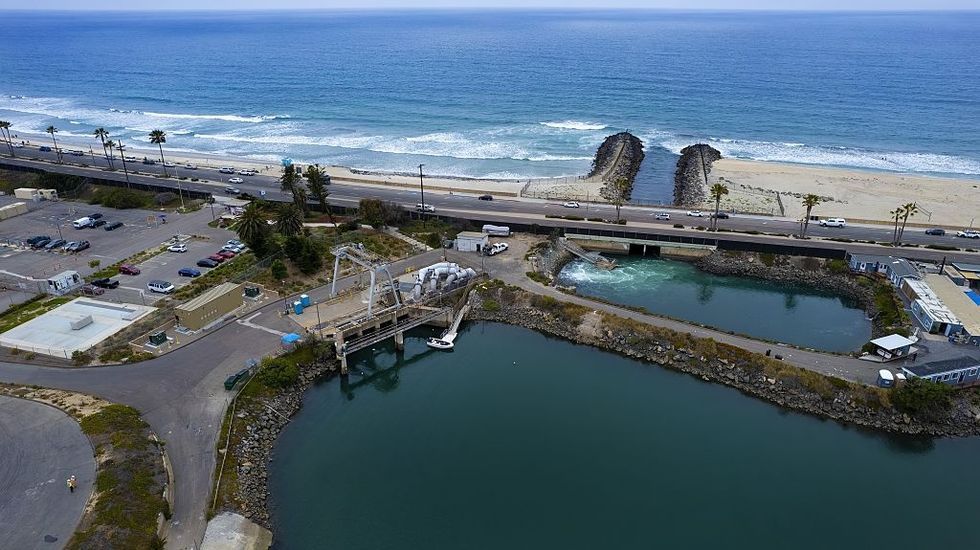
Desalination, as my colleague Katie Brigham put it in March, is “having a moment.” It’s not hard to see why. The San Diego County Water Authority is generating so much water from a desalination plant the utility opened a decade ago that it has not only ended its own shortfalls, it has produced a surplus. Now, as a result, the California city is poised to sell some of its rights to Colorado River water to Arizona and Nevada under the first large-scale deal to trade water between the states entitled a share of what flows through the nation’s fifth-longest river. The agreement highlights how desalination could “help parched inland states fill a widening gap between water supply and demand,” The New York Times reported.
It’s a welcome development. Just last week, experts told the Utah News Dispatch that the Colorado River’s largest reservoirs are approaching a “system crash.”
Sign up to receive Heatmap AM in your inbox every morning:
* indicates required
Email Address *Our Privacy Policy & Terms Apply.
4. Rhode Island lawmakers rebuke governor’s climate cuts
New York’s Legislature might have backed its Democratic governor’s bid to weaken the state’s climate law, but Rhode Island is taking a different approach. Lawmakers in New England’s smallest state rejected Democratic Governor Dan McKee’s proposal to slash Rhode Island’s climate programs in the name of affordability. On Friday, E&E News reported that the state budget lawmakers advanced last week nixed the changes to clean energy policies.
5. Japan sets a target for building new reactors
In January, the United Kingdom, Norway, and several major European Union nations including Germany and Denmark agreed to a pact to build out a sweeping array of wind turbines in the North Sea, turning the waterway into “the world’s largest clean energy reservoir.” If the pledge holds, roughly 11% of the 222,000-square-mile sea could be covered in turbines. That’s the finding of a new study from Heriot-Watt University in Scotland. Under the current target, the North Sea would host a total of about 19,400 turbines by the middle of this century. By 2030, the U.K. alone is on track to have roughly 4,200 turbines, followed by Germany with about 2,700, and the Netherlands with 1,700, according to Renewables Now. The Dutch would claim the highest offshore wind density, with wind farms covering around 19% of its North Sea waters by 2050, followed by Belgium at 18%.
THE KICKER

There’s been much ado about Chinese electric vehicles being built in Mexico. But on Sunday, Mexican President Claudia Sheinbaum unveiled the Olinia — a 100% domestically designed electric van that looks a bit like Toyota’s Kayoibako EV minivan. In a post on X, she proudly called it “the electric car created by young Mexican women and men.” The name harkens to the Nahuatl word for “movement.”