GLOBALVARS
0

Current conditions: New York City is bracing for triple-digit heat in some parts of the five boroughs this week • The warm-up along the East Coast could worsen the drought parching the country’s southeastern shores • After Sunday reached 95 degrees Fahrenheit in the war-ravaged Gaza, temperatures in the Palestinian enclave are dropping back into the 80s and 70s all week.
THE TOP FIVE
1. The Iran War energy crisis enters a new phase: ‘We are living on borrowed time’
Assuming world peace is something you find aspirational, here’s the good news: By all accounts, President Donald Trump’s two-day summit in Beijing with Chinese President Xi Jinping went well. Here’s the bad news: The energy crisis triggered by the Iran War is entering a grim new phase. Nearly 80 countries have now instituted emergency measures as the world braces for slow but long-predicted reverberations of the most severe oil shock in modern history. With demand for air conditioning and summer vacations poised to begin in the northern hemisphere’s summer, already-strained global supplies of crude oil, gasoline, diesel, and jet fuel will grow scarcer as the United States and Iran mutually blockade the Strait of Hormuz and halt virtually all tanker shipments from each other’s allies. “We are taking that outcome very seriously,” Paul Diggle, the chief economist at fund manager Aberdeen, told the Financial Times, noting that his team was now considering scenarios where Brent crude shoots up to $180 a barrel from $109 a barrel today. “We are living on borrowed time.”
The weekend brought a grave new energy concern over the conflict’s kinetic warfare. On Sunday, the United Arab Emirates condemned a drone strike it referred to as a “treacherous terrorist attack” that caused a fire near Abu Dhabi’s Barakah nuclear station. The UAE’s top English-language newspaper, The National, noted that the government’s official statement did not blame Iran explicitly. The attack came just a day after the International Atomic Energy Agency raised the alarm over drone strikes near nuclear plants after a swarm of more than 160 drones hovered near key stations in Ukraine last week.
2. Dominion and NextEra are in talks for a utility megamerger
We are apparently now entering the megamerger phase of the new electricity supercycle. On Friday, the Financial Times broke news that NextEra Energy is in talks with rival Dominion Energy for a tie-up that would create a more than $400 billion utility behemoth in one of the biggest deals of all time. The merger talks, which The Wall Street Journal confirmed, could be announced as early as this week. The combined company would reach from Dominion’s homebase of Virginia, where the northern half of the state is serving as what the FT called “the heartland of U.S. digital infrastructure serving the AI boom,” down to NextEra’s home-state of Florida, where the subsidiary Florida Power & Light serves roughly 6 million customers. While Dominion dominates data centers in Northern Virginia, NextEra last year partnered with Google to build more power plants and even reopen the Duane Arnold nuclear station in Iowa.
3. Lithium Americas takes a $120 million hit on Thacker Pass mine
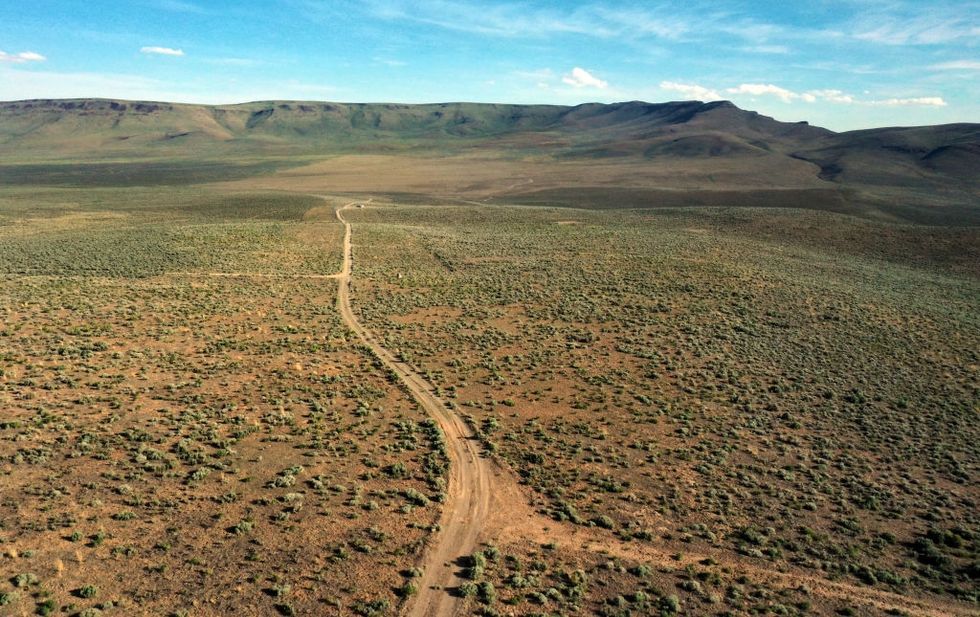
Trump digs lithium. In fact, he’s such a fan of Lithium Americas’ plan to build North America’s largest lithium mine on federal land in Nevada that he renegotiated a Biden-era deal to finance construction of the Thacker Pass project to secure a 5% equity stake in the publicly-traded developer. Yet the White House’s macroeconomic policies are pinching the nation’s lithium champion. During its first-quarter earnings call with investors last week, Lithium Americas cautioned that the Trump administration’s steel tariffs, coupled with inflation from disrupted shipments through the Strait of Hormuz, could add between $80 million and $120 million to construction costs at Thacker Pass. Most of the impact, Mining.com noted, is expected this year. Once mining begins, the project could spur new discussion of a strategic lithium reserve, the case for which Heatmap’s Matthew Zeitlin articulated here.
Sign up to receive Heatmap AM in your inbox every morning:
* indicates required
Email Address *Our Privacy Policy & Terms Apply.
4. Trump to name new Bonneville Power Administration chief
The Department of Energy has selected Travis Kavulla, an energy industry veteran, as the 17th chief executive and administrator of the Bonneville Power Administration, NewsData reported. Founded under then-President Franklin D. Roosevelt in 1937, the federal agency is a holdover from the New Deal era before utilities had built out electrical networks in rural parts of the U.S. Unlike the Tennessee Valley Authority — which functions as a standalone utility that owns and sells power, though it’s wholly owned by the federal government and its board of directors is appointed by the White House — the BPA, as it’s known, is a power marketing agency that sells electricity from hydroelectric dams owned by the Army Corps of Engineers and the Department of the Interior’s Bureau of Reclamation. Kavulla currently serves as the head of policy for Base Power, the startup building a network of distributed batteries to back up the grid. He previously worked as the regulatory chief at the utility NRG Energy, and as a state utility commissioner in his home state of Montana. NewsData, a trade publication focused on Western energy markets, cautioned that the Energy Department may hold off on announcing the appointment for “the next few days or weeks” as sources warned that “it might be delayed while the department conducts a background check, or to allow the new undersecretary of energy, Kyle Haustveit, to be confirmed.”
Reached Sunday night via LinkedIn message, Kavulla politely declined to comment on whether he was appointed to lead the BPA.
5. Gas-rich Azerbaijan looks to build its first offshore wind farm
Offshore wind may be spinning in reverse in the U.S. as the Trump administration attempts to, as Heatmap’s Jael Holzman put it, “murder” an industry through death by a thousand cuts. But elsewhere in the world, offshore wind is booming. Just look at Azerbaijan. Despite its vast reserves of natural gas, the nation on the Caspian Sea is looking into building its first offshore turbines. On Friday, offshoreWIND.biz reported that the Azerbaijan Green Energy Company, owned by the Baku-based industrial giant Nobel Energy, had commissioned a Spanish company to design a floating LiDAR-equipped buoy for the country’s first turbines in the Caspian. The debut project, backed by the Azeri government, would start with 200 megawatts of offshore wind and eventually triple in size.
THE KICKER
Before the wealthy software entrepreneur Greg Gianforte ran to be governor of Montana, he donated millions of dollars to a Christian-themed museum that claims humans walked alongside dinosaurs and the Earth is just 6,000 years old. After winning the state’s top job, the Republican set about revoking virtually all policies related to climate change, including banning the projected effects of warming from state agencies’ risk forecasts. With drought withering the state, however, Gianforte has turned to perhaps the most ancient policy approach humanities leaders have called upon to fix devastating weather patterns: Pray. On Sunday, Gianforte declared an official day of prayer for rain. “Prayer is the most powerful tool we have,” he wrote in a post on X. “I ask all who are faithful to come to God with thanks and pray.”