GLOBALVARS
0
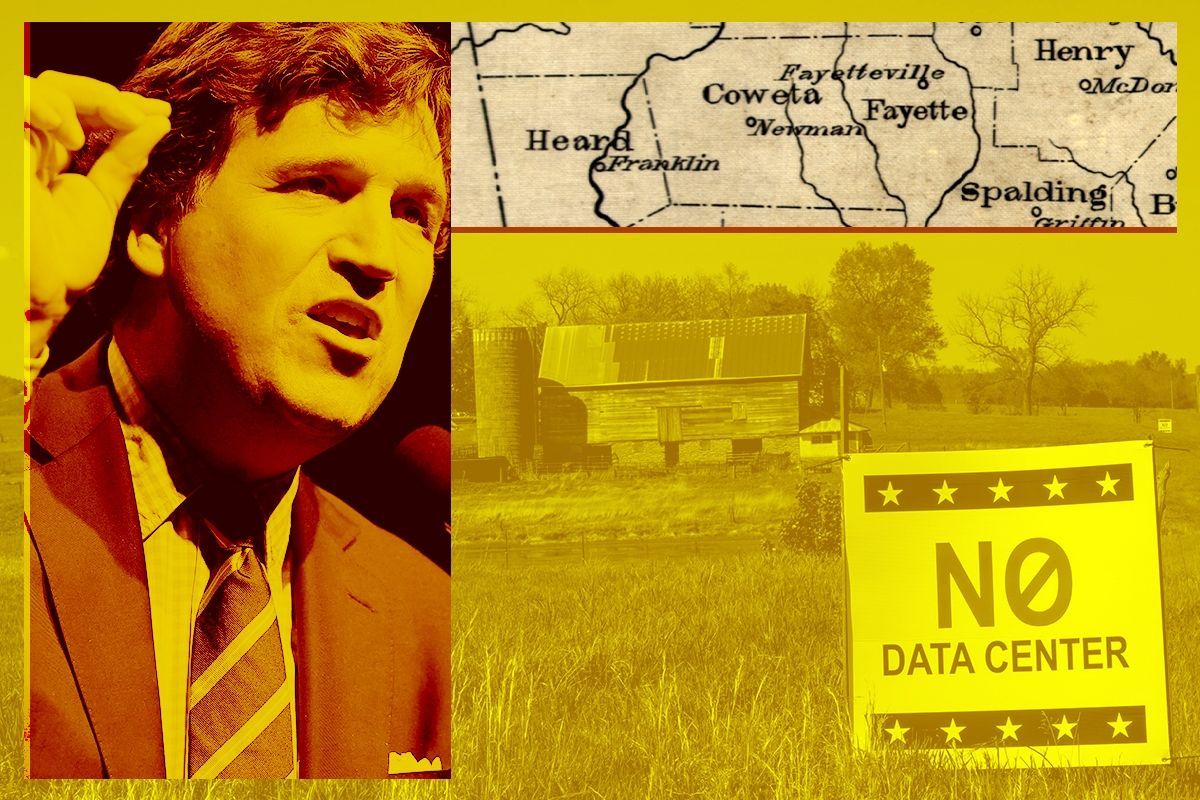
The data center backlash is causing a crisis of faith amongst American conservatives over land use, energy abundance, and corporate regulation. The Republican Party — not to mention the politics of AI infrastructure — may never be the same.
In the last week, I’ve seen a surge of Republican politicians pushing to temporarily ban data centers in conservative states. In South Carolina, Representative Nancy Mace, a leading GOP gubernatorial primary candidate, called for a statewide moratorium on new data centers. In Texas, the sitting agriculture commissioner Sid Miller proposed the same for the Lone Star State. Ditto in North Dakota where the idea got backing from a GOP primary candidate for a Public Service Commission seat.
I also witnessed a wave of anti-data center sentiment bursting forth online over the last few weeks. Major figures in the online right like Matt Walsh and Tucker Carlson have been posting videos lambasting the pace and practices of the data center boom, joined by a flood of commentary on YouTube and conservative video platforms like Rumble. On X and Facebook, the right has split into factions with figures like Marjorie Taylor Greene siding with activists while other pundits and personalities play data center defense, mocking critics as misinformed and antithetical to free market conservatism.
“Right now, frankly, anti-AI politics, anti-data center politics, that’s working for some people in some campaigns,” right-wing pundit Scott Jennings said Wednesday on his Salem News Channel show in a discussion with Republican Senator Dave McCormick of Pennsylvania, one of the biggest AI boosters in Congress.
Conservative and GOP-aligned political and policy advisers told me all of this ruckus is a lagging indicator for genuine anger amongst their voters. “It’s a collision between the Republicans’ traditional pro-business identity and a new populist identity,” Chris Wilson, founder of GOP polling firm WPA Intelligence, told me in an interview Wednesday. “The old Republican consensus would’ve been pretty straightforward. The challenge is you have this emerging Republican electorate asking who owns this? Who is consuming it? Who is it going to benefit?”
It’s all in the data, pun intended. On Friday, GOP pollster Frank Luntz posted about this anxiety over data center development spreading to “regions led by both Democrats and Republicans.” Luntz pointed to a new Gallup poll confirming a trendline we reported in February using Heatmap Pro data: Opposition to data centers in GOP areas rose more than 300% over the previous six months.
Other recent data points make it obvious Trump Country is turning against data centers, such as in New Jersey, where a Stockton University poll found nearly half of Republican voters would support a data center ban “in the town where they live.” Meanwhile, new analysis out of Houston University in Texas found roughly 45% of Republicans in that city’s metro area would oppose a data center within a mile of their home.
Let’s be honest, here — those are approaching offshore wind-levels of abysmal support.
“The fact the polling has changed so negatively so quickly has shown there is very real concern, very real worry about what these data centers are doing and how they affect a region,” said Will Reinhart, a senior fellow at the American Enterprise Institute. Reinhart admitted that with the way winds are blowing, there may be a “very real” possibility that a major 2028 Republican candidate for president supports a national data center moratorium. The fact Florida Governor and 2024 candidate Ron DeSantis has been so critical of data center development “is a bellwether.”
“I would imagine there’s going to be more support for [moratoria], especially as energy prices are going to continue to rise. To me it feels like this is coming. What this portends for a larger electorate is you’ll have a push and pull. You’ll have some regions that want to see development and know they can benefit from a data center. Some regions are going to say no, we don’t want this.”
This level of profound opposition threatens to disrupt what was once Republican political consensus behind land use policy and energy development. Plainly, even once catnip for the GOP like a fossil-friendly permitting approach could face political hurdles in the future if Republican voters don’t want pipelines to power the largest driver of new energy demand.
Perhaps it’s understandable then why so many figures on the Right are coming to defend data centers. The leading counterargument? Data center opponents are agitators armed with misinformation and backed by foreign governments trying to undermine American dominance in artificial intelligence. Pro-AI advocates are seizing on the idea, as is Shark Tank magnate Kevin O’Leary (with lackluster results). Conservative energy pundits in D.C. are asking GOP lawmakers to investigate whether foreign funding is playing a role in the backlash. It’s even endorsed by Interior Secretary Doug Burgum, who said last week at a conference in Alaska that some of the opposition was funded by “foreign-sourced dark money.”
“I worry about us on the Build Baby Build where we’re still running into this thing where there are some states that are literally passing bans on AI data centers,” Burgum said, “and it’s not organic and local.”
When it comes to swaying skeptical members of the public, blaming outsiders for local conflicts over energy and tech infrastructure development is unlikely to work. The past is very much prologue here; some Republicans have long argued — with scant evidence — that foreign adversaries and wealthy Europeans are quietly puppeteering the American environmental movement. But we’ve never seen the national discourse ever pick up the topic, really. Meanwhile, we all know this strategy never really worked when defending solar farms from opposition in rural areas.
Republican energy politics strategist Chris Johnson told me that ironically, the solar and wind fights of recent years laid the groundwork for openness to conspiracies about technology as well as “muscle memory built for NIMBYism, to fight against anything.”
“There has to be this much more empathetic effort to meet people where they’re at,” Johnson said, adding he believes the conflicts over solar and farmland became an example of a “mistake” that wound up undermining other GOP priorities.
“The overemphasis on solar’s land use and the imagery of farmland being taken by solar panels like a scene out of Blade Runner, that is not helpful when you’re now seeing an environment with such tremendous growth in energy demand,” he told me. “I think it was a mistake for folks on the right to go so hard against some technologies we clearly need right now.”
All this being said, all hope is not lost for the right-coded AI and data center optimists out there.
David Blackmon, a longtime lobbyist for oil and gas based in Texas who writes about energy for The Daily Caller, told me how this backlash reminded him of the fracking boom of the 2010s. Perhaps famously to those in oil and gas, scares about water and air pollution from fracking were plentiful throughout that era, typified by the film Gasland — specifically a viral segment from the film involving flammable water from a faucet. The fracking boom ran through rural and often conservative-leaning towns and counties, and Blackmon remembers companies were “pretty close to losing our license to operate” in major parts of the shale patch “because of the ham-handed way we handled communications and public outreach.”
“This pretense that all the opposition to their projects is somehow bussed in from other places, or amounts to astroturf, is the down-playing of real, valid public concerns that are raised related to their projects,” he said. “The data center industry, at least in a few high profile cases, has really made a mess of things. It’s a lack of understanding of the industry. The case hasn’t been effectively made at a national level, or a local level. Why is this big industrial complex being plopped down?”
Blackmon and many others in conservative political circles believe the pathway to regenerating support for data centers rests in effectively communicating local benefits. The Rainey Center, another right-leaning D.C. organization, shared new polling with me that shows educating voters about policies like President Trump’s Ratepayer Protection Pledge makes them overall more likely to support AI data centers. “The public isn’t opposed to data centers, they’re opposed to paying for them on their power bill,” Hunt told me. “The industry’s social license is being written right now.”
This is also how some Republican AI and data center optimists in Congress seem to think.
Speaking with Scott Jennings on his show Wednesday, Dave McCormick expressed his belief data centers can be “economic engines.” But he, too, stressed that data center developers should fulfill a “covenant” with the communities hosting them.
“When these data centers come to town, they need to bring more energy than they use. So they should lower energy prices, not raise them. They need to have water recycled so it’s a closed-loop system. They need to make commitments on what they’re going to bring to the tax base. They need to promise to use local workers. I think if that covenant is in place most communities are going to opt in,” McCormick said. “But there’s a lot of disinformation, a lot of lies out there about it. And frankly the Chinese are behind a lot of it, Scott. ”
So where does this leave us? I believe we’ll see more Republican-led counties, states, and congressional offices back restrictions of some kind on data centers, as well as new rules and regulations on the burgeoning sector’s energy and water impacts. Whether the GOP’s traditionally business-friendly orthodoxy is permanently fissured by the data center backlash is yet to be determined. But we might be about to see a Republican race to a populist top on this issue — or bottom, depending on where you’re sitting.
“If they’re just pro data centers, that’s a problem,” Wilson, the GOP pollster, told me. “If they’re pro-AI, that idea is still politically safe, and it’s safer than being anti-growth or anti-technology. You don’t want to be perceived that way as a Republican.” Republican voters will still be supportive of AI competitiveness, beating China, domestic infrastructure, and lower energy bills, he said. But they’ll be skeptical of taxpayer subsidies for data centers, straining on energy and water supplies, secrecy around data center deals, or use of eminent domain.
“Vulnerabilty emerges when support for data centers is perceived as support for big corporate interests over local control,” Wilson concluded.