GLOBALVARS
0
Geothermal is so hot right now. And bipartisan.
Long regarded as the one form of electricity generation everyone in Washington can agree on (it’s both carbon-free and borrows techniques, equipment, and personnel from the oil and gas industry), the technology got yet another shot in the arm last week when leading next-generation geothermal company Fervo raised almost $2 billion by selling shares in an initial public offering.
Now, a coalition of western states and nonprofits is coming together to work on the policy and economics of fostering more successful geothermal projects.
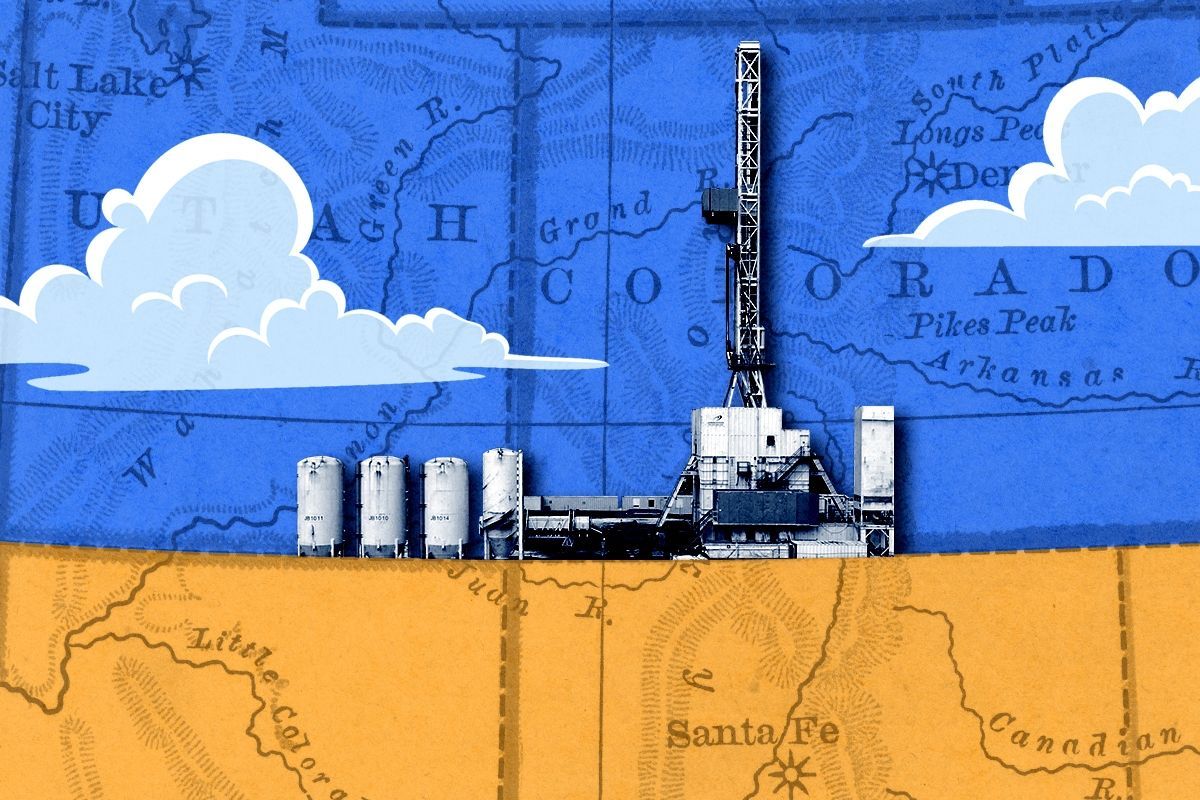
Governor Jared Polis of Colorado and Governor Spencer Cox of Utah will announce the formation of the Mountain West Geothermal Consortium this afternoon at a press conference in Salt Lake City.
The consortium brings together governors, regulators, and energy policy staffers from those two states and their Mountain West neighbors Arizona and New Mexico, along with staffing and organizational help from two nonprofits, the Center for Public Enterprise and Constructive, both of which employ former Department of Energy staffers.
The consortium will help coordinate permitting, financing, and offtake agreements for geothermal projects. This could include assistance with permitting on state-level issues like water usage, attracting public dollars to geothermal projects, and upgrading geophysical data to guide geothermal development.
Michael O’Connor, a former DOE staffer who worked on the department’s geothermal programs, is the director of the consortium. He told me that the organization has done financial and geotechnical modeling to entice funding for earlier stage geothermal development that traditional project finance investors have seen as too high-risk.
“We think that the public sector should be a part of the capital stack, and so what we’re trying to do is build investment programs that leverage the state’s ability to provide the early concessionary capital and match that with private sector capital,” O’Connor said. “The consortium has done a whole bunch of financial modeling around this, and we’re now working with energy offices to build that into actual programs where they can start funding.”
The consortium is also trying to make it easier for utilities to agree to purchase power from new geothermal developments, O’Connor said. This includes helping utilities model the performance of geothermal resources over time so that they can be included more easily in utilities’ integrated resource plans.
“Most Western utilities either have no data to incorporate geothermal into their IRPs, or the data they’re using is generalized and 15 years old,” O’Connor told me. This type of data is easy to find for, say, natural gas or solar, but has not existed until recently for geothermal.
“Offtakers want the same kind of assurance that infrastructure investors want,” O’Connor said. “Everyone wants a guaranteed asset, and it takes a little bit more time and effort.”
The third area the consortium is working on is permitting. Many geothermal projects are located on land managed by the Bureau of Land Management, and therefore have to go through a federal permitting process. There are also state-specific permitting issues, most notably around water, a perennially contentious and complicated issue in the West.
How water is regulated for drilling projects varies state by state, creating an obstacle course that can be difficult for individual firms to navigate as they expand across the thermally rich intermountain west. “You’re always working with this sort of cross-jurisdictional permitting landscape,” Fervo policy chief Ben Serrurier told me. “Anytime you’re going to introduce a new technology to that picture, it raises questions about how well it fits and what needs to be updated and changed.”
Fervo — which sited its flagship commercial geothermal plant in Cape Station, Utah — has plenty of experience with these issues, and has signed on as an advisor to the consortium. “How do we work with states across the West who are all very eager to have geothermal development but, aren’t really sure about how to go about supporting and embracing, encouraging this new resource?” Serrurier asked. “This is policymakers and regulators in the West, at the state level, working together towards a much broader industry transformation.”
The Center for Public Enterprise, a consortium member think tank that works on public sector capacity-building, released a paper in April sketching out the idea for the group and arguing that coordinated state policy could bring forward projects that have already demonstrated technological feasibility. The paper called for states to “create new tools to support catalytic public investment in and financing for next-generation geothermal.”
Like many geothermal policy efforts, the geothermal consortium is a bipartisan affair that builds on a record of western politicians collaborating across party lines to advance geothermal development.
“There is sort of this idea that the West is an area that we collectively are still building, and there is still this idea of collaboration against challenging elements and solving unique problems,” Serrurier said.
Cox, a Republican, told Heatmap in a statement: “Utah is working to double power production over the next decade and build the energy capacity our state will need for generations. Geothermal energy is a crucial part of that future, and Utah is proud to be a founding member of the Mountain West Geothermal Consortium.”
Polis, a Democrat, said, “Colorado is a national leader in renewable energy, and geothermal can provide always-on, clean, domestic energy to power our future. Colorado is proud to partner on a bipartisan basis with states across the region to found the Mountain West Geothermal Consortium.”
O’Connor concurred with Fervo’s Serrurier. “Western states are better at working together on ’purple issues’ than most states,” he told me.
In this moment, O’Connor said, the issue at hand is largely one of coordinating and harmonizing across states, utilities, and developers. “Several pieces of good timing have fallen upon the industry at this moment, which has led to a positive news cycle,” he told me. “Making sure that gets to scale now means we have to solve thorny or bigger dollar problems — and that’s why we’re here.
“We’re not an R&D organization,” he added, referring to the consortium. “We’re here to get over the hurdles of financing and of offtake and of regulatory reform.”