GLOBALVARS
0
Current conditions: The most powerful storm to hit Western Australia in 49 years has deluged the capital of Perth • Temperatures in the Arizonan metropolis of Phoenix are climbing to 103 degrees Fahrenheit today, and will stay around that level all week • South Georgia Island, a British overseas territory near Antarctica in the Atlantic, is bracing for heavy snow.
THE TOP FIVE
1. Anthropic prepares to go public
Anthropic, the artificial intelligence giant behind the chatbot Claude, filed the first documents to the Securities and Exchange Commission to make its stock market debut. The company submitted a confidential S-1, meaning that — unlike the recent SpaceX filing — the details aren’t yet publicly available. By doing so, Anthropic has “the option to go public after the SEC completes its review,” the company wrote Monday in a blog post. The number of shares to be offered and the price “have not yet been set.” The IPO could have big energy implications. Unlike some hyperscalers, who have pushed back against the public blowback to data centers, Anthropic vowed three months ago to pay to offset electricity price hikes from its server farms, as I previously wrote. Coupled with the news yesterday morning that Iran had broken off negotiations with the U.S. to end the conflict blocking the Strait of Hormuz, Monday offered clear evidence of what Heatmap’s Robinson Meyer described as the electricity economy “having its moment.”
Here are a couple more data points: Later on Monday, Berkshire Hathaway, the investment company formerly run by Warren Buffett, announced plans to invest $80 billion into Google owner Alphabet’s data center buildout. Meanwhile, Mike Schroepfer, the former chief technology officer of Facebook parent Meta Platforms, raised $250 million for his climate-tech venture capital firm Gigascale, Bloomberg reported.
2. Energy Department bars homeowners from using federal rebates to quit gas
On Monday, the Department of Energy released its long-awaited guidance on how to use the remaining home rebate programs left intact after Republicans repealed broad swaths of the Inflation Reduction Act. Unsurprisingly, the program — which had a complicated rollout — initially meant to support deployment of electric heating is now no longer available for homeowners hoping to switch from gas to electric.
“Make no mistake: This is part of a coordinated strategy to boost fossil fuel profits at the expense of working families,” Tony Sirna, the deputy policy director of buildings at the progressive climate group Evergreen Action, said in a statement. “These home electrification rebates were a lifeline for families who otherwise could not afford to upgrade their homes and escape rising energy costs. Gutting them ensures millions of households remain captive customers of greedy gas utilities now poised to saddle ratepayers with up to $1.4 trillion in costs for pipelines that will ultimately be underused or entirely unnecessary.”
3. China and Britain hit critical milestones on new nuclear plants
Allow me to break with journalistic convention and lead with the dog-bites-man story: China, already the world leader in building its own nuclear reactors, just installed the containment dome on its latest reactor at the Lianjiang nuclear power plant in Guangdong province, World Nuclear News reported. This is a vital step toward completing construction, though not unusual in a country with a whopping three dozen commercial fission reactors underway.
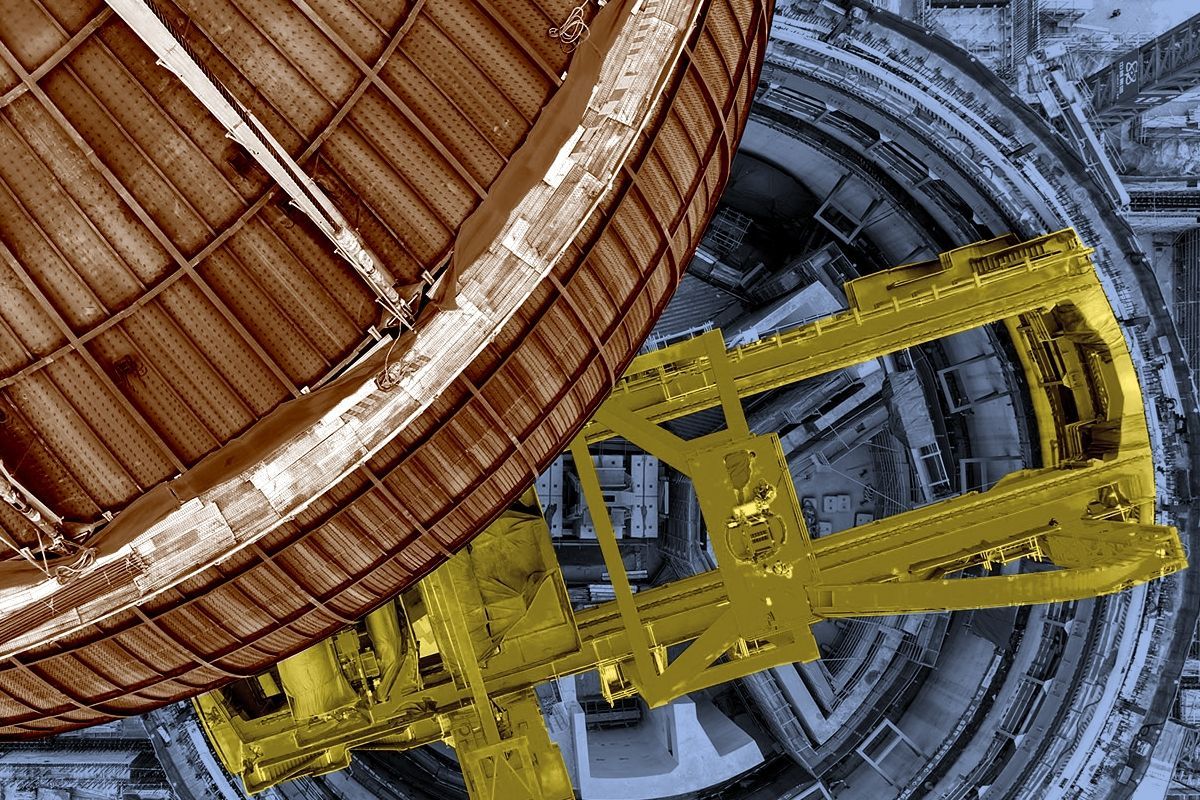
And now for the man-bites-dog. The United Kingdom, whose nuclear industry has long suffered the same anemia as that in the United States, just reached a major milestone on its long-delayed Hinkley Point C nuclear site in southwest England. On Monday, NucNet reported that the second reactor pressure vessel had been lifted into place by the world’s largest crane.
Sign up to receive Heatmap AM in your inbox every morning:
* indicates required
Email Address *Our Privacy Policy & Terms Apply.
4. A judge blocks Trump’s breakup of a key climate research institute

A federal judge in Denver halted the Trump administration’s effort to carve up Boulder’s National Center for Atmospheric Research by handing over a supercomputing center to the University of Wyoming. The 38-page injunction, detailed in the Colorado Sun, called the move by the National Science Foundation to divest from the supercomputing center “arbitrary, capricious, an abuse of discretion, or otherwise not in accordance with law.” Senior U.S. District Judge R. Brooke Jackson argued that his decision was necessary because a lawsuit filed in March by the University Corporation for Atmospheric Research was likely to succeed, and “too much damage had already been done to the supercomputing center’s operations.”
5. Trump-backed USA Rare Earth makes a big bet on France
The U.S. wants to quit Chinese minerals. But mining all those metals domestically is virtually impossible. As a result, one of the two big rare earths champions in which the Trump administration took an equity stake is now looking to Europe. On Monday, USA Rare Earth announced plans to invest more than $204 million into producing rare earths and magnets made from them. The deal, per Mining.com, builds off a previous agreement to acquire a stake in the French rare-earth processor Carester for $47 million.
THE KICKER
France isn’t the only country netting some green investment. On Monday, Italian oil giant Eni announced its own bet on battery manufacturing. The company reached a deal for a joint venture with Seri Industrial Group to develop an integrated industrial supply chain for lithium-iron-phosphate batteries. The deal will close by the end of this week. Eni said the deal “adds another piece to the puzzle of completing the supply chain from critical minerals to the production of energy storage.”