GLOBALVARS
0
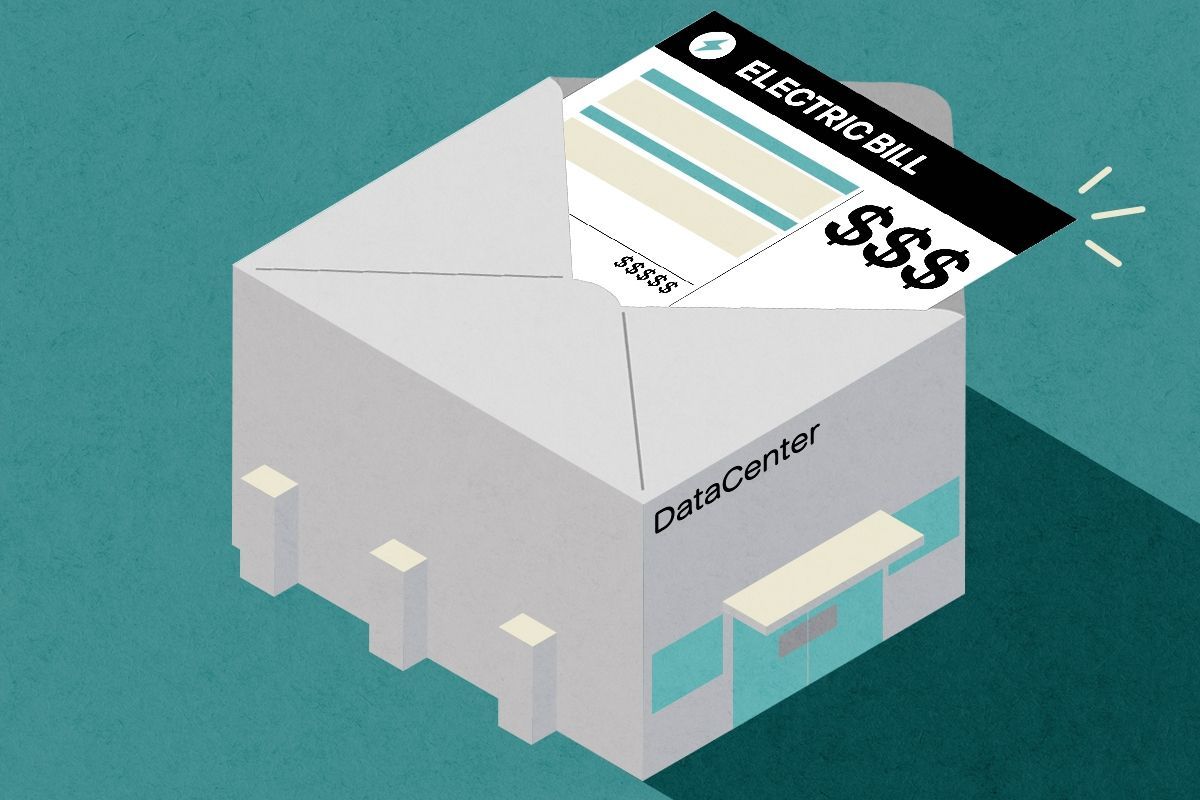
Americans’ support for data centers cratered over the past nine months. Rising electricity prices are a big part of the reason.
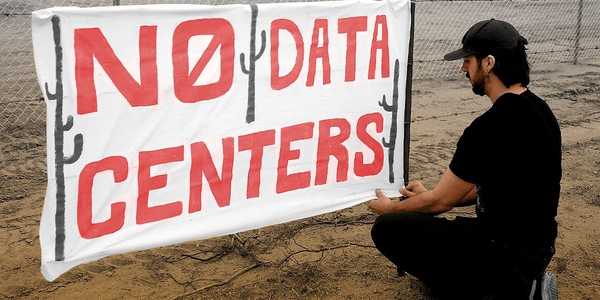
A Heatmap Pro poll conducted in May found that seven in 10 Americans would oppose a data center being built near where they live, up from four in 10 when we asked the same question in August 2025. We also polled people on mounting electricity costs, providing them with about a dozen potential explanations for the surge in prices and asking whether they blame each one “a lot,” “a little,” or “not at all.”
Here, too, the shift in sentiment was definitive. More than half of respondents blamed the construction of new data centers “a lot,” up from just 28% in August, making it the top concern on the list. In the earlier poll, “more demand for electricity overall” — a related issue — received the most blame, while construction of new data centers specifically sat near the bottom of the list.
Whether data centers deserve all this blame is complicated. Electricity prices were already rising before the race to power artificial intelligence began in earnest. According to Heatmap and MIT’s Electricity Price Hub, the national average price rose 21% from November 2020 to November 2022, when ChatGPT was first released to the public. Utilities have been raising rates to cover the cost of maintaining and upgrading the aging power grid, but the drivers are also region-specific. In the West, rates are rising because of wildfire insurance and mitigation efforts such as burying powerlines. (Interestingly, Americans blamed rising costs less on extreme weather, such as wildfires and heat waves, in our latest poll than they did last summer.)
As for what Americans think is driving those costs, our polling results were fairly consistent across regions. Construction of new data centers topped the list everywhere except in the West, where “the oil and gas industry” received one percentage point more blame, while the oil and gas industry came in a close second in the Midwest and Northeast. In the South, the war in Iran ranked second in respondents’ minds. We did, however, see a divide between urban and rural respondents, with slightly more urban residents who considered “the Trump administration and Republicans,” “the oil and gas industry,” and “the war in Iran” to be the major drivers of power prices than data centers.
Though data centers are not the only culprit, they have contributed to higher prices in a few areas, most notably in the PJM electricity market. Market experts warn that this trend will become widespread as the buildout progresses unless lawmakers and regulators make changes to protect residential customers.
“The projected growth in data center demand is beyond anything (short of wartime industries) ever asked of the American power sector,” Travis Kavulla, the head of policy at Base Power Company, wrote in a recent essay for American Affairs. That requires a new market structure, he argued at a Heatmap News event on Wednesday. Rather than the first-come-first served interconnection queue, he advocated for an “open season” model. “It’s a process whereby the incremental cost of building out the grid is mechanically assigned to the incremental load growth,” he explained, “whereas otherwise it might be socialized broadly across consumers — and in a time of increasing inflationary prices, that would lead to a lot of cross-subsidization. It’s both a speed to power thing and a customer affordability thing.”
As my colleague Jael Holzman has reported, state leaders have generally been more inclined to explore regulatory fixes to the problem of rising electricity prices than to enact moratoria on new data center construction, the preferred path for many grassroots activists who oppose data centers. States such as Oregon and Vermont have already passed rules that aim to protect ratepayers from data center expansion, and many more states have introduced bills to do the same.
“The public isn’t opposed to data centers, they’re opposed to paying for them on their power bill,” Sarah Hunt, the president and CEO of the right-leaning Rainey Center, told Jael in a separate story about how data centers are splintering the Republican Party. The Rainey Center’s own polling found that telling voters about policies such as President Trump’s Ratepayer Protection Pledge, a voluntary pact signed by big tech companies that agree to pay the full cost of connecting data centers to the grid, made them more likely overall to support AI data centers.
Heatmap’s polling found that blame toward data centers is escalating at about the same rate among all political parties, roughly doubling across the board. Among Republicans, 40% of those who identify as MAGA blamed data centers “a lot,” while 45% of those who identify as non-MAGA did. Democrats were generally more fervent, with 62% assigning major responsibility to data centers.
One other consistent feature in our polling is that both opposition to and blame for data centers is strongest among young people aged 18-34. Blame for data centers declined as respondents got older, with 67% of the youngest cohort pointing the finger most strongly at data centers compared to 44% of those over 65. (Aging Americans’ primary culprit for higher prices? An aging electrical grid.)
The Heatmap Pro poll of 4,118 American registered voters was conducted by Embold Research via text-to-web responses from May 15 to 28, 2026. The survey included interviews with Americans in all 50 states and Washington, D.C. The margin of sampling error is plus or minus 1.6 percentage points.