GLOBALVARS
0
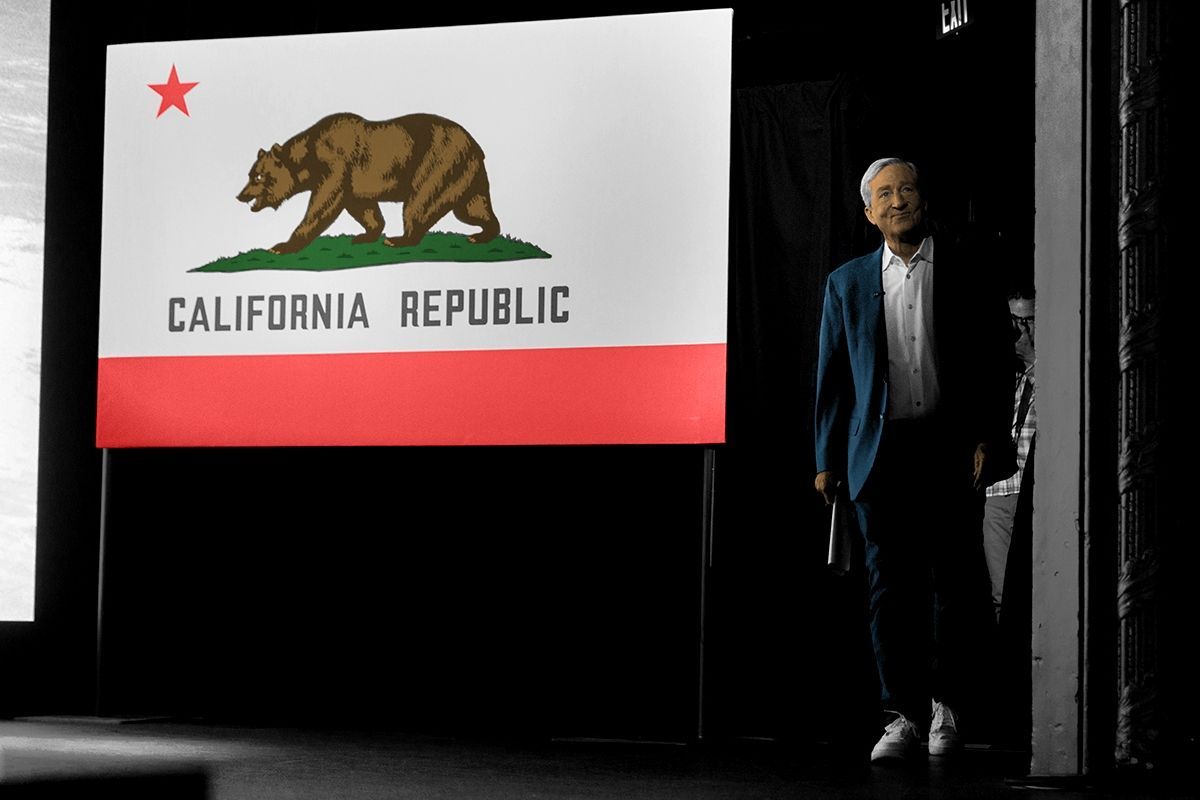
Tom Steyer, the billionaire investor and climate activist, is probably not going to be California’s next governor.
While the Associated Press still hasn’t called the race (and votes are still being counted), outside observers such as Decision Desk HQ have projected the outcome. The likely winners of California’s top-two primary will be Xavier Becerra, a Democrat and former federal health secretary, and Steve Hilton, a British-born Republican and conservative commentator. They’ll face each other in the November election.
That means the country’s most ambitious state-level climate policy will probably wind up in Becerra’s hands. And Becerra, notably, has suggested he will look upon the state’s carbon-cutting goals more skeptically than California’s past two Democratic governors. He has committed neither to California’s goal of ending gas-powered vehicle sales by 2035, nor its goal of phasing out fossil fuels by 2045. And he has suggested the state has ignored affordability in its quest to cut carbon emissions.
“Can we make the 2045 goal? Sure would like to, but I’m not going to hang up our economy and families’ cost of living if we find that we’re not able to meet that goal,” he said in an interview earlier this year. His website lists “Energy and Utilities” but not climate change, as a top priority for his future administration, and adds for clarity: “Bill affordability will be at the center of my energy policy.”
All that will matter in the years to come. Yet the most significant immediate consequence — if Steyer does fail to make the run-off — might be for campaign finance. After Becerra (or an independent committee associated with him) accepted donations from Chevron and an oil and gas trade group, Steyer pounced. “Big Oil,” Steyer said, was betting on Becerra to dismantle California’s climate policy. Becerra retorted that he had sued oil companies as California’s attorney general. Then he kept Chevron’s money.
That was just one episode in a long and complicated race, of course. But ultimately, it’s not clear that voters in one of the country’s most liberal polities cared about the donation or Becerra’s less ambitious approach to climate policy — or perhaps Steyer, a billionaire himself, was not the most persuasive critic of money’s corrosive influence in politics. Either way, Becerra’s successful primary campaign may signal a more conciliatory approach to fossil fuels from Democrats, even those from coastal, progressive states. (Heatmap, I hasten to add, doesn’t accept advertising or any other kind of sponsorship from oil and gas companies.)
What’s more cut and dried is that Steyer has donated an awe-inspiring amount of money to climate, environmental, and other progressive causes over the past 17 years, and now has little to show for it. It’s worth doing a brief tally: He spent $216 million on this run for governor, including more than $195 million on ads. He dropped another $342 million to run for president in 2020. Neither effort succeeded (assuming projections hold).
Then there’s the $90 million he spent on the Trump impeachment effort during the president’s first term, as well as the $58.5 million he gave to the NextGen Climate political action committee for the 2018 cycle. Steyer, in fact, helped found the NextGen Climate organization in 2013; he later gave it and a few other groups $74 million to turn out young voters on climate issues in the 2014 midterm, then donated at least another $25 million in 2016. His political spending from 2009 to 2017 came to $365.6 million, according to his own disclosures.
All in all, Steyer has spent roughly a billion dollars since 2009 to advance causes and issues that he cares about — as well as his own political career. Climate has been one of the biggest beneficiaries of this largesse.
And it hasn’t quite all been a wash. Steyer has seemingly had the most success doing what he knows best: for-profit investment. Galvanize, the climate-aware asset manager he co-founded in 2022 and co-chaired until last year, has closed at least $1 billion in funds, and raised $370 million as recently as March. And even as a political donor, Steyer has pulled off big wins when intervening in California’s referendum elections. He was the biggest donor to the “No on Prop 23” campaign in 2010, which successfully protected the state’s climate policy from a Koch brothers-funded effort to defang it. And he was the biggest single contributor to last year’s Prop 50 referendum, which allowed the state to join the Trump-initiated mid-decade redistricting war.
But it isn’t exactly an inspiring record. I would say Steyer is the New York Knicks of political giving, except the Knicks are good now. While Steyer’s money paid the rent for many climate activists, organizers, and wonks over the years — and played some role in creating the political moment that produced the Inflation Reduction Act — it hasn’t created the kind of durable majority for climate action that he may have once hoped. Perhaps that should invite some introspection: Has the effort to produce a pro-climate-action consensus failed despite its billionaire backers? Or because of them?
What has long perplexed me about Steyer is that even though he has spent much of his time as a candidate embracing the left — and allying himself with the Democratic Party’s various interest groups — he strikes a far more moderate tone in conversation. As he told me during a Heatmap event at last year’s San Francisco Climate Week, “No one’s going to adopt new technologies to be nice. They’re going to adopt new technologies because they’re better, because they’re a better deal, because they’re cheaper, or in some ways solve a pain point for the customer.” In that sense, at least, he believed the market could work. Whether a similar market exists for political donors is perhaps best left unanswered.
CUI BONO
The Iran war — and the energy crisis it ignited — have been a gift to China’s clean energy manufacturing sector.
But they have also helped America’s oil and gas industry. A new round of government statistics, released today, show that America’s crude oil, petroleum product, and fuel oil exports surged by more than $8.7 billion in April. That helped push down the government’s volatile trade deficit to its lowest level in months. The Trump administration has sought to lower the trade deficit since taking office.
Incidentally, a tracker from researchers at Brown University estimates that Americans have paid an extra $56 billion for gasoline and diesel since the Iran war began.
AND FINALLY
It’s not exactly climate adaptation, but I’ll take it: The U.S. Food and Drug Administration has amended the list of ingredients allowed in American sunscreen for the first time in 20 years, permitting the use of a stable and broad-spectrum chemical long permitted in European and Asian sunscreens.