GLOBALVARS
0
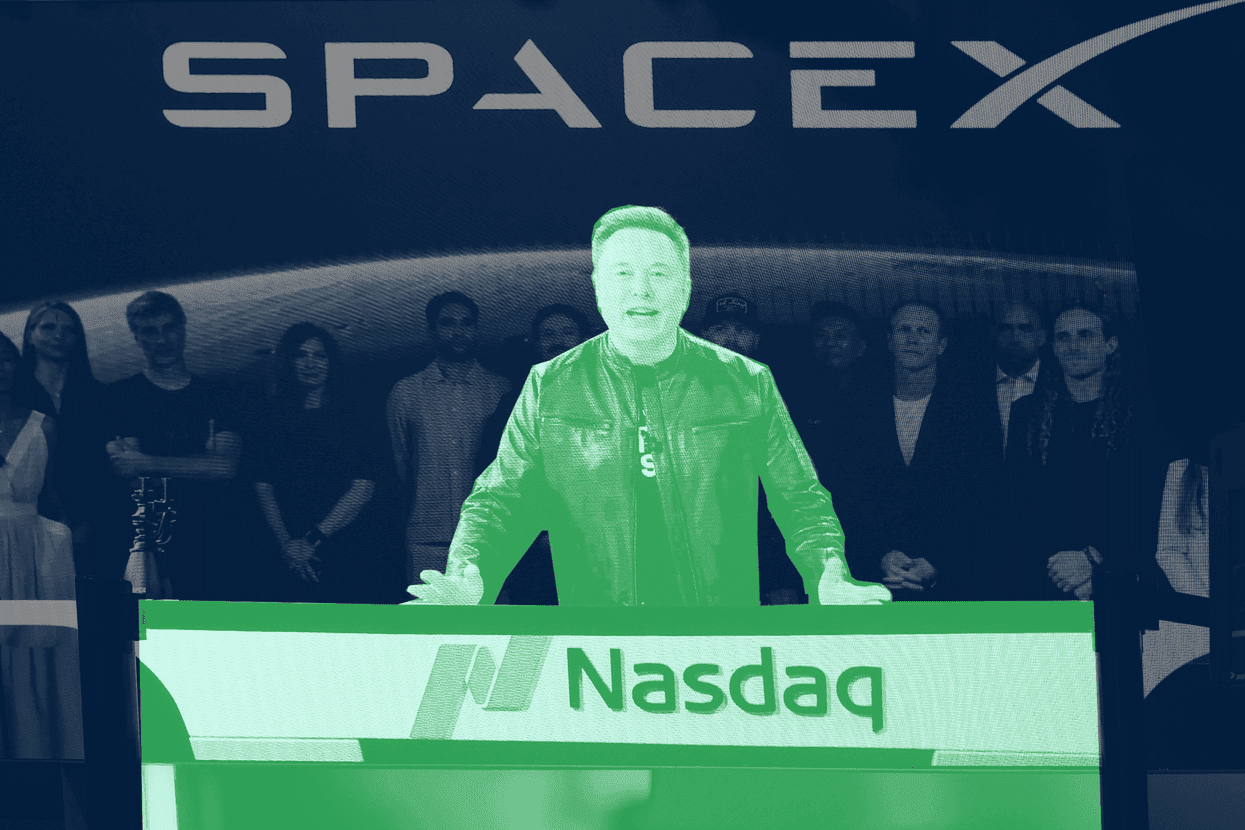
SpaceX is now a public company. The rocket and satellite maker’s shares began trading this morning, surging 19% from their initial price of $135 to more than $160 at the market close. With the sale, Elon Musk became the world’s first trillionaire; his wealth has roughly tripled since President Donald Trump won re-election in 2024.
I’ll let other observers judge the IPO’s success, the firm’s long-term prospects, and the meaning of a world where we now have trillionaires. So I will make a few other points:
1.
I remain agog at Musk’s ability to raise enormous amounts of cash from public equity markets to do hardware and manufacturing development. To some degree, the idea of a venture-backed firm doing hardware engineering — or what some now call “deep tech” — is Musk’s most impressive creation. The SpaceX IPO raised $75 billion today. That money will now go in part to scaling and commercializing rockets, factory equipment, and allegedly, at some point in the future, orbiting data centers.
2.
Let’s not forget how crucial the U.S. government is to Musk’s story. In the world of climate, energy and manufacturing, we wail about financing’s “missing middle,” the elusive type of investment that can help scale and deploy early-stage technologies by bridging the gap between expensive venture capital and cheap bank lending. But this is at least partially a solved problem. SpaceX and Tesla survived the valley of death with government help: The Energy Department’s Loan Programs Office (which the Trump administration has dubbed the Office of Energy Dominance Financing) extended a $465 million loan to Tesla to build its Fremont, California, factory in 2010; NASA’s 2008 commercial resupply contract gave SpaceX guaranteed offtake for its Falcon rocket. Neither firm would likely have survived without those key injections of financial certainty.
3.
To some degree, Musk has already made his mark on the American economy by creating a new culture of manufacturing engineering. I cannot recommend enough my colleagues Matthew Zeitlin and Emily Pontecorvo’s report on the new cadre of climate tech founders who came up at SpaceX and Tesla. As it happens, I spent Wednesday touring a clean energy factory founded by a Tesla alumnus, and I was struck by how many signs of Musk’s bottlenecks-focused management approach were visible, even at a company seemingly run more humanely than Musk’s famously “hardcore” firms.
4.
To that point, Emily and Matt asked a number of clean tech executives who worked for SpaceX or Tesla what they learned from the experience. Their responses are fascinating; you can read them in full here. These comments from Justin Lopas, the COO of Base Power, stuck out — he was asked the “one thing” he learned from working for Musk:
You can get way more done in a day and can move way faster than you think. This does not mean necessarily more hours (although solving any hard problem requires that too), but instead being thoughtful about sequencing work, not accepting delays from suppliers or external counterparties without solid rationale, parallel pathing, accelerating critical learnings to early in the project, etc
5.
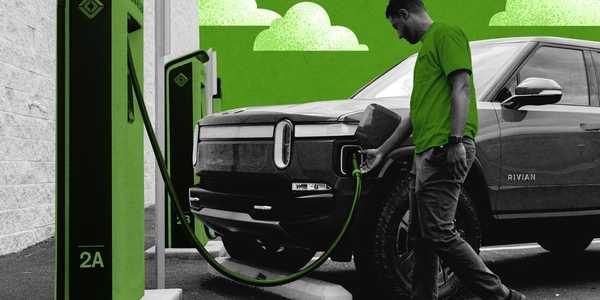
To step back, one irony of Elon Musk’s situation — at least to me — is that relatively few American politicians are eager to talk about what has actually driven his wealth. I’m not just talking about his firms’ reliance on public financing, although that counts too. I mean Teslaitself. Although Musk now describes that business as a “robotics company,” it is and remains an electric vehicle and battery manufacturer. (It recently began high-volume production of the Tesla Semi, a potentially game-changing long-haul electric truck.) After today, Musk’s Tesla stake makes up less than half of his wealth, but, still, he would not be a trillionaire without EVs, solar panels, and batteries.
But that is not a particularly convenient fact. That Musk is a clean energy trillionaire remains unpalatable to Republicans, who would prefer to cast EVs as an inferior substitute made to satisfy government mandates. And Musk’s antisemitism, far-right politics, and gleeful destruction of the U.S. Agency for International Development — not to mention Tesla’s violation of labor law — have obviously destroyed his reputation among Democrats.
Yet his elevation to a 13-digit net worth nonetheless marks a new era in American capitalism. The richest Americans in history have almost always been oilmen: John D. Rockefeller became the country’s first billionaire by creating the Standard Oil trust; when he died in 1937, his net worth of $1.4 billion represented 1% to 2% of the country’s gross domestic product. In the 1960s, J. Paul Getty became the country’s richest person by negotiating Saudi and Kuwaiti oil concessions. Yet Musk became a billionaire not by harnessing commodities, but through his mastery of software, hardware, and clean energy.
Musk’s fortune now exceeds 3% of U.S. GDP. He is the richest American in history, judged as a share of national production. And it was electricity, lithium, and modern factory production — and, if you wish, the kerosene and methane that fuel SpaceX’s rockets — that got him there. As the science fiction writer William Gibson almost said, the future is already here; it’s just not evenly distributed in your retirement portfolio yet.
Many thanks for reading, and have a wonderful weekend.