GLOBALVARS
0
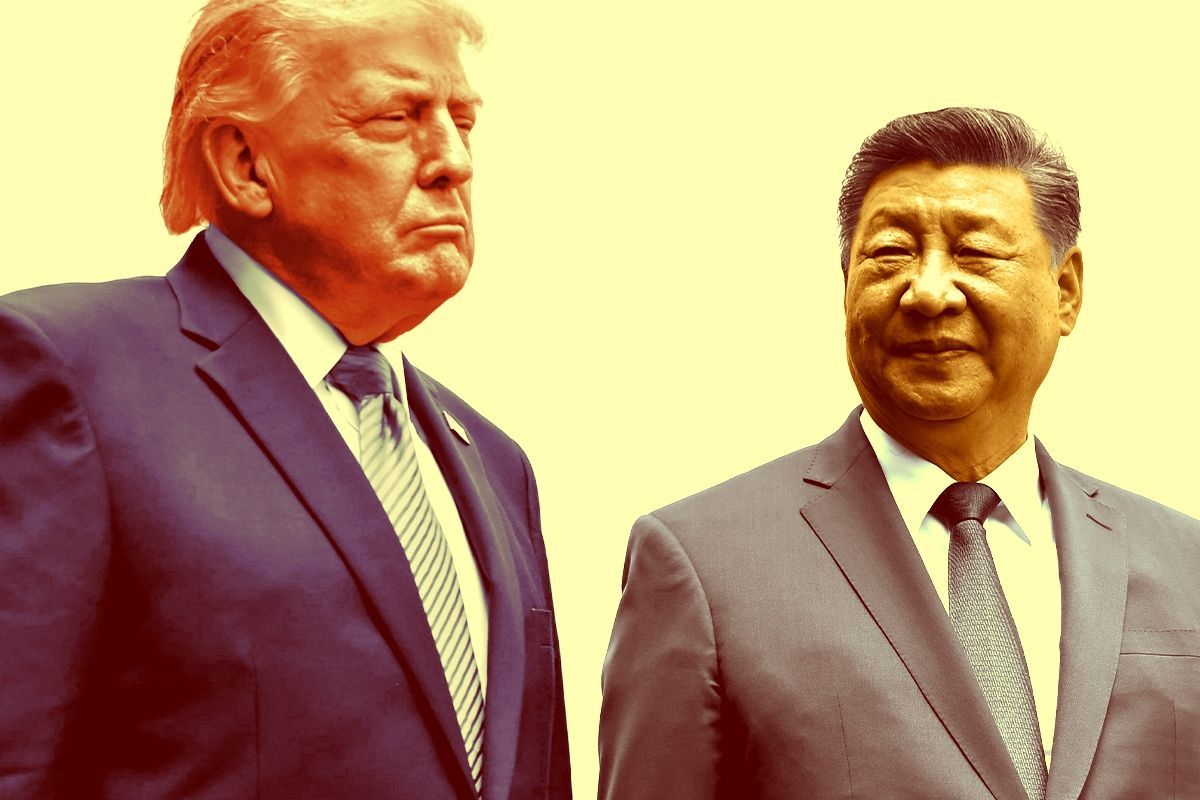
We have an Iran deal. We think. Since President Trump and Iran announced the arrangement on Sunday afternoon, its details have had a Heisenbergian quality — not even Israeli leaders seem to be sure what they are. From an energy markets standpoint, Trump told The New York Times on Sunday that the text guarantees “permanently toll-free” access to the Strait of Hormuz, but it remains unclear how and when the waterway will reopen.
What we do know is that some version of the deal is set to be signed on Friday. At the same time, the U.S. and Iran will start 60 days of “technical negotiations” to discuss Iran’s nuclear program and sanctions relief, according to Vice President JD Vance. “A lot of very important details” have yet to be figured out, Vance told reporters on Monday. If Iran doesn’t agree to give up its nuclear program in those talks, Trump told the Times yesterday, he would either order bombing to restart or make the United States “the guardian of the Middle East” in exchange for oil revenues. (So much for toll-free access! At least then CENTCOM could establish a hotline.)
Regardless, it may take weeks for Iran to remove its sea mines from the strait. Then ships and their exhausted crews will begin trickling out of the Persian Gulf. My colleague Matthew Zeitlin has the full rundown on what will happen next in Iran — and what it means for oil, natural gas, and the energy transition.
But let’s assume, for a moment, that the war really is over. What did we learn from the past 107 days of conflict?
Get Heatmap in your inbox daily.
* indicates required
Email Address *Our Privacy Policy & Terms Apply.
For me, the most astonishing thing about the conflict remains that China, which used to buy 11 million barrels of oil a day from global markets, only imported about 7.8 million barrels a day in May. That’s just over 3 million barrels a day of demand, seemingly vaporized overnight. (For context, the world used about 104 million barrels a day last year.) China’s enormous domestic oil and gas stockpiles and its high concentration of electric vehicles seem to have produced the cut — as did a domestic increase in energy prices that helped dampen demand on its own.
For the past few years, climate and energy journalists like me have hammered that China’s solar, battery, and electric vehicle manufacturing complex is the real deal. But the war clarified that the world now has two real and rivalrous energy regimes. There is the oil-and-gas regime, heavily concentrated in the OPEC+ countries and North America, and there is the electricity-and-batteries regime, located in East Asia and especially China.
These systems are linked and interdependent, yet in competition for consumer demand — as well as policy-driven and infrastructural lock-in from countries. The United States is the lynchpin of the former system: Not only is it the world’s No. 1 producer of oil and natural gas, but it also (allegedly) guarantees security and freedom of navigation in the Middle East. China anchors the electric regime: Not only does it dominate the manufacturing of solar panels, wind turbines, lithium-ion batteries, and electric vehicles, but it also owns or refines the minerals essential to their production. While America can boast better petroleum engineers than anywhere else in the world, China has the manufacturing know-how necessary to spin off new innovations. Each country, in other words, dominates the stocks, flows, and knowledge that drive these planet-spanning regimes.
To be clear, I don’t agree with the interpretation — sometimes in vogue — that the United States is a “petrostate” while China is an “electrostate.” America has a much more diversified economy than most petrostates; oil makes up 10% to 15% of our dollar-denominated goods exports and an even smaller share of our overall exports. In Saudi Arabia, by comparison, oil is more than 70% of goods exports. Nor do I think “electrostate” evokes the reality that China, notwithstanding its world-historic renewables buildout, still gets 60% of its power from coal.
Much still unites these systems too — notably the petrochemicals sector, which produces from oil and gas the necessary inputs to solar, batteries, and EVs. But that’s why China’s coal-to-chemicals sector — which I previously discussed on our podcast Shift Key with the energy analyst Lauri Myllyvirta — has played such an important role during the past few months, allowing the country to cut crude demand without slowing down production lines. Given that the coal-to-chemicals industry is more carbon intensive than the sector it ostensibly replaces — and that India is already looking at developing its own version of the sector — I suspect we’ve only heard the beginning of it. We’ll examine it more in the days and weeks to come.