0
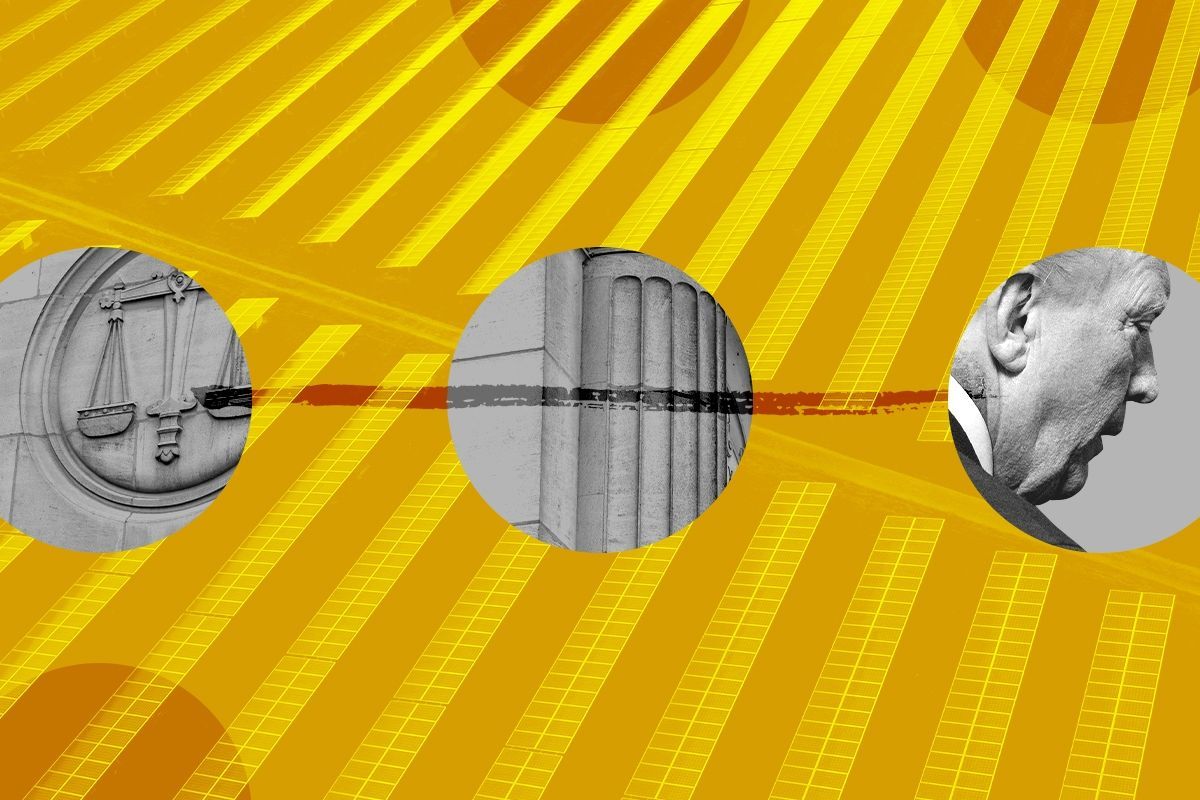
The Trump administration really wants you to think it’s thawing the freeze on renewable energy projects. Whether this is a genuine face turn or a play to curry favor with the courts and Congress, however, is less clear.
In the face of pressures such as surging energy demand from artificial intelligence and lobbying from prominent figures on the right, including the wife of Trump’s deputy chief of staff, the Bureau of Land Management has unlocked environmental permitting processes in recent weeks for a substantial number of renewable energy projects. Public documents, media reports, and official agency correspondence with stakeholders on the ground all show projects that had ground to a halt now lurching forward.
What has gone relatively unnoticed in all this is that the Trump administration has used this momentum to argue against a lawsuit filed by renewable energy groups challenging Trump’s permitting freeze. In January, for instance, Heatmap was first to report that the administration had lifted its ban on eagle take permits for wind projects. As we predicted at the time, after easing that restriction, Trump’s Justice Department has argued that the judge in the permitting freeze case should reject calls for an injunction. “Arguments against the so-called Eagle Permit Ban are perhaps the easiest to reject. [The Fish and Wildlife Service] has lifted the temporary pause on the issuance of Eagle take permits,” DOJ lawyers argued in a legal brief in February.
On February 26, E&E News first reported on Interior’s permitting freeze melting, citing three unnamed career agency officials who said that “at least 20 commercial-scale” solar projects would advance forward. Those projects include each of the seven segments of the Esmeralda mega-project that Heatmap was first to report was killed last fall. E&E News also reported that Jove Solar in Arizona, the Redonda and Bajada solar projects in California and three Nevada solar projects – Boulder Solar III, Dry Lake East and Libra Solar – will proceed in some fashion. Libra Solar received its final environmental approval in December but hasn’t gotten its formal right-of-way for construction.
Since then, Heatmap has learned of four other projects on the list, all in Nevada: Mosey Energy Center, Kawich Energy Center, Purple Sage Energy Center and Rock Valley Energy Center.
Things also seem to be moving on the transmission front in ways that will benefit solar. BLM posted the final environmental impact statement for upgrades to NextEra’s GridLance West transmission project in Nevada, which is expected to connect to solar facilities. And NV Energy’s Greenlink North transmission line is now scheduled to receive a final federal decision in June.
On wind, the administration silently advanced the Lucky Star transmission line in Wyoming, which we’ve covered as a bellwether for the state of the permitting process. We were first to report that BLM sent local officials in Wyoming a draft environmental review document a year ago signaling that the transmission line would be approved — then the whole thing inexplicably ground to a halt. Now things are moving forward again. In early February, BLM posted the final environmental review for Lucky Star online without any public notice or press release.
There are certainly reasons why Trump would allow renewables development to move forward at this juncture.
The president is under incredible pressure to get as much energy as possible onto the electric grid to power AI data centers without causing undue harm to consumers’ pocketbooks. According to the Wall Street Journal, the oil industry is urging him to move renewables permitting forward so Democrats come back to the table on a permitting deal.
Then there’s the MAGAverse’s sudden love affair with solar energy. Katie Miller, wife of White House deputy chief of staff Stephen Miller, has suddenly become a pro-solar advocate at the same time as a PR campaign funded by members of American Clean Power claims to be doing paid media partnerships with her. (Miller has denied being paid by ACP or the campaign.) Former Trump senior adviser Kellyanne Conway is now touting polls about solar’s popularity for “energy security” reasons, and Trump pollster Tony Fabrizio just dropped a First Solar-funded survey showing that roughly half of Trump voters support solar farms.
This timing is also conspicuously coincidental. One day before the E&E News story, the Justice Department was granted an extension until March 16 to file updated rebuttals in the freeze case before any oral arguments or rulings on injunctions. In other court filings submitted by the Justice Department, BLM career staff acknowledge they’ve met with people behind multiple solar projects referenced in the lawsuit since it was filed. It wouldn’t be surprising if a big set of solar projects got their permitting process unlocked right around that March 16 deadline.
Kevin Emmerich, co-founder of Western environmental group Basin & Range Watch, told me it’s important to recognize that not all of these projects are getting final approvals; some of this stuff is more piecemeal or procedural. As an advocate who wants more responsible stewardship of public lands and is opposed to lots of this, Emmerich is actually quite troubled by the way Trump is going back on the pause. That is especially true after the Supreme Court’s 2025 ruling in the Seven Counties case, which limited the scope of environmental reviews, not to mention Trump-era changes in regulation and agency leadership.
“They put a lot of scrutiny on these projects, and for a while there we didn’t think they were going to move, period,” Emmerich told me. “We’re actually a little bit bummed out about this because some of these we identified as having really big environmental impacts. We’re seeing this as a perfect storm for those of us worried about public land being taken over by energy because the weakening of NEPA is going to be good for a lot of these people, a lot of these developers.”
BLM would not tell me why this thaw is happening now. When reached for comment, the agency replied with an unsigned statement that the Interior Department “is actively reviewing permitting for large-scale onshore solar projects” through a “comprehensive” process with “consistent standards” – an allusion to the web of review criteria renewable energy developers called a de facto freeze on permits. “This comprehensive review process ensures that projects — whether on federal, state, or private lands — receive appropriate oversight whenever federal resources, permits, or consultations are involved.”