GLOBALVARS
0
We got a much better sense of the Trump administration’s nuclear buildout plans today.
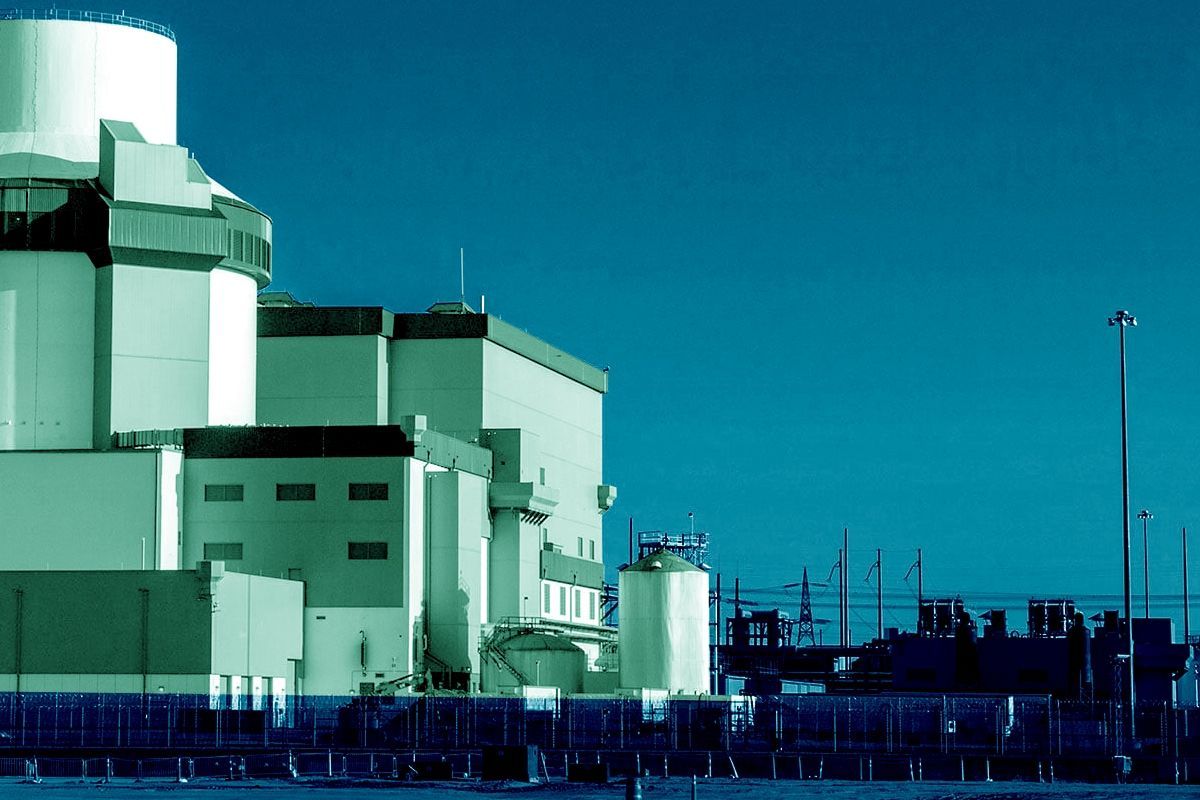
The Energy Department announced its long-awaited loan program that will aim to build a new fleet of nuclear reactors across the country. The department’s in-house bank will provide low-interest loans of up to $17.5 billion to help utilities and power developers buy up to 10 Westinghouse AP1000s, the third-generation nuclear reactor that is that company’s flagship product.
I can’t say this program was entirely a surprise: If you read Heatmap, you’ll remember we reported on the existence of this program — and the discussions between the government, utilities, power developers, and Westinghouse — back in February. Gregory Beard, who leads the Energy Department’s in-house bank, also teased the program at a Houston conference in April.
The program looks roughly as anticipated: It will aim to construct up to 10 new reactors, with two AP1000 Westinghouse reactors across five sites. That could add up to 11 gigawatts of nearly around the clock zero-carbon electricity to the power grid. What’s new is that Westinghouse and the utility will jointly own the power plants.
According to The Wall Street Journal, utilities and Westinghouse will each own part of the plants once they’re built. Five loans will become available; the department is already in talks with seven utilities.
At the high level, it’s a cool program — or at least I think so. Nuclear support has become surprisingly bipartisan, at least at the elite level, in recent years. In New York, Governor Kathy Hochul is trying to develop new nuclear plants. As we’ve noted before, the countries with some of the cleanest power grids in the world, such as France and Sweden, achieved their low carbon emissions in part by undertaking large, state-led nuclear energy buildouts. France, in particular, harmonized its nuclear power plants to a single reactor design and then built them to spec across the landscape. China is engaged in a similar buildout now with a variant of the AP1000. By getting behind the AP1000 in the United States, the Trump administration is following a global best practice.
The idea of a mass buildout makes sense for other reasons, too. Recent nuclear projects in the United States have often faced delays because construction and manufacturing timelines don’t line up. AP1000s are manufactured partly off-site in Westinghouse facilities and then shipped in; when a part arrives late, an expensive construction crew has to sit idle while they wait for it to arrive. (These timing misalignments drove part of the Vogtle plant’s runaway costs in Georgia.) By placing what is in essence a bulk order for AP1000 parts, the new program aims to bring down the cost of production and even allows project sites to swap identical parts as they come available — if one site isn’t ready to receive a pressure vessel, for instance, it can go somewhere else.
I hesitate to praise the project's climate bonafides at the risk of discouraging the Trump administration, but it is worth noting that if this project were to succeed, it would be one of the largest state-assisted build-outs of zero-carbon electricity in recent American history. But it would still take some time to arrive: These reactors aren’t forecast to come online til 2035.
Let me note one more irony. For a long time, the country’s policymakers and nuclear industry (to the extent the latter exists) have dreamt of small modular reactors: petite fission plants that can be manufactured in a factory and would produce a few hundred megawatts. The AP1000, in both its American and Chinese iterations, is a very large reactor — but it has become, in a sense, modular and manufacturable.
Cameco, which owns about half of Westinghouse, saw its stock rise 1.8% in the day’s trading. Brookfield Renewable Partners, which owns the other half, was flat. It was otherwise a choppy day in the markets, with the S&P 500 falling 1.4% and some tech and AI-exposed companies continuing their slide.
There will be much more to say about this program, and we look forward to covering it at Heatmap.