GLOBALVARS
0
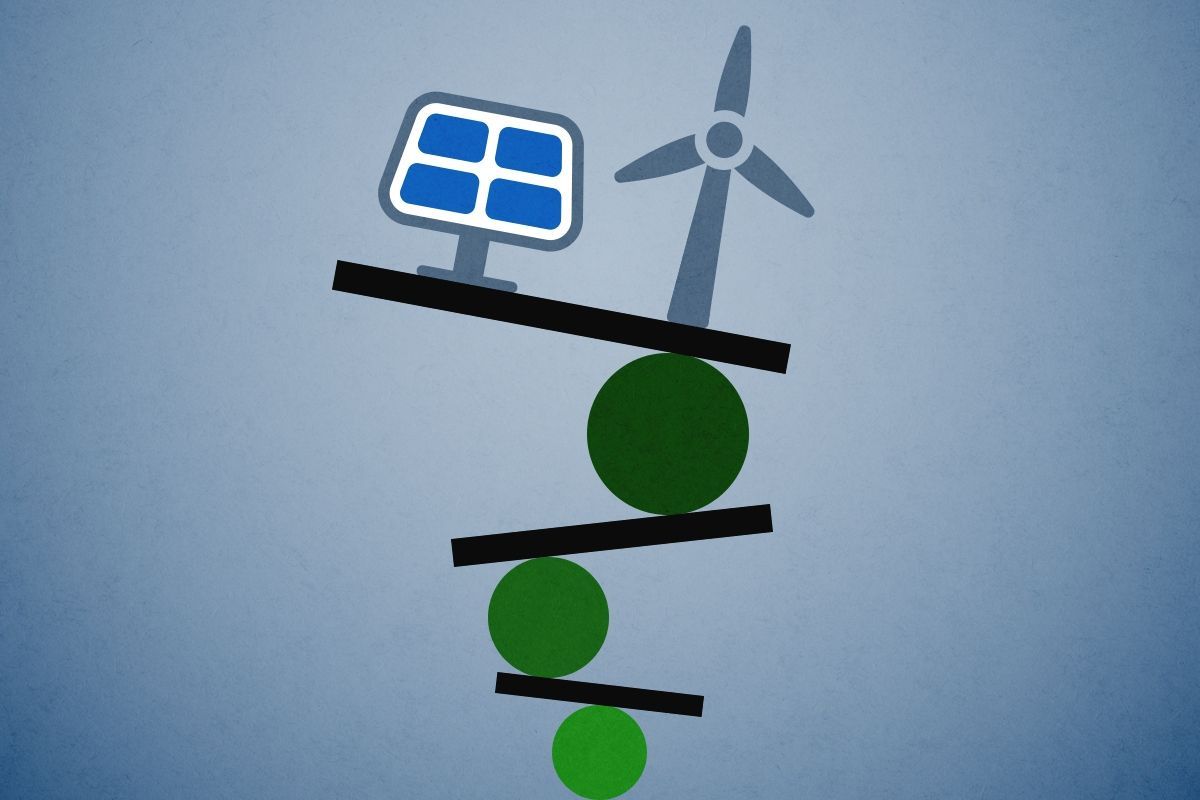
The renewables market is in a state of flux. On the one hand, the tax credits that were a key pillar of wind and solar project financing have started to expire, while the race to be up and running in time to claim those that remain is on.
At the same time the renewables industry is getting whacked by federal tax policy, it’s also getting a shot in the arm from hyperscalers and data center developers, many of whom are hungry for power that can be deployed quickly to the grid and complies with their clean energy pledges.
“There’s a massive onslaught of demand, not enough supply to meet that demand and then Trump’s administration effort to slow down certain types of supply,” Jon Powers, the president of solar and storage developer CleanCapital, told me, describing how data center buyers are snapping up whatever power they can.
So what does this mean for pricing in the market? LevelTen, a marketplace for power purchase agreements, looked at the data and, in a report released Tuesday, found that solar PPAs were almost 5% cheaper in the second quarter of this year compared to the first quarter.
LevelTen attributed this decline in part to an especially steep drop in prices in CAISO, the California electricity market; excluding CAISO, solar PPA prices dropped slightly less than 2%. And while those hyperscalers are still buying, LevelTen found, other commercial and industrial customers are pulling back — what the analysts described as a “continued softening in the market’s buy-side.”
“We saw a lot less corporate energy buyers in the space in 2025 — 40% less — and that is just due to the increase of hyperscalers and data centers getting projects and snapping them up quickly,” Sarah Wolf, LevelTen’s director of North American transactions, told me.
To explain California specifically, Wolf said that the market there tends to be more volatile than in the rest of the country due to the expense and regulatory hurdles to development. With fewer new projects coming online, especially as compared to a larger, more light-touch market like Texas, individual project pricing can swing average prices more.
The tax credit cliff is “creating this very competitive atmosphere, where buyers are feeling like — in order to safe harbor their equipment, to keep on the development timelines that they have — they need to get a PPA in place,” Wolf said. “They’re looking competitively for a buyer. That’s driving some pricing down.” The same holds for renewables developers, who have wanted to get a PPA in place as quickly as possible, giving leverage to buyers who can demand lower prices.
The other factor driving down prices LevelTen identified was potential revisions to standards issued by the Greenhouse Gas Protocol, which are currently the subject of a long and fraught overhaul process.
“We have many buyers who are fully leaning in and want to contract now,” Wolf said. “And we have buyers who are in a kind of a ’wait and see’ — they want to better understand what that’s going to be, so there’s not a risk that they might have to unwind something.”
As for wind, PPA prices have actually risen, according to LevelTen’s data — up 5.5% on the quarter and 17.5% on the year. “We’re also seeing wind just being less competitive than solar,” Wolf added.
The report attributed this to tariffs, gas prices pushing up delivery costs, and the “ongoing federal permitting bottleneck that has largely ground new-build wind development to a standstill.” That means specifically the Department of Defense’s efforts to hold up wind projects on potentially spurious national security grounds.
This has meant a “fast-dwindling pipeline of viable wind assets,” LevelTen’s report says, “and price premiums for fully permitted projects available for offtake.”
In short, the best news for individual wind developers may be bad news for the industry — and the climate — as a whole.