GLOBALVARS
0
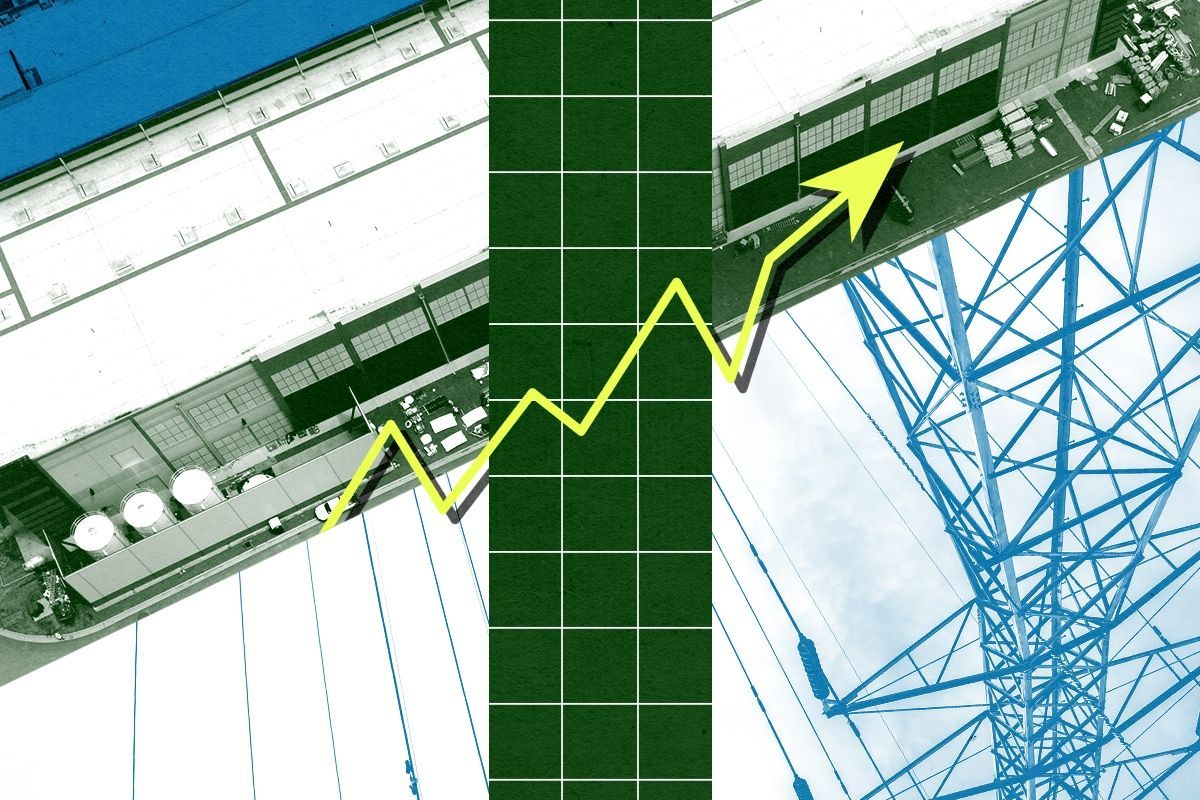
Energy analysts at BloombergNEF predicted last year that U.S. data center electricity demand would reach 106 gigawatts within the next decade. In its latest outlook, released Tuesday, the group increased its forecast by 83%, to 194 gigawatts — enough to light up 150 million homes, or roughly every single household in the country today.
Even that may be a conservative estimate. If data center developers were to max out the total number of the high-powered chips used to train and operate AI models forecast to be delivered by 2035, electricity demand would reach 229 gigawatts.
Over 100 gigawatts of that demand has entered the development pipeline since the beginning of this year, the result of both rising demand for artificial intelligence and shortened construction timelines for data centers. Some developers have oriented their site selection around energy availability, redeveloping brownfield energy generation sites for quick access to electricity and developing relationships with utilities. Others have eschewed grid interconnection entirely and instead relied behind-the-meter power generation.
As Mark Daly, head of technology and innovation at BNEF and a co-author of the report, pointed out to me, a growing share of the project pipeline comes from first-time developers. He and his colleagues project that non-hyperscaler data center capacity will nearly quintuple over the next decade, as hyperscaler capacity almost triples. That could ultimately create pipeline risks, however, as small-scale developers lack the capabilities of more experienced developers to optimize around pre-construction bottlenecks and navigate rapidly growing local opposition. Although local opposition to data centers has become prevalent, historic trends and predictions on how quickly developers are able to navigate hostile environments are built on the proficiency of experienced developers. Because first-time developers may face more challenges, Daly told me that data center projects overall “would see an increase in the number of delays.”
All of this, of course, comes with a big asterisk. The data center sector is rapidly evolving, and therefore highly uncertain. Among leading market research firms, BNEF said, there is a 100-gigawatt spread between the lowest and highest predicted electricity demand from data centers in 2030. Driving this spread are differences in assumptions about the average development timeline for a data center project. Daly told me that BNEF’s “project-based estimate is middle-of-the-road to bearish compared to other outlooks,” but also acknowledged that the fickle nature of local opposition on development timelines may place more constraints on future data center development than currently modeled.
No matter which prediction turns out to be most accurate, hourly U.S. electricity demand will come under intensifying pressure. BNEF predicts that average hourly U.S. electricity demand from AI workloads will grow five-fold over next nine years, reaching 120 gigawatts by 2035. That will put data centers at 12% of total electricity consumption on average by 2030, and 20% in 2035, up from 5% in 2025, according to figures from the International Energy Agency. This will put particular strain on electricity prices in markets like the Mid-Atlantic’s PJM, where data centers already comprise nearly a third of electricity consumption, and Texas’ ERCOT, where data centers currently consume a fifth of the market’s electricity.
Even the most conservative bet on future data center electricity demand is a scenario we’re not prepared for. If the Electric Power Research Institute’s prediction that just 56 gigawatts of new data center capacity will be up and running by 2030 — the lowest estimate BNEF cited — that would still consume the equivalent of Sweden’s total energy supply. Absent investments from utilities into grid resilience and intensive permitting reform to speed up renewable energy siting and development, PJM and ERCOT customers will not be the only ones feeling a serious squeeze in their wallets when their monthly utility bills arrive.