GLOBALVARS
0
In seven years of owning an electric car, I’ve done practically no maintenance. My 2019 Tesla Model 3 has gotten a new set of tires and windshield wipers, but because an EV doesn’t require oil changes or many of the other occasional chores that come with gas cars, that’s about it.
The one thing I have had to fix is the battery, and no, I don’t mean the big one that makes the car go.
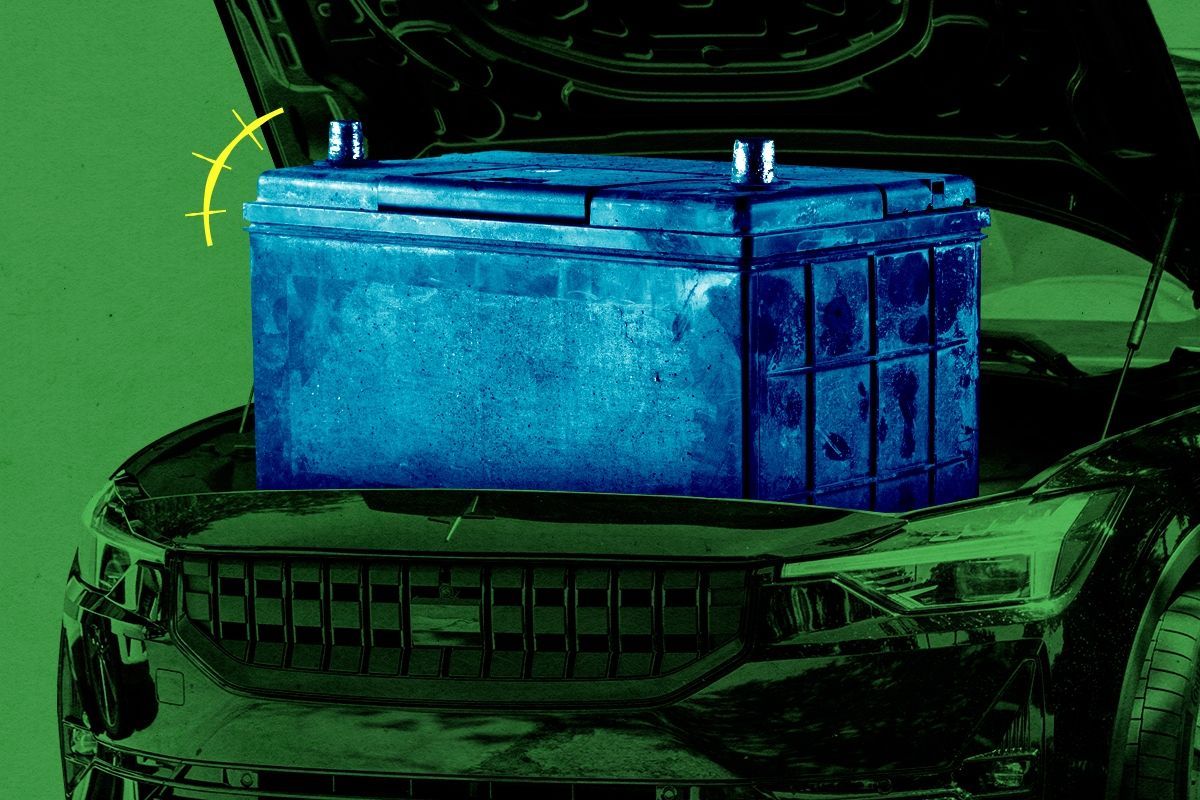
Twice in those seven years, I’ve replaced the car’s 12-volt battery. This is the toolbox-sized unit that’s familiar to millions — it’s what the phrase “car battery” used to mean back before electric vehicles. Lots of new or aspiring EV drivers may not even realize their car has a second, smaller battery borrowed from combustion days. But this crucial holdover — the most recycled object on the planet, by the way, at a rate of more than 100 million annually — has already been a source of annoyance for EV engineers and drivers.
The reason behind the weird setup is straightforward. Despite the fact that EVs are effectively giant batteries on wheels, they need a backup source to operate the power windows and doors. If you’re in a car accident that disables the main battery, for instance, you need power to the doors to escape, and also a way to disconnect the high-voltage battery. Thus, the old-fashioned 12-volt battery squirreled away deep inside the car to protect it during collisions.
It’s not just a matter of backup power, either. A large, high-voltage battery would have to step down its electrical output for applications other than pushing a car down the road; it’s simpler to power them with a 12-volt battery and use the big unit to recharge the smaller one. After all, legacy carmakers have decades of experience building this kind of electrical system for gasoline-powered cars. Some EVs also use the 12-volt setup to disconnect the high-voltage power supply when the car is simply parked for a long time.
All this makes solid engineering sense. It also means that a sleek, modern EV is reliant upon the clunky car battery of yesteryear. Some drivers, including those in new Kia EVs, have said they can’t drive their cars even though there’s plenty of juice in the big unit because something went wrong with the 12-volt. As one Reddit commenter wrote: “It seems absurd to design a car that can run out of electrons and not be able to start while it is carrying 70 kWh of energy in a giant battery.” Yet that’s exactly the reality.
There are a few reasons why. As InsideEVs has noted, the rugged old 12-volt keeps getting more and more responsibility. Nowadays, the constant cellular connectivity of modem EVs — as well as features that can be used while the car is parked, such as security systems that tap into the vehicle’s exterior cameras to monitor the surrounding area — can cause a continuous drain on the 12-volt battery. That requires the car’s big battery to “wake up” and recharge the smaller one, which not only bleeds the vehicle’s driving range while it’s sitting still but also causes lots of recharging cycles for the 12-volt, prematurely aging the small battery.
Rivian had notorious problems from this issue for the older R1T and R1S and had to engineer a fix. Hyundais and Kias, meanwhile, have had longstanding issues with their Integrated Charging Control Unit, the system that recharges the 12-volt battery, that have caused a variety of recalls and headaches widely documented in online posts and videos. Chevy and Toyota have endured their own growing pains trying to make a low-voltage electrical system work well inside an EV.
But the car companies are getting smarter. Rather than duplicating what works in gas cars, more of them are building EV-specific systems with this application in mind. For example, the 12-volt in an EV doesn’t need to provide the big single burst needed to start up a gas engine, but it does need to be able to survive being subjected to more recharging cycles. In other words, it’s not that using these batteries in modern EVs is a bad idea — we just need to be smarter about how.
Perhaps EV builders one day will engineer away the old battery. Rivian, for one, has filed a patent for an electrical architecture that would work without a low-voltage battery at all. But those workarounds are a long way out. For now, even the most futuristic-feeling electric cars are stuck with the same kind of battery your dad had to jump-start in the church parking lot that time you left the AC on and the engine wasn’t running. My big, high-voltage battery might keep running forever, even as its capacity continues to diminish. But inevitably, I’ll need another small, dumb battery when this one goes kaput.