GLOBALVARS
0
A decade ago, the Princeton economists Alan Blinder and Mark Watson published a paper about a fact that they called “not nearly as widely known as it should be”: The U.S. economy has done better under Democratic presidents than Republican presidents.
Blinder was not a completely impartial observer — he served on President Bill Clinton’s Council of Economic Advisers, and Clinton later appointed him vice chair of the Federal Reserve — but he and Watson compiled a lengthy list of statistics to back up their claim. The U.S. economy grows faster, produces more jobs, has a lower unemployment rate, sees higher corporate profits and investment, and experiences better stock market performance under Democrats than Republicans. While the original paper described this divergence from 1947 to 2013, recent research has shown that it held through the subsequent Obama, Trump, and Biden administrations.
The only metric where the two parties come close is inflation, but Democrats still seem to have a tiny edge there, even after the Biden-era inflation.
Why? Blinder and Watson found that it didn’t entirely come down to timing. (Other observers have disputed this, arguing that Republicans tend to get elected at the peak of economic booms, while Democrats win during or just after recessions.) Instead, Blinder and Watson found that a few factors — oil shocks, productivity growth, a more favorable international growth environment, and perhaps better consumer confidence — could explain much of the divergence.
Of course, these factors can’t be entirely separated from a president’s record in office. Oil shocks, for example, tend to drag down global growth, which in turn slows the U.S. economy. And as Watson and Blinder write, some of those oil shocks “may have been induced by [American] foreign policy.” By that mechanism, presidential bellicosity in the Middle East can translate into poorer economic outcomes. This belligerence may even be, as the writer Matt Yglesias contended earlier this year, Republican presidents’ “worst economic policy.”
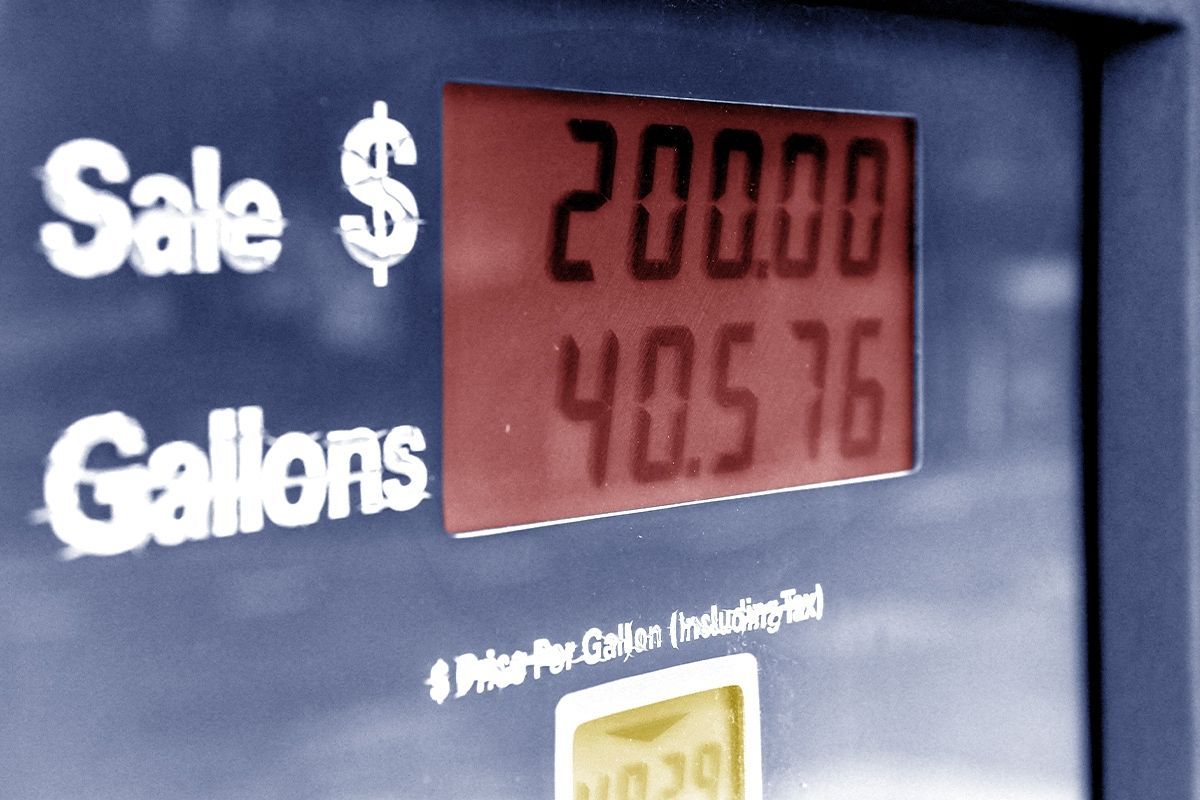
Why am I recounting all this? Because average U.S. gasoline prices have slipped back above $4 a gallon, according to AAA. (As I write, they stand at $4.01.) The collapse of the ceasefire with Iran — and President Trump’s inability to figure out how to end a war he started — are once again driving up fossil fuel prices.
The numbers add up. Defense Secretary Pete Hegseth told Congress today that the Iran War has cost $37.5 billion so far, but according to a tracker from Brown University researchers, Americans have already paid nearly double that — $71 billion! — on more expensive gasoline and diesel fuel. A billion here, a billion there, and pretty soon you’re talking about real economic underperformance. That estimate suggests the burden of higher energy prices from the Iran War has wiped out the expected $65 billion consumer boost from the One Big Beautiful Bill Act’s expanded tax refunds.
Of course, from a decarbonization perspective, higher gas prices are good, in theory. They encourage people to drive less and to switch to more fuel-efficient — or even fully electrified — vehicles, reducing carbon emissions. (This is part of why I joke about Degrowth Donald, raising fuel prices as he goes.) But short-term oil shocks are the second worst kind of emissions reductions after recessions: They are unlikely to last; they will probably not lead to real decarbonization; and they produce a lot of human misery along the way.
Perhaps this oil spike won’t persist. Perhaps Trump will find a way out of the quagmiring conflict in the Persian Gulf. Perhaps Republican presidential underperformance really does all come down to luck, too. (Or maybe, as a 2020 paper argued, Democratic presidents benefit from a “pre-election growth surge” just before a Republican wins.) But I think it’s worth noting that the recent trickle of news — and the recent and less noticed surge in gas prices — is how an oil interruption results in slower growth overall. If oil shocks really are responsible for GOP presidential underperformance, this is what it would look like.
The irony is that technology finally exists to make the American transportation sector — and the overall economy — less dependent on oil. This technology was developed at the American public’s expense to help manage a scenario much like this one. And the administration has undermined it at almost every opportunity.