GLOBALVARS
0
Current conditions: Tropical Storm Bertha washed out the majority of monitored sea turtle nests in the western part of the Florida Panhandle • Record rain in West Virginia swelled creeks that toppled bridges in the north central part of the state • In the Pacific, Tropical Depression Kiyapo is barreling toward the northern part of the Philippines’ Luzon island.
THE TOP FIVE
1. China wants to increase its renewable energy consumption 53% in five years
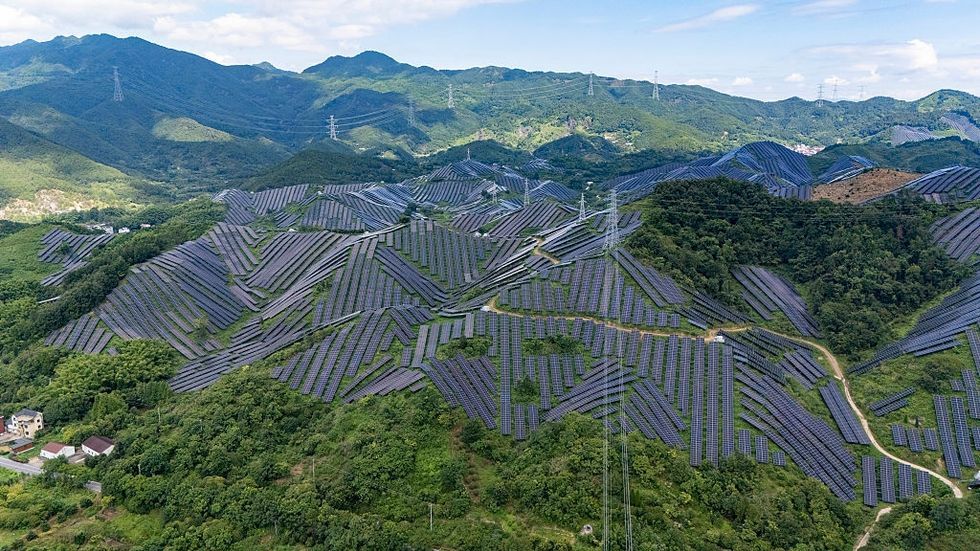
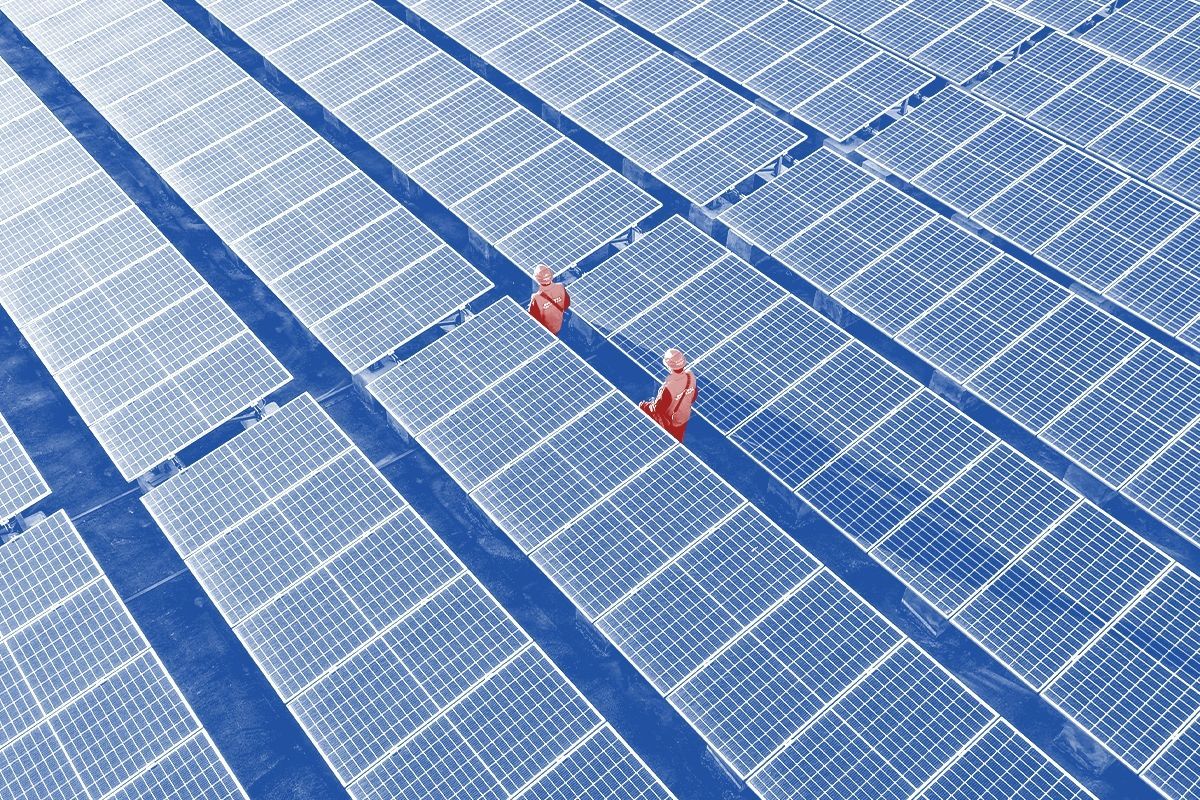
China just quietly upped its target for renewable energy consumption, ratcheting up the goal 53% by 2030, rising to 1.8 billion tons of coal equivalent from 1.18 billion tons last year. That’s according to the latest five-year plan for renewables the National Development and Reform Commission published on its website. Wind and solar, paired with energy storage, are expected to provide 20% of electricity during the summer and winter evening peak periods, up from 10% currently, according to Bloomberg. By 2030, Beijing wants 300 gigawatts of peak capacity from renewables. Non-electric utilization of renewables, such as for heavy industry, is projected to rise to 150 million tons of coal equivalent from 60 million in 2025. The People’s Republic is betting on novel technologies to start taking off. By the start of the next decade, China wants to increase solar thermal capacity to 15 gigawatts from just under 2 gigawatts at the end of last year. The government wants marine energy, such as tidal and wave power, to go from virtually nothing today to at least 400 megawatts.
In the meantime, Beijing’s buildout of nuclear reactors continues apace. Per my promise to keep you abreast of all the big milestones, here’s the latest: China General Nuclear just installed the “supermodule” for the CAP1000 — the Chinese version of America’s Westinghouse AP1000 — at its Unit 2 project at the Lufeng Nuclear Power Plant in Guangdong Province. The installation this week of a module that’s too big to be transported by rail or boat and thus needed to be fabricated on site “signifies that the construction of the reactor building” for the new unit “has entered a new phase.”
2. Meta drops out of clean energy pact amid gas buildout
Meta has quit a top corporate initiative to promote clean energy as the Facebook parent company has built out at least a dozen gas-fired power stations to supply electricity to its data centers over the past year. While rivals such as Apple, Google, and Microsoft remain members of the RE100, a project of the British-headquartered nonprofit the Climate Group that former United Kingdom Prime Minister Tony Blair co-founded, Recharge News reported that Meta had left the initiative. A spokesperson for the company told TechCrunch it was a mutual decision, though Meta declined to comment on the exact reasoning.
3. Elon Musk affirms Tesla’s plans for a solar buildout as earnings miss
The United States currently has a little over 70 gigawatts of capacity to manufacture solar panels each year. Tesla has plans to dramatically increase that number. “We are just going to multiply it [by] an order of magnitude,” Vaibhav Taneja, Tesla’s chief financial officer, said during an earnings call Wednesday night. “We’re going at a very rapid scale.” It was just one of the various investments the electric auto giant is banking on investors to support as billionaire CEO Elon Musk ramps up spending on manufacturing semiconductors and humanoid robots as part of its artificial intelligence buildout, while also tackling an energy source that the scale of China’s factories has largely brought down to a commodified price. The stock plunged nearly 15% on Thursday as CNBC cautioned that investors are increasingly spooked about spending on artificial intelligence. “Yes, this means that we are doing a lot of things all at the same time,” Taneja said. “And that’s why we just have to go as fast as … humanly possible, make things work in the real world.”
Adding to the company’s woes: The U.S. government is now looking to strengthen regulations on car door hands after federal filings linked electric door failures to at least 15 deaths in Tesla vehicles, Bloomberg reported.
Sign up to receive Heatmap AM in your inbox every morning:
* indicates required
Email Address *Our Privacy Policy & Terms Apply.
4. Oil prices surged past $100 a barrel for the first time since May
The price of Brent crude, the international benchmark for oil, surpassed $100 per barrel for the first time since May amid President Donald Trump’s threats to ramp up the U.S. bombing campaign against Iran and a resurgence of attacks from Yemen’s Tehran-backed Houthi rebels in the Red Sea. West Texas Intermediate, the U.S. benchmark, finished out the day of trading at a little over $92 per barrel. Murban crude, out of the United Arab Emirates, soared nearly 20% to more than $107 per barrel. On Thursday, Trump told Axios he was close to a final decision on whether to launch a “massive attack” on Iran, “bigger than ever before.” The threat comes on what the Financial Times clocked as the 12th straight night of U.S. strikes against the Islamic Republic.
A new analysis from the consultancy Wood Mackenzie, meanwhile, showed the limits of Saudi Arabia’s main bypass for the Strait of Hormuz. Riyadh redirected virtually all crude exports through its East-West Pipeline to Yanbu on the Red Sea after Iran closed the narrow waterway at the mouth of the Persian Gulf at the start of the war in February. Volumes flowing through the pipeline peaked at more than 4 million barrels per day in March. But by June, that flow declined to about 2.4 million barrels per day, a 41% decline. On the whole, crude exports out of the Persian Gulf fell 82% between January and June. That’s likely due to dropping production as the regional industry struggles to find sufficient outlets for its supply. The Red Sea corridor also also “faces a declared Houthi blockade that, if enforced, could reduce global oil supply considerably.”
5. Interior Department reassesses coal reserves on federal lands
The U.S. has 4.2 billion short tons of coal reserves in active mines and another 356 billion short tons in untapped deposits, according to an updated U.S. Geological Survey report the Department of the Interior released Thursday. If extracted and burned in a power plant, the coal could supply the nation’s needs for at least 600 years at the current rate of consumption, the agency said. “American Energy Dominance is more important than ever, and so is beautiful, clean coal’s role in the production of electricity needed to fuel our future prosperity,” Secretary of the Interior Doug Burgum said in a statement. “Thanks to the USGS’s rigorous and independent assessment, we’re better equipped to manage America’s vast public lands responsibly while supporting energy security and economic opportunity.” Of the 34 coal mines on federal land, 14 are located in Wyoming, followed by Colorado with six, North Dakota and Utah with four mines each, and Alabama and Montana with three mines each. But Wyoming's mines contain 87% of the reserves associated with active mines on federal lands. As I told you last month, the Trump administration put up $850 million to support a coal revival. And the Iran War, as my colleague Matthew Zeitlin wrote in March, is only fueling more demand for coal.
THE KICKER
Last month, I told you that Japan was the other country, besides the United States, bucking the global trend toward more, not less, offshore wind. Here’s a good reminder that, in most cases, such trends are directional, not definitive. The 315-megawatt Oga-Katagami-Akita offshore wind project just received its certification from Japanese regulators, “confirming that the design of its wind power generation facilities complies with” technical standards. It’s a major step toward building the array of 21 Vestas turbines off the coast of Akita Prefecture, per offshoreWIND.biz.