GLOBALVARS
0
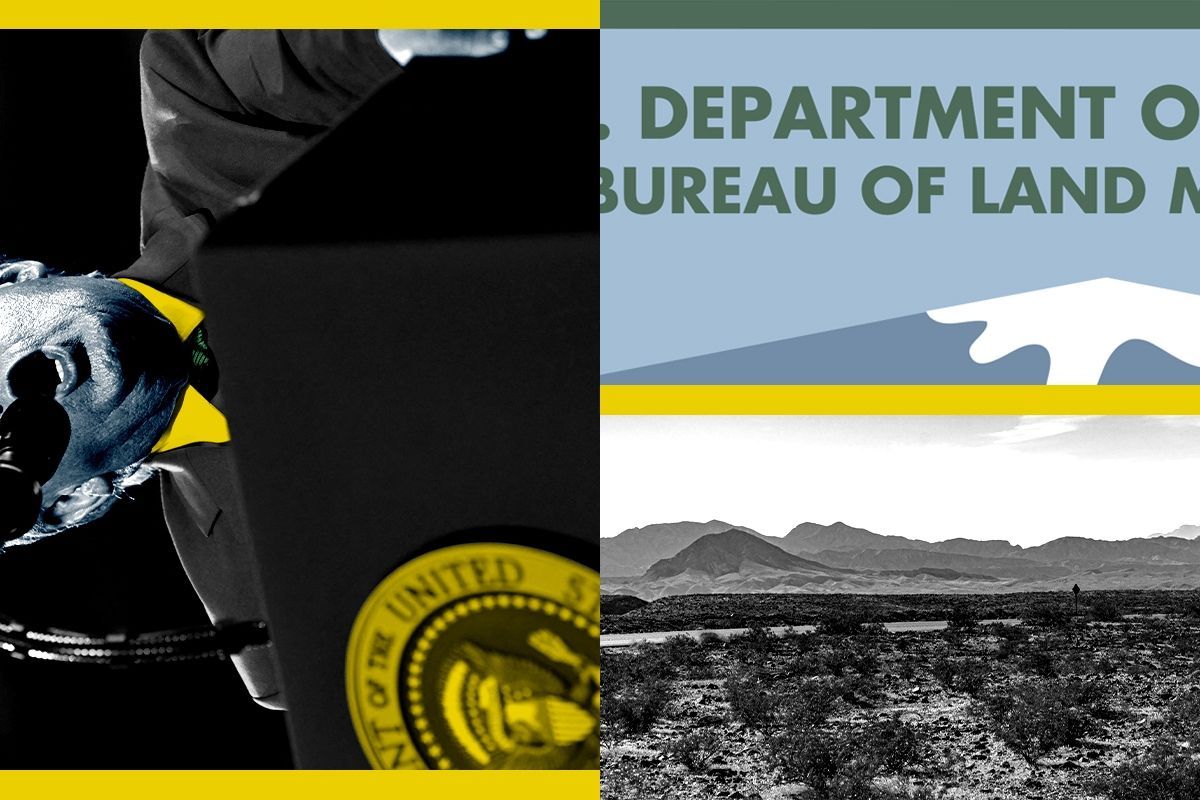
The U.S. government for the first time approved a data center on federal lands. What the Trump administration is pitching as a demonstration of bureaucratic speed and ambition in the era of artificial intelligence, however, is turning into the same sort of mysterious backroom deal that’s upsetting other communities.
On Monday, the Bureau of Land Management announced that it would allow a large AI data center to be built on a plot of federal land technically within the limits of Boulder City, Nevada. The approval was initially granted as a right-of-way in 2023 for the second phase of a solar project known as Townsite Solar, to be built by a joint venture between Skylar Opportunities LLC, a subsidiary of Houston energy trader Bill Perkins’ investment firm, and renewables developer Arevon. (Ironically, Perkins also just launched an ETF to profit from higher electricity demand.)
Earlier this year, the LLC overseeing the project — itself named Townsite Solar 2 — notified the city that it would change tack and instead construct a large data center on the site. There would be no new power generation installed — rather, the facility would hook up directly to an existing substation. This time, the backlash was immediate and fierce, and led Boulder City’s planning commission to reject the data center within city limits.
Quietly, Townsite Solar 2 had prepared a backup plan: The project would shift to federal land that was already approved to use for the second phase of the solar farm. It wasn’t until early July that the Boulder City government and its residents learned that BLM had given Townsite Solar 2 permission to advance the data center without any new public hearings or comment periods. According to BLM, the data center would be essentially like a solar farm, so it wouldn’t require any new review.
“The BLM concluded that the new proposed action — a data center — is essentially the same,” city government attorney Brittany Walker told the Boulder City council at a July 14 public hearing. “This is a departure from previous precedent and procedure as the BLM essentially sweepingly approved a new land use without following processes in federal law.”
Boulder City is now fighting the federal assessment. Walker claimed at the July 14 hearing they weren’t notified ahead of time that Townsite Solar 2 would be so quickly approved and built on this parcel of federal acreage, a form of government-to-government communication often required under federal land use planning statutes.
Mystery continues to swirl around what BLM did here — and how Townsite Solar 2 got the agency to do it.
Nada Culver, who served as No. 2 at BLM under the Biden administration, told me that BLM had veered from the usual course of business in approving this data center. Consulting local governments before a decision is made “sits at the heart” of the Federal Land Management and Policy Act, which is the primary statute governing BLM’s land use decision-making, she said. Both that law and the National Environmental Policy Act are “supposed to involve the government actually looking at environmental impacts and sharing them. so it’s not responsible or arguably even legal for the BLM to say, ‘We aren’t going to look at those impacts or share them with the public,” she added.
Boulder City officials have said this is the first major data center approval on federal lands, to their knowledge. Culver told me she believed that to be true, and hadn’t heard of such a thing happening before. “This isn’t a niche BLM issue, so to try and say this is just another use when we’re all surrounded with this loud discussion at the national level about data centers is particularly stark.”
Patrick Donnelly of the Center for Biological Diversity told me his organization and the Sierra Club, another legacy conservation group, are planning a separate legal challenge, one they say is intended to stop more such swaps from happening. Donnelly noted that at least two more data center projects — both powered by on-site gas — are poised to start the federal permitting process at any moment, according to the BLM’s online materials.
“This is the first one, and it’s going to set the stage for these things on public lands, and we can’t let this happen,” he told me.
The timing of this fight couldn’t be worse for the Trump White House, as officials try to pivot towards a “feel your pain” message ahead of the 2026 midterm elections. On Thursday, utilities and data center developers joined Trump cabinet officials at the Environmental Protection Agency for a joint event promoting the administration’s Ratepayer Protection Pledge, a voluntary set of industry practices geared toward ensuring the cost of AI infrastructure isn’t borne by those living near it.
With the BLM’s decision to advance the data center on federal land, Boulder City will lose an estimated $2.3 million in annual leasing and taxation revenue that it would’ve received if the project were built on city land, according to the Las Vegas Review-Journal. If the project is built on BLM land, Boulder City officials have said they’ll still be forced to front the cost for water and sewage hookup to the facility, as well as road maintenance.
Townsite Solar 2 told me in an unattributed statement that it wants Boulder City “to receive the greatest possible revenue and contribution benefits from the project, regardless of siting on federally-owned or city-owned land.”
“TS2 wants the project to provide meaningful, measurable benefits for Boulder City residents, local businesses, and the broader community. Our goal is to develop a responsible, sustainable project that Boulder City can be proud of and that can serve as a national model.”
The people I talked to for this story were largely flummoxed at BLM’s determination that the data center would be “essentially like” the solar farm that was approved in 2023. “These are two unrelated projects,” Culver told me. “I find it very hard to see how this would not trigger the need for a new analysis or public engagement.”
BLM’s logic made my head hurt, too. Among other things, the agency said “both proposals will use the exact same location, same acreage, and same perimeter,” and “both are proposals for industrial uses that will operationalize cutting-edge technologies that are predominantly electrical and solid state in nature.” The agency also claimed the data center was just like the solar farm because construction would take approximately the same amount of time, and would involve facilities and changes that “are visually geometric and less than 30 feet in height.”
You could describe a data center this way, but you could also describe any other number of things this way: a grocery store, a factory, a rollercoaster.
When I asked BLM for comment, a spokesperson simply sent me back the text used in the press release announcing Townsite Solar 2’s data center approval. A press representative for Townsite Solar 2 declined to provide details about who handled government affairs for the data center project, except to say that it hadn’t hired any federal lobbyists.
Some of Trump’s loudest critics told me they think this deal happened because Arevon, a joint partner described as a key financier in the project’s application with Boulder City, hired lobbyists with The Bernhardt Group, a government relations firm created last year by former Trump Interior Secretary David Bernhardt. Arevon hired the firm around the same time Townsite Solar 2 initiated the process to use the federal land for the data center, according to federal disclosures.
I have a history with Bernhardt. After leaving the Trump administration in 2021, Bernhardt went on to run the Trumpworld think tank America First Policy Institute and released a tell-all book, You Report to Me, that called for the bureaucracy to stand down against — as he put it to me — “the interests of the executive.” (I interviewed him around the time of its publication, after which he gave me an unsolicited copy of the book that I keep at my bedside as a form of dark humor.)
These days Bernhardt’s firm represents oil interests, including energy companies, mining, and large-scale agricultural interests that use lots of water (think: almonds). But it’s also pitching itself to the AI energy commentariat. In May, the former Interior secretary authored an op-ed in The Washington Examiner calling for rapid investment in U.S. artificial intelligence infrastructure. He then took to right-wing TV network Newsmax to promote the column, arguing that people fighting to stop data centers were just trying to “oppose the president’s vision for energy dominance.”
It would be easy to point at these federal disclosures and online comments and claim this bizarre data center land use swap is the work of a familiar Trump-era boogeyan. Except Arevon was effusive to me in saying that is not what happened here. In a statement, the company said that it’s a passive member of the joint venture, holds less than 25% ownership stake, and has “not directly hired consultants or lobbyists for this project.”
I didn’t get a response from Overwatch, a data center engineering and design firm contracted to help with the project. Overwatch does have a director of government affairs, but their hire was announced months after the application would have been submitted to BLM.
This leaves us sleuths to conclude the likeliest reason this happened is also the most obvious one: Trump just wants data centers on federal lands, and this was a way to make that happen. What happens next will have enormous implications for the future of data center development and federal land use in the United States, especially if more companies facing federal permit stonewalling seek to turn their solar farm permits into permission to build AI infrastructure.