GLOBALVARS
0
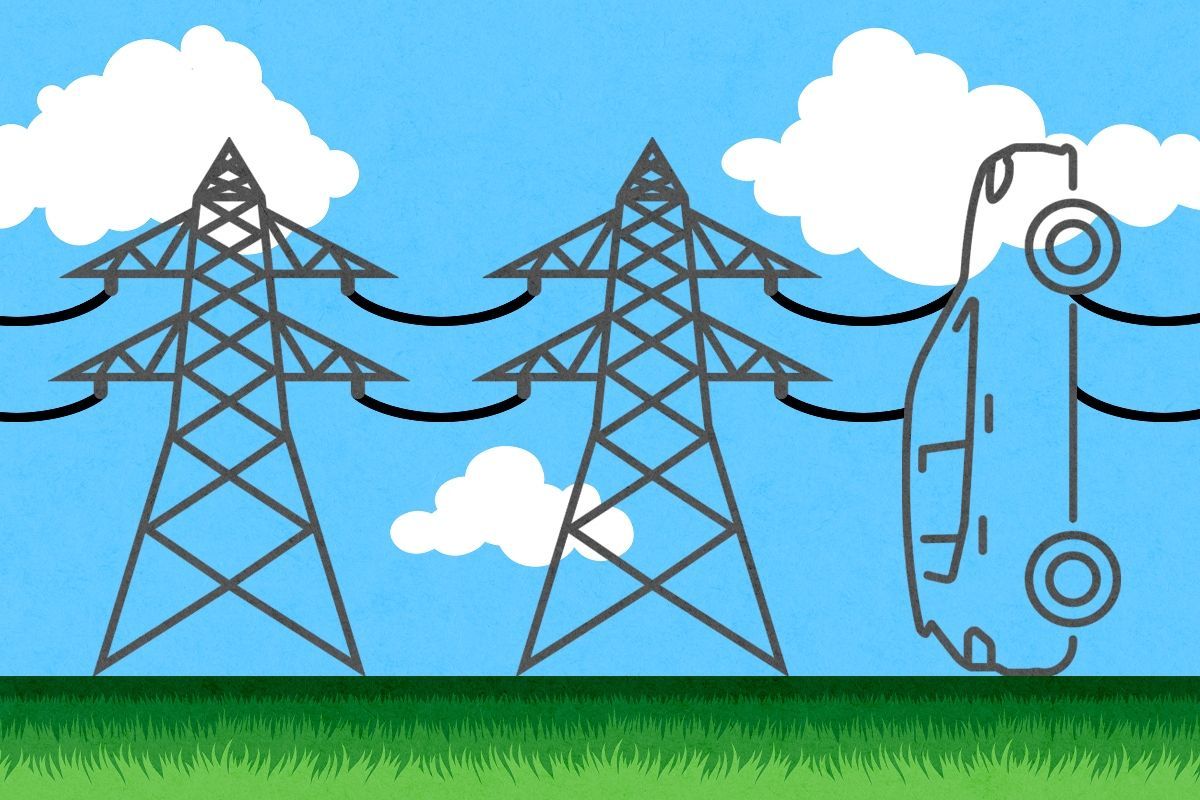
When energy experts imagine the grid of the future, they often dream of millions of electric vehicles moonlighting as mobile power banks, using their hefty batteries to send electricity back to the grid when it needs a boost. But despite rapid EV adoption, this utopia has remained largely out of reach. Most vehicles don’t yet support bidirectional power flow, and most markets lack incentives for customers to feed power back to the grid in the first place.
That’s finally starting to change. While vehicle-to-grid — a.k.a. V2G — technology is still in its earliest innings, a new Massachusetts program announced on Thursday is working to make the technology something closer to commonplace. Funded by the Massachusetts Clean Energy Center, the state’s economic development agency, the initiative will install 60 bidirectional charging systems in participating residents’ homes.
The program has already begun enrolling its first participants, joining a small but growing group of V2G demonstrations across the country. But the field remains so nascent that even a 60-home project stands out. Kip Hack, who leads the distributed energy resource management company EnergyHub’s EV work, told me he very much considers it a “leading program for North America.”
The Massachusetts initiative brings together a wide variety of partners: utility companies Eversource and National Grid, EnergyHub, and technology partners Sunrun and The Mobility House, which each provide the software and device integrations needed to connect various EV models to the grid. Depending on their vehicle, eligible customers will enroll in the program through either Sunrun or The Mobility House, which will then connect them to their utility’s existing demand flexibility program, ConnectedSolutions. This decade-old initiative pays customers to reduce strain on the grid by leveraging smart thermostats, batteries, and other commercial and industrial energy systems. Now EVs will join the mix.
“They don’t actually care what the participating technology is. They only care about the output,” EnergyHub’s president, Seth Frader-Thompson told me, referring to ConnectedSolutions’ technology-agnostic design, which runs on EnergyHub’s software platform. That means the program can readily incorporate new distributed energy resources as they become available, simplifying the entire process in a way that many other regions have yet to figure out. “So when V2G technology was ready, nobody had to create a new program. You already had a program structure, an incentive structure, et cetera, that you could just have these vehicles participate in.”
Each distributed energy asset enrolled in the program can earn up to $275 per average kilowatt of grid support provided during the summer months. But customers don’t receive that payment directly from their utility. Rather Sunrun and The Mobility House set their own customer incentive structures based on that underlying $275 per kilowatt value.
Chip Silverman, Sunrun’s director of grid services and virtual power plants, told me that its customers will receive a fixed payment simply for signing up, just as the company’s stationary battery storage customers do. That gets new participants in the door — they can then earn additional performance incentives if they actually discharge power back to the grid during a demand response event. “We want to incentivize people to plug in 5:00 p.m. to 8:00 p.m. on weeknights because we want to get you to try to hit the peak events whenever possible,” Silverman told me.
The pool of qualifying vehicles remains quite limited, however. Sunrun’s system only supports the Ford F-150 Lightning, while The Mobility House’s software integrates with chargers compatible with the Kia EV9, Volvo XC90, Polestar 3, and several Nissan Leaf models. Teslas with V2G capability — which today means just the Cybertruck — are not eligible. That’s because while every other vehicle in this program places the requisite DC to AC power converter within the wall charger, Tesla installs this hardware in the car itself. While that will likely prove to be a smarter, cheaper long-term approach, for now it doesn’t align with how utilities certify and approve grid-connected equipment.
Yet even at this early stage, with limited scale and narrow eligibility requirements, Massachusetts’ early adopters are already demonstrating the technology’s value. “It has been quite hot, unseasonably hot in New England these last several weeks,” Hack told me, explaining that participants’ EV batteries have already been tapped to discharge power “more than once” since enrollment began earlier this month.
The potential for far greater impact is enormous. “The size of the battery in the car is remarkable,” Frader-Thompson told me. While a typical home battery stores around 10 to 15 kilowatt-hours of energy, an EV battery can hold on the order of 70 to 100 kilowatt-hours. “So if the vehicle is plugged in, it essentially has the ability to export the equivalent of an entire residential battery every hour during an event,” he explained.
To truly turn V2G from a promising concept into a reliable grid resource, however, utilities and grid operators will need much more data on when these batteries are available and how much power EV owners are actually willing to provide. By the end of this summer, Massachusetts’ latest experiment could offer some of the first real-world answers.