
GLOBALVARS
0
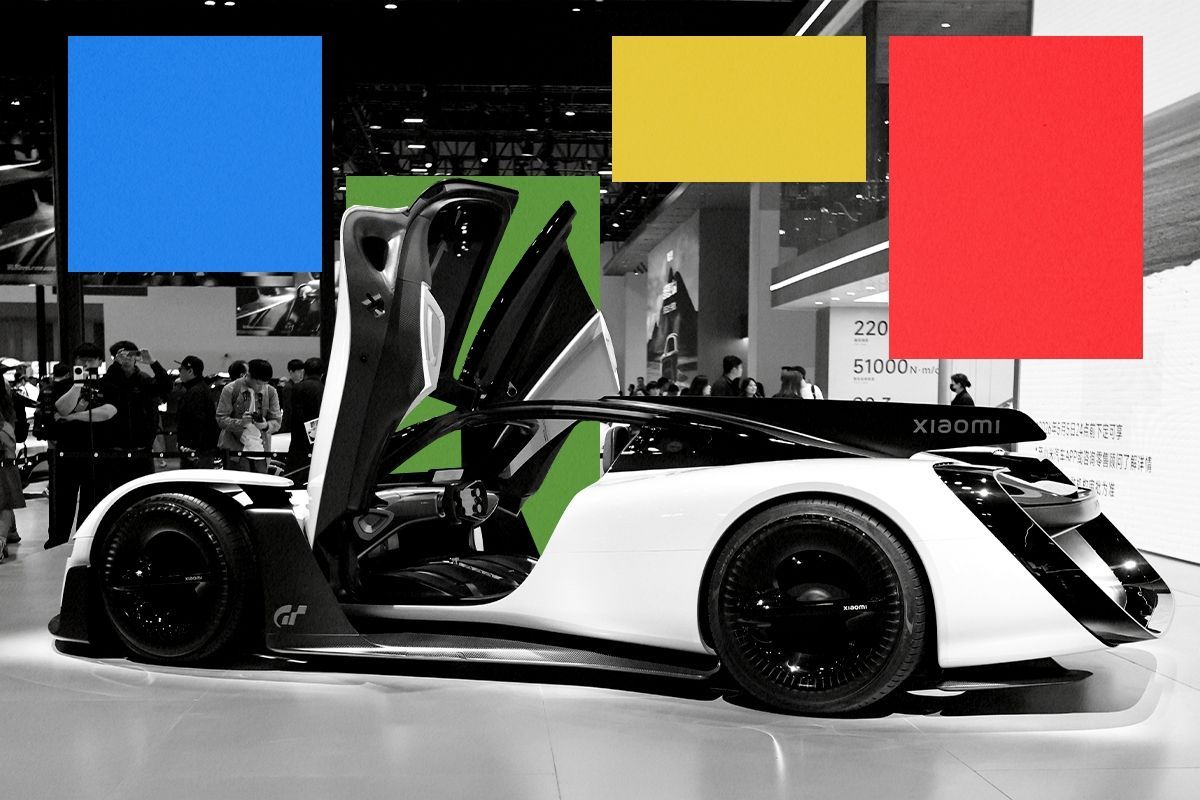
The Beijing Auto Show is now the world’s largest auto show — and its most important. It’s where China’s automakers show off their new innovations and newest models to a huge audience of domestic consumers and global influencers. As one attendee observed, there were more EV models in one room of the show than there are available for sale in the entire U.S. car market.
So what was it like to be there in person? On today’s episode of Shift Key, Rob talks with Kate Logan, the director of the China Climate Hub and Climate Diplomacy at the Asia Society Policy Institute; and Jeremy Wallace, the A. Doak Barnett Professor of China Studies at Johns Hopkins School of Advanced International Studies.
Jeremy and Kate attended this year’s show and left with some strong impressions. They also chat with Rob about whether China has solved the EV charging problem, what tech was most impressive (and what was absent) from the expo, and how American policymakers should work with China’s world-leading battery and EV manufacturing firms.
Shift Key is hosted by Robinson Meyer, the founding executive editor of Heatmap News.
Subscribe to “Shift Key” and find this episode on Apple Podcasts, Spotify, Amazon, or wherever you get your podcasts.
You can also add the show’s RSS feed to your podcast app to follow us directly.
Here is an excerpt from their conversation:
Robinson Meyer: You’re in Beijing. You’re looking at Chinese consumers kind of choosing vehicles. What were the standout automakers at the level of the show? Who was most impressive? Who had the biggest crowds? And what were you most impressed by?
Jeremy Wallace: I think the first thing to say is that the move that so much of the Western media takes to equate China with BYD simplifies the reality. The day that Kate and I were walking around the show, we visited God knows how many booths and displays, and only at the end of the day did we realize we had not yet seen BYD, and then went into an entire hall that was BYD. And so, you can walk for seven hours, walking around looking at the future of the car industry, and not even see BYD until the end.
That being said, its displays were quite impressive. It is both the second-largest battery maker on the planet, as well as the largest EV player in the world. And its wares were quite impressive, both on the technical side of various battery-charging capacities, as well as the models. Sitting in a $6,000 car is a different experience than sitting in a $60,000 car, but it is a car and it does seem like it will move. It does seem like it will charge your phone, and have a screen inside, and get you from place to place at a quarter of the price of the average cheapest possible U.S. vehicle on the market. I still think for all of the luxury and everything else that was on display and the center of attention, the cheap EV and its reality is very compelling from an American perspective.
Kate Logan: Maybe I’ll highlight the opposite end of what surprised me, which is that I went in thinking about affordable Chinese EVs, and certainly agree with everything Jeremy just said. But at the same time, there were so many luxury SUVs on display. And that really surprised me because a couple of reasons. One is that, you know, they’re not just high quality in the sense of being luxurious to sit in — full massage chairs, strong horsepower, mostly electric, and if not electric, battery electric hybrid, but also more affordable.
And I think about this idea of American car companies leading in luxury SUVs. That’s what the American consumer likes, whatnot. And I think about where the Chinese companies are trying to sell these vehicles. And I think part of them are for the domestic market in China, sort of upscaling a bit. But some of the companies we talk to as well are very much looking at international luxury markets like the Middle East. I think the first booth that we went to at the start of the day was Zeekr, which had this really beautiful new luxury SUV that I think Jeremy sat in for a few minutes. And you’re just thinking about what that means for the future of international markets and exports — not just from China, but for other countries like the U.S. — was certainly something that came to mind.
And then the second thing was just in terms of where crowds were clustering was also very much around the leading battery tech. So BYD, we think of it as an auto company, but it’s also very much a battery company. And then, of course, CATL, the leading battery company, and both BYD and CATL, their pavilions at the center had a big chamber with a vehicle in negative temperatures. So for BYD, I think it was -30 degrees Celsius. And then for CATL, -50 degrees Celsius, basically showcasing that not only can their batteries charge to 70% in five minutes for BYD, for instance, but also do so and hold a charge at extremely cold temperatures. And they had a little hole where you could stick your hand in just to verify that that chamber was as cold as it looked with the little icicles dangling from the vehicle. But to see that up front and see that be a focus was really interesting as well.
You can find a full transcript of the episode here.
Mentioned:
WSJ: Chinese EVs can already be seen in the US… in El Paso
The new Carnegie Mellon report: An Industrial Strategy for Ranking Risk and Opportunity in Energy & AI Supply Chains
Bloomberg on the Ford and CATL deal
Jeremy’s recent work in Heatmap: China Can’t Decide If It Wants to Be the World’s First ‘Electrostate’
This episode of Shift Key is sponsored by ...
Heatmap Pro brings all of our research, reporting, and insights down to the local level. The software platform tracks all local opposition to clean energy and data centers, forecasts community sentiment, and guides data-driven engagement campaigns. Book a demo today to see the premier intelligence platform for project permitting and community engagement.
Music for Shift Key is by Adam Kromelow.


