
GLOBALVARS
0
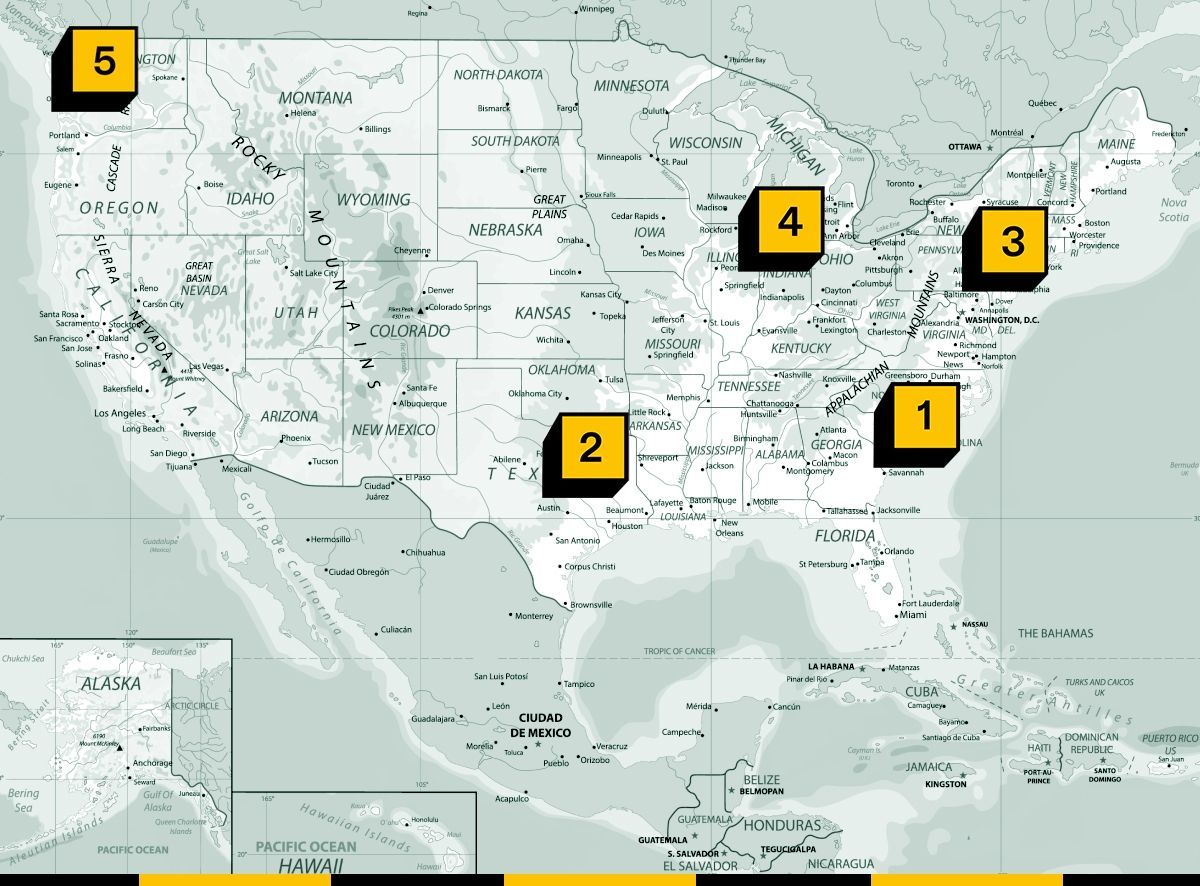
1. Berkeley County, South Carolina – Forget about Richland County, Ohio. All eyes in Solar World should be on this county where officials are trying to lift a solar moratorium.
- Berkeley County instituted a solar moratorium in 2023. Now RWE is asking the county to lift the moratorium and the county’s land use committee voted this week at a hearing to recommend doing so, citing concerns from state utility Santee Cooper about energy prices. The county has seen electricity prices rise roughly 20% over the past three years, according to our Electricity Price Hub.
- “They flat out said they need more power. They’re not going to have enough power by 2029,” councilmember Amy Stern said at a hearing Monday. “We are going to have more of this [discussion]. The moratorium lift[ing], all it does is allow us to get more information.” RWE wants to rezone land for a utility-scale solar farm the company claims would provide 198 megawatts, enough power for 37,000 homes.
- Some most vocally supportive of the moratorium packed the hearing room, becoming so boisterous the council threatened local sheriff intervention. This shouldn’t be surprising; public opinion modeling indicates overall support for renewable energy in Berkeley County but the area has a substantial opposition risk score – 62 – in the Heatmap Pro database.
- I’m closely monitoring whether the outcry overrules concerns about energy prices and Berkeley County supervisor Johnny Cribb told attendees of the hearing he’s against lifting the moratorium: “I’m against large-scale solar farms in this county, because of the reality of our county.”
2. Hill County, Texas – We have our first Texas county trying to ban new data centers and it’s in one of the more conservative pockets of the state.
- The county commission voted this week to temporarily halt approvals for new data center developments for one year while it studies project impacts, with an eye to developments elsewhere in Texas.
- It’s an unusual step in a state where such zoning restrictions on energy use have long been considered illegal and the county’s legal counsel even warned at the vote that they were signing up to be sued. This fits a growing trend of Texas counties enacting industrial development restrictions almost asking to become a legal test case (see: Van Zandt County and BESS).
- Hill County is a Republican-leaning Dallas ex-urb represented in Congress by Rep. Jake Ellzey, one of the legislative body’s most conservative lawmakers. It also has one of the worst data center opposition scores in Texas in the Heatmap Pro database.
3. Sussex County, New Jersey – A town in north Jersey rapidly changed course from backing a new data center to outright banning all projects.
- Over the weekend, Thomas Walsh Jr., mayor of the rural town of Andover in the Jersey Highlands, explained in a statement that he’d no longer allow the town to approve data centers. It comes after a backlash so fierce people were dragged out by police at a recent public hearing on the subject.
- The town will also nix a land use ordinance established in September allowing data centers in a zone delegated for industrial redevelopment. There was only one project under development in Andover that would’ve provided almost one third of the town budget – but that won’t happen now.
- I believe that this offers a case study in the limitations of brownfield development. The data center causing the hubbub would’ve been located at an abandoned former airport. Sounds ideal right? Until you see video of activists walking the area showing houses abutting the border of the data center site.
4. Porter County, Indiana – The Chicago ex-urb of Valparaiso is significantly restricting data centers too, after pulling the plug on a large project under development.
- According to a new draft ordinance released this week, Valparaiso would ban data centers everywhere except industrial sites, pending individual reviews. Any project will also have to get a special use permit from the city. There’s a raft of other environmental rules, including a limitation on vibration – a nod to concerns about infrasound I discussed earlier this month.
- Porter County actually banned data center approvals for one year, pending study of the issue. This also isn’t the only place in Porter county where data center developers have struggled. QTS rescinded a project in Union Township last fall after loud protests, most of which focused on its proximity to a school.
- However, I believe Indiana counties will face continued political pressure not to indefinitely continue their moratoria given the weight of industry growth in the state.
5. King County, Washington – It’s Snoqualmie vs. the energy sector right now, as the new poster child for battery backlash bans BESS in its borders.
- As I told you last week, Snoqualmie is up in arms about a large Jupiter Power battery storage project situated just outside of city limits. Snoqualmie leadership on Monday put forward a BESS moratorium and it’s exceedingly likely to be approved in the coming weeks. This won’t impact the Jupiter Power project, but it’s certainly a vent for frustration.
- Meanwhile, the utility Puget Sound Energy shrugged off Snoqualmie’s request for Jupiter Power’s battery to be moved. In a two-page letter replying to city officials, PSE said residential concerns “should be considered in the permitting process,” and insisted the project will be safe. “King County underwent over a year of intensive stakeholder engagement in developing their BESS ordinance to determine where projects could be sited and to further strengthen safety requirements, among other elements. With King County's oversight, we believe that energy storage projects can be safely located without burdening established communities.”


