
GLOBALVARS
0
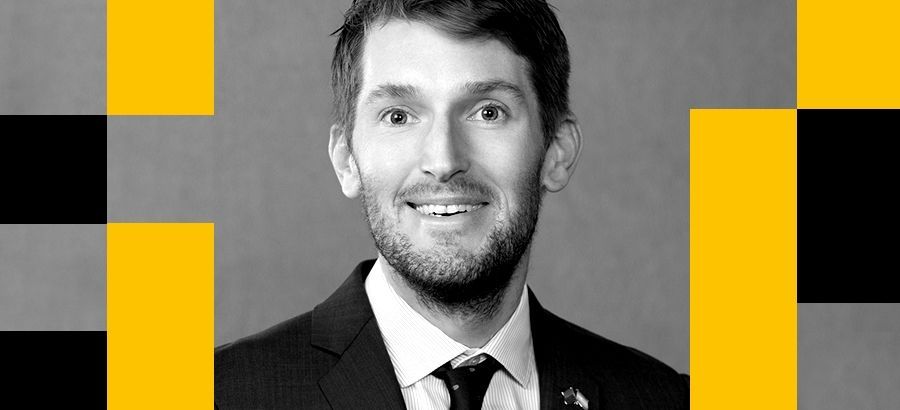
This week’s conversation is with Utah state senator Nate Blouin – a candidate for the Democratic nomination to represent the state’s 1st Congressional District, which includes Salt Lake City. I reached out to Blouin amidst the outpouring of public attention on the Box Elder County data center project backed by celebrity investor Kevin O’Leary. His positions on data centers and energy development, including support for a national AI data center moratorium, make him a must-watch candidate for anyone in this year’s Democratic congressional primaries. (It’s worth noting this seat was recently redrawn in ways that made it further left.)
The following conversation was lightly edited for clarity.
I guess to start, how’s the fight going?
On the [O’Leary] data center front? It’s good. People have really been activated by this. It’s always exciting for me to see when people get interested in politics because it hits close to their lives. I think that’s why you’re seeing people so passionate here. We had thousands file protests on their water rights change application. We had thousands show up to a county commission meeting in Box Elder County, Utah. The people have taken notice and understand the ramifications of such a gigantic project in our backyard. Officials are listening and I don’t know if that’s going to translate into concrete action to stop this thing but it’s good to have people involved, taking an interest in what I see as an environmental issue and an energy issue.
You’re running for office in the Salt Lake City area right?
Correct. I’m currently in the state senate representing central Salt Lake County running for a congressional district that is entirely located within northern Salt Lake County.
I assume your next question is: why is this a concern to you if this isn’t in Salt Lake County?
Yeah.
I was anticipating that.
This is a gigantic project. Several gigawatts of energy, an enormous amount to put on or off the grid depending on how it plays out. It’s a huge project, likely the largest natural gas generating facility in the country and on par with some of the largest generating facilities in the world. As the crow flies, my district right now and the one I’m running to represent are 50 to 70 miles across the Great Salt Lake just south of this proposed location. And we already have really massive air quality issues in our area. We have a Great Salt Lake that is struggling in incredible fashion, at one of its lowest ever levels and no hope of returning to normal in the near future. Any of those issues are going to come up, create climate damage, increase our ozone levels.
When you approach the data center issue as a candidate, how do you see it impacting your race and how do you approach the issue in general?
This ties together so many threads. The climate issues I’ve worked on in the past. Certainly looking at who is going to benefit here and who is going to lose out. We’ve seen the state give out massive tax incentives, to the tune of probably hundreds of millions of dollars. People are so angry about all these things. It’s these threads about billionaires who profit while we struggle with the air pollution that’s choking many in our community. That’s what put it at the center of this race. I think you’re going to see that more often across the country where other large proposals are.
On the larger picture, my perspective is that we need a moratorium on data centers as we envision what the future is. A national moratorium. I’m aligned with Sen. Bernie Sanders and Rep. Alexandria Ocasio-Cortez on that front. Sanders endorsed my campaign because I see eye to eye with him on many issues including this one.
I don’t want these dumped in our backyard. This one in particular because of how enormous it is, but we’ve seen other proposals and I fought these in the legislature.
We need to ask, what is the future of this industry? While average people are struggling with high energy costs, why are we incentivizing all this infrastructure to benefit the select few who own this stuff?
We have to get public buy-in both on how the infrastructure works and how if we move forward with any of these, how they benefit our communities. The environmental aspect as well, all these communities that have been dumping grounds in the past aren’t going to want these either. We have to look at what the future of AI also looks like.
If I may, when I spoke with Senate candidate Graham Platner about this idea over the past weekend, he told me that he doesn’t want a moratorium for the sake of a moratorium.
Right.
I mean look, there are great things AI can do. Great medicines to be discovered. Weather forecasts. We can better utilize clean energy.
I want a moratorium because it gives time to actually envision what policies are needed to get buy-in. What role the government plays in managing these technologies, too. Make sure they’re being used in the public interest and not against us.
A mish-mash of policies across the states or just saying we’ll do the work isn’t the right approach. I think we need to take a pause and develop those strategies. Then we’ll see what happens and move forward.
I spoke with Holly Jean Buck about that Jacobin piece where she argued against a data center moratorium after previously being for it. She mentioned being concerned about this unique allegiance between the folks fighting data centers on the left and on the right. It’s unclear those folks have the same end goals.
What’s your take on that allegiance and if it’ll lead to positive development in the long term?
I think there are shared end goals.
Protecting land? There’s different reasons. On the right, they’re concerned about farmland and agricultural land being developed into things they don’t want, where on the left it's about public land and the general environmental picture. But on surveillance, for example, there’s more commonality in what we want to see. Most people don’t want to see more government intrusion.
I think there are commonalities and differences. It’ll be interesting to see how those pan out in the long run.
I agree with Platner’s statement. This is to figure out the path forward before we spend trillions of dollars on infrastructure that’ll be paid for by ratepayers.
My last question: do you think we’ll still be having the same conversation about all of this 10 years from now?
No. I don’t think so – if we take the time that’s needed to get public buy-in.
That’s why we have to see the government play an active role here. So far, they’ve let everyone do whatever they want. We can’t keep letting the billionaire class get whatever they want so they can make a bunch of money off of us.
To return to Utah, the process here was horrible. It was a data center that would encompass 40,000 acres. It’s a gigantic area and amount of emissions. And it was done through an opaque government agency that pushed it forward.
What I know from my work in the clean energy space, like with transmission, if you do the process right and forums and tell people you’re interested in doing something nearby and in X way, you can see people rally around those projects.
Here you saw Kevin O’Leary, a Canadian guy, come in and work behind the scenes to make himself a bunch of money.
We need to figure out how to do this in a way that envisions how the public can be involved.


