GLOBALVARS
0

Brace yourself for more statewide data center moratoria.
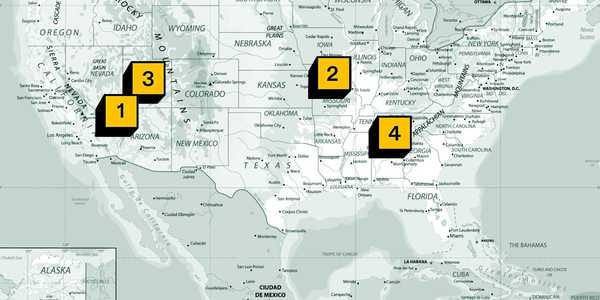
So far there are only two full state-wide blocks on data center permits, in New York and Texas. At least fifteen states have moratorium legislation in the pipeline, but few if any of those bills stand a chance of becoming law in the short term. Here are five states, however, where a broad development pause may gain momentum in the next year or two — and all of them are crucial to watch this November.
New Hampshire — Very high likelihood
If you blinked you may have missed it: New Hampshire Governor Kelly Ayotte, a Republican, said she wants to enact a statewide data center moratorium.
Ayotte first came out in support of a pause last month at a Rotary Club meeting, declaring, “It does not make any sense at all to site a data center in New Hampshire.” She also reportedly plans to include a moratorium proposal in her upcoming 2027 fiscal budget. New Hampshire’s legislative sessions occur in the first half of the year, so we won’t see action on a moratorium bill this fall. But Ayotte’s statements suggest the Granite State — which is controlled by the GOP — could pivot to a pause very soon.
New Hampshire has very few data centers. Like, almost none. Only two project fights exist in the Heatmap Pro database, both in Portsmouth, and each has been canceled amidst opposition. Ayotte’s remarks were prompted by the fight against a hyperscale project being studied in the small town of Bow at a former coal plant that closed in late 2025.
None of this should surprise anyone familiar with New England NIMBYs. A New Hampshire moratorium also makes sense given the state’s proximity to Maine, which almost had one of its own. Ayotte, who is up for re-election this year, is likely looking at the political fortunes of Governor Janet Mills and trying to avoid potholes ahead of a likely blue wave hitting her state.
Arizona — Medium-high likelihood
This week, Arizona Attorney General Kris Mayes, a Democrat, came out in support of a statewide data center moratorium.
Mayes told Arizonans in a public statement on Monday that she wants to avoid undue strain on the electric grid and adding to the burden of water cuts led by the Trump administration. Phoenix, where opposition grows by the day, seems to be the primary reason. This shouldn’t in any way be a surprise given the backlash to these projects, which in Arizona’s case is rooted in legitimate water security concerns.
One of the first high-profile data center conflicts I ever learned about was in Arizona: Project Blue, which had to move on from the city of Tucson after officials voted it down last summer. That led Amazon to bail from the facility, though it’s still under development elsewhere on county land. Locals are deeply concerned about the water impacts.
Ordinarily an attorney general wouldn’t have any sway on legislative or executive policy, but the state is already quite receptive to restricting data center development. Governor Katie Hobbs has enacted a three-year pause on tax abatements for data centers, and in response to requests for comment on Mayes’ statement, has told media she’s working on more policies targeting the sector. Hobbs has said she will do more in the following legislative session, but it’s not clear what.
The real decisive action here is probably going to be legislation, and that will depend on the reception any moratorium finds with Republicans in the state legislature, which is typically split in this purple state. The Arizona GOP is quite pro-industry, and Mayes’ opponent in her race for re-election opposes restricting data center construction.
Kansas — Medium likelihood
You really should get to know the name Cindy Holscher for the next two months.
Holscher, a state senator, won a surprise upset victory in the Democratic gubernatorial primary this year, and currently sits within a one-point margin of her Republican opponent. How’d she get the nom? By calling for a statewide data center moratorium. “It reminds me of when the automobile manufacturers had to put seatbelts into their cars,“ Holscher told MSNOW after she won the primary. “We as a people and as a state just need to make sure there are guardrails in place.”
Kansas politics are weird. The state is best known as a conservative ideological bastion that’s pro-business. Full Republican control of the Kansas government during the Obama era led to significant social services cuts most closely associated with former Governor Sam Brownback. But after that, Kansans seemed to like moderate Democratic governors, electing Laura Kelly in 2022. Kelly is now term limited out of office.
Kansas already has a colorful patchwork of local data center and renewable energy restrictions. Land use is a big deal in this agricultural behemoth. Should Holscher win in a blue wave year, she would have a mandate to enact a statewide moratorium. Still, Republicans control the legislature, and that’s unlikely to change. My major questions are, should Holscher win, would the GOP in state government listen to Holscher’s request? Or can she do this through the executive branch?
Ohio — Medium likelihood
Politics nerds are obsessing over Ohio right now. There, Trump acolyte Vivek Ramaswamy is neck-and-neck in the polls for governor with a Democratic candidate who backs a “conditional” data center moratorium: Amy Acton.
What’s a conditional moratorium? It’s in the eye of the beholder, really. Technically speaking, Governor Josh Shapiro instituted a conditional moratorium in Pennsylvania, where data center projects cannot get permits unless they meet very specific standards set by the governor himself. Shapiro did it through executive action, but in this case, it’s unclear whether the moratorium will be codified through that process or through law.
Should Acton win — or if former Senator Sherrod Brown defeats sitting Senator Jon Husted in the U.S. Senate race — I anticipate major legislative action on data centers in Ohio. Republicans there have essentially permanent control of the state legislature, and they’ve historically been pro-data center. But the freakout over opposition to artificial intelligence and hyperscalers in the senate race specifically has spooked national Republicans, who think it provided the opening Brown needed to potentially win back his seat. Acton and Brown’s political fortunes appear to be wedded to one another, linked to a general angst in the American public.
Oklahoma — Medium-low likelihood
Every top 5 list needs a wild card, and mine is Oklahoma.
Currently, there’s minimal risk of a data center moratorium. I might’ve had this state higher on my list had Gentner Drummond won the runoff for the GOP gubernatorial primary, given his proclivity to side with anti-renewables activists who also oppose data centers. Instead, likely future governor Mike Mazzei is running on a more moderate, Trump-friendly approach to data centers centered on maintaining industry growth while protecting ratepayers from new infrastructure costs. His opponent, Cyndi Munson, supports a one-year moratorium.
I consider Oklahoma’s odds of having a data center moratorium about equal to the chance of a statewide wind energy ban. Momentum for anti-wind legislation began in the state legislature, and I expect the same to happen with data centers. But unlike the wind industry, which has enormous power in the state, data centers are still a nascent industry. This is a place that may take about two or three years to manifest full cultural upheaval over these projects.