GLOBALVARS
0
Current conditions: The Pacific is facing a traffic jam of storms, with Hurricane Karina, Tropical Storm Lowell, and Tropical Storm Marie all raging at once • Temperatures in Charlotte, North Carolina, America’s secondary banking capital after New York, are nearing 100 degrees Fahrenheit amid a regionwide heatwave • Tropical Storm Edouard knocked out power from more than 81,000 households in Texas and Louisiana.
THE TOP FIVE
1. American energy companies scamper into Venezuela
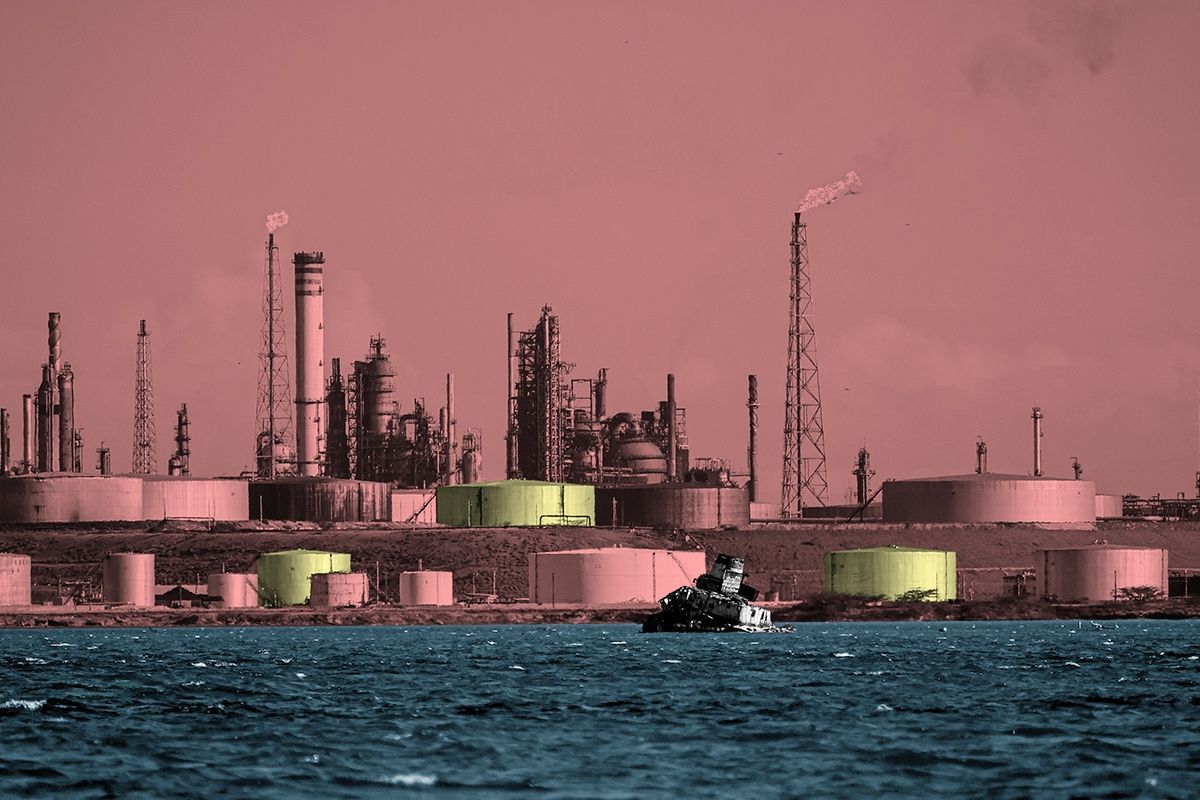
Call it the scramble for Caracas. For the first time since the dawn of the 21st century, the South American nation with the world’s largest known oil reserves is open for business to Americans. Eight months after U.S. forces arrested former dictator Nicolás Maduro in his home and Washington backed his vice president, Delcy Rodriguez, as the new leader, Venezuela is becoming a hotbed for American energy companies. On Wednesday, Chevron announced plans to double its production in Venezuela with a $7 billion investment. “We were trying to work at what I call Trump speed,” Secretary of Energy Chris Wright said at a signing ceremony at the Miraflores Palace, according to The Wall Street Journal. “President Trump didn’t want a nudge or a slow drift in a positive direction. He wanted to see as fast as possible a transformation in Venezuela.”
The energy equipment behemoth GE Vernova, meanwhile, inked its own deal to repair large portions of Venezuela’s power grid, Bloomberg reported.
2. U.S. LNG exports surged 23% since last year
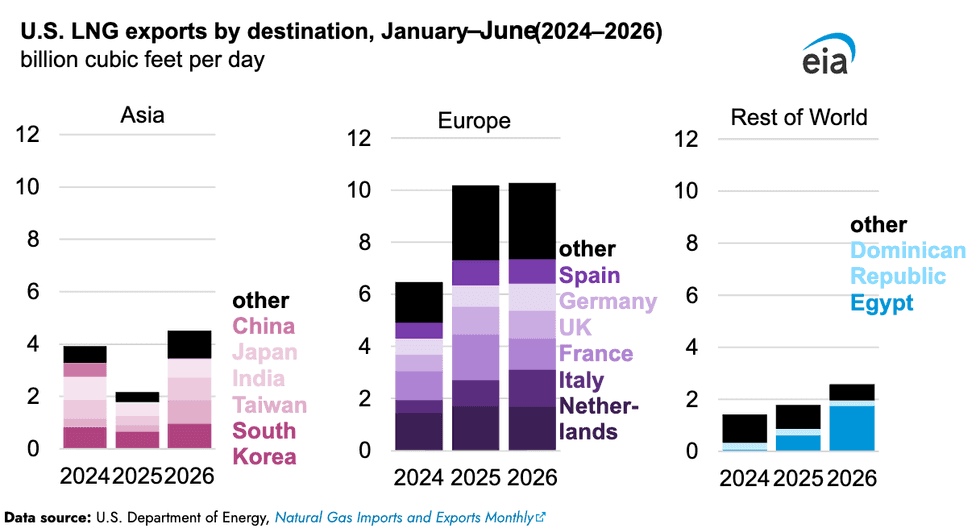
U.S. exports of liquified natural gas averaged 17.4 billion cubic feet per day in the first six months of this year, 23% more than the same period in 2025, according to the latest analysis by the U.S. Energy Information Administration. The agency projected that overseas sales will mostly stay flat through the end of the year before rising to 18.7 billion cubic feet per day in the first half of 2027. The world demands lots of gas right now. The biggest impediment to selling more is capacity. New and expanded export terminals “boosted LNG exports at the fastest rate since the United States began large-scale exports in 2016,” EIA found.
While natural gas and gasoline are different fuels entirely, the boom in the export market for one has come during a domestic price surge for the other. Diesel is selling for $5.69 per gallon, according to AAA data. Regular gas is now averaging $4.12 per gallon nationwide. But diesel is particularly worrying. As my colleague Matthew Zeitlin wrote last month, “now is the worst time for diesel to get expensive,” since it’s a critical moment in farmers’ growing seasons when tractors and other equipment need fuel.
3. The fashion industry’s greenhouse gas footprint soared nearly 14% last year
The fashion industry, particularly the cheaply-made fast-fashion brands, are notorious for pollution. Typically that comes in the form of dyed rivers and microplastics from polyester fibers. But the planet-heating gases coming from the apparel sector are on the rise. Emissions climbed 6.3% in 2024, following a 7.5% spike the previous year, according to a new report by the Apparel Impact Institute. That, according to Bloomberg, increased fashion’s emissions by roughly a gigaton, or “about the same as the entire climate footprint of Japan.”
Sign up to receive Heatmap AM in your inbox every morning:
Email Address *Our Privacy Policy & Terms Apply.
4. Data center infrastructure giant SB Energy is going public
SB Energy, the division of the Japanese giant Softbank that’s focused on building the infrastructure for artificial intelligence, is seeing such a boom it’s going public. Chip behemoth Nvidia is backing the deal to start trading the stock on the Nasdaq. “The reason Nvidia is on our part of the equation here is that, you know, helps us to unlock things like investment-grade financing. It helps to ensure the project is a success,” SB Energy CEO Rich Hossfeld told CNBC.
Still, the company cautioned that it “may face community opposition, local moratoria, and hyper-local dissent, including growing public resistance to AI and AI-related infrastructure.” Polling from Heatmap Pro last month showed that three-quarters of Americans now oppose data centers in their backyards.
5. Japan is nuclearmaxxing
To put it in the modern parlance of today’s youth: Japan’s nuclear sector used to mog most of its peers in East Asia. When the 2011 Fukushima accident occurred, Japan got the ick on atomic energy. Now it’s once again ascending to nuclear maxing — er, nuclearmaxxing. On Wednesday, NucNet reported that a high-level Japanese council chaired by the prime minister adopted a new policy that calls for “maximum use” of atomic energy in the country.
Russia, meanwhile, is leaning into floating nuclear power plants. The country launched the world’s first small modular reactor in 2019 aboard the Akademik Lomonosov, a Siberia-bound barge designed to carry a power plant. In May, I told you that Rosatom was considering building more. On Wednesday, World Nuclear News reported that the Kremlin-controlled nuclear company is establishing a facility specifically designed to produce floating nuclear plants.
THE KICKER
Maersk is going old school. The shipping giant just signed a deal to install the first wind sail on a container ship as the shipping industry looks for ways to get off heavily-emitting bunker fuel. The sail, according to the Financial Times, is a 115-foot rotor designed by the British company Anemoi to function without taking up a lot of space in the areas where containers go.