
GLOBALVARS
0
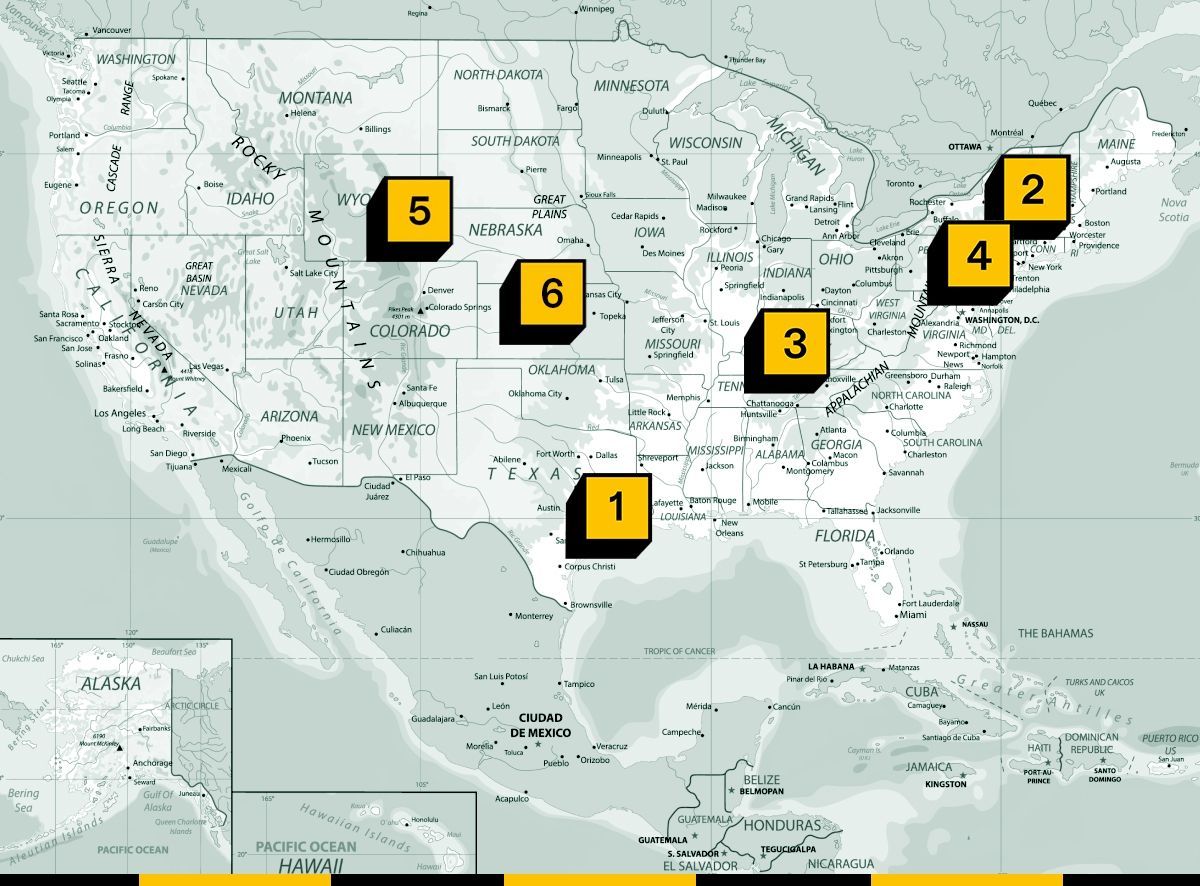
1. Matagorda County, Texas – The bipartisan data center backlash is now so powerful that a top Republican Texas state official is doing an event with the Democrat vying to replace him.
- On Thursday afternoon, outgoing Republican agriculture commissioner Sid Miller and Democratic candidate Clayton Tucker are marqueeing a forum hosted by Matagorda County Against Data Centers, an opposition group that appears to also monitor solar and battery storage for potential opposition, too. Miller is leaving his post at the end of the year after being defeated in a GOP primary by Nate Sheets, who was supported by Gov. Greg Abbott.
- This bipartisan forum will take place after Abbott himself called for new laws and regulations on data centers in a letter to Texas Public Utility Commission Chair Thomas Gleeson and ERCOT CEO Pablo Vegas. Abbott said he’d push to require data centers to pay costs for electric infrastructure and use “water-efficient technologies such as closed-loop cooling systems.” Also on the to-do list? Mandatory property setbacks and noise reduction.
- It’s becoming clear the frustrations against AI infrastructure and associated energy projects are starting to boil without a vent. The first county to issue a data center moratorium in Texas has withdrawn the effort after facing a $100 million lawsuit from a developer, and other counties are delaying future moratoria on fears of legal risks. Where will all of this frustration go without the option to pause development locally?
- We’re starting to see Texas legislators seek to channel this anger. Last week, Rep. Veronica Escobar – a Democrat who represents the dry, data center-anxious city of El Paso – offered an amendment in a House committee to block funding for the EPA’s new data center construction rules. The amendment failed but I’d hardly be surprised to see this sort of rider gain traction if Democrats retake the lower chamber, especially if data centers are a major election issue.
2. Albany County, New York – As we await Gov. Kathy Hochul’s decision on whether to enact the nation’s first statewide moratorium on data centers, I wanted to bring up some pretty crucial facts about the situation in the Empire State.
- First off, New York state law says while the legislature is in session, the governor has 10 days excluding Sundays to take action on a bill passed by the legislature. This math means a likely June 17 deadline to sign, veto, or let the bill become law without her taking a stance on the measure. Bills without an action become law automatically.
- First off there is almost no historic data center conflict in the state; our Heatmap Pro database only reflects four fights over complete project proposals to date. That being said, there is data center development inbound – it just hasn’t fully manifested into full proposals yet.
- Per public reporting, some of this development would repurpose existing structures like former aluminum plants and industrial parks. The one to watch in New York from my point of view is Stream Data Centers’ STAMP project in Genesee County. STAMP used to be a green industrial project and involved Plug Power’s hydrogen development efforts, which I covered in depth long ago.
- Bringing STAMP to fruition has been a political priority of Hochul’s going back years, and the facility resembles the former paper mill Maine Gov. Janet Mills cited to veto her state’s moratorium bill. But in this case, the governor’s been noncommittal about whether to support turning the spot into a data center campus.
- Whether Hochul ultimately lets the state be the first to pause data center development is anyone’s guess, but I’d note any veto would betray what our polls show a vast majority of Democratic voters want to see happen.
3. Davidson County, Tennessee – Anyone who’s anyone should be talking about Nashville.
- First came the Nashville Zoo’s fight against a Nashville data center proposal from DC Blox, as the animal attraction spot actively opposes construction of the facility located next door. Top of mind for the zoo? Noise and light pollution they’re afraid will unduly disturb species inside.
- Few images are more politically salient than suffering animals, which may be why the Nashville Zoo’s fight against this data center went national, earning cable TV coverage and an endorsement from country star Brad Paisley. “[It’s] an absolute nightmare scenario,” Paisley said in an Instagram post calling for people to sign a petition against the data center. “It doesn’t belong there. It would be an enormous monstrosity, an absolute eyesore and detract everywhere from not only the zoo but that area.”
- Nashville itself is now eyeing a temporary moratorium on data center development in response to the zoo’s concerns.
- Then came another data center proposal at the historically black Fisk University. On Wednesday, Fisk alumni protested construction of the data center development dubbed Quantum Leap.
- Now, Nashville is advancing a temporary moratorium on data center development for at least a month. The Metro Council advanced an ordinance this week halting projects including these two controversial ones. Additional bureaucratic approvals are necessary before the pause is enacted and I’ll be actively monitoring this situation.
4. Lehigh County, Pennsylvania – I’m used to eagles halting wind turbines, but now people are trying to use the birds to stop data centers.
- Apparently, per public reports, locals residing near a hyperscale project named Atlas have been collecting evidence of bald eagle nesting within the proposed construction area. Building anything near a bald eagle nesting site requires proper permitting from the U.S. Fish and Wildlife Service and compliance with the Bald and Golden Eagle Protection Act. Willfully violating that law has financial and criminal penalties.
- On Thursday morning, the township hosting the data center proposal suddenly pulled the project from a planning commission meeting that evening. Town officials said one of many reasons for the cancellation is they need a much larger venue to accommodate public interest in Project Atlas. This was the second canceled meeting on the project after a similar situation in February, indicating prolonged delay.
5. Laramie County, Wyoming – We had another anti-wind rally backed by national conservatives, this time in Wyoming.
- On June 4, anti-wind activists rallied at the state capitol hosted by CFACT, a national group I’ve watched closely since launching The Fight in 2024. CFACT helped organize a similar rally in Oklahoma in March and has helped others seek to stop offshore wind facilities under construction.
- The most notable aspect of this rally: CFACT joining hands publicly with the Albany County Conservancy, a Wyoming-based organization I’ve also followed closely for its hyperlocal fights against specific wind projects over the golden eagles. Seeing this local group meld minds with CFACT to me indicates we could see this golden eagle fight return to federal policy discussions on the East Coast at any time.
6. Ellis County, Kansas – Let’s end on a sweet note: a giant solar farm getting its permits.
- An iBV Energy utility-scale solar project received its conditional use permits from this county last week. This is quite an accomplishment. Ellis is a rural farm-focused county with a population fewer than 30,000 people and Ellis County has a high clean energy opposition intensity index score in Heatmap Pro driven mostly by this characteristic.
- I think one of the reasons iBV was able to get this project over the finish line was its contribution agreement with the county, wherein the company would give more than $1 million to government coffers within the first year of development. This would be then donated annually, increasing 1% every year. County officials seemed to really like that deal.