0
If you happened to be watching the popular Thai morning show Wanmai Thai earlier this month, you may have come across an odd segment on workplace attire. In it, the three hosts demonstrated that by removing your business jacket, you can stay comfortable at the office and conserve electricity. “People who are addicted to cool air conditioners — well, now you don’t have to,” the disrobed hosts told their viewers from their shirtsleeves.
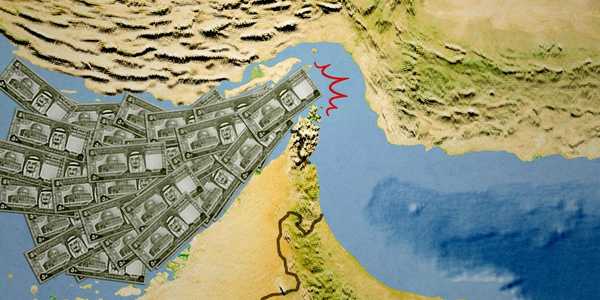
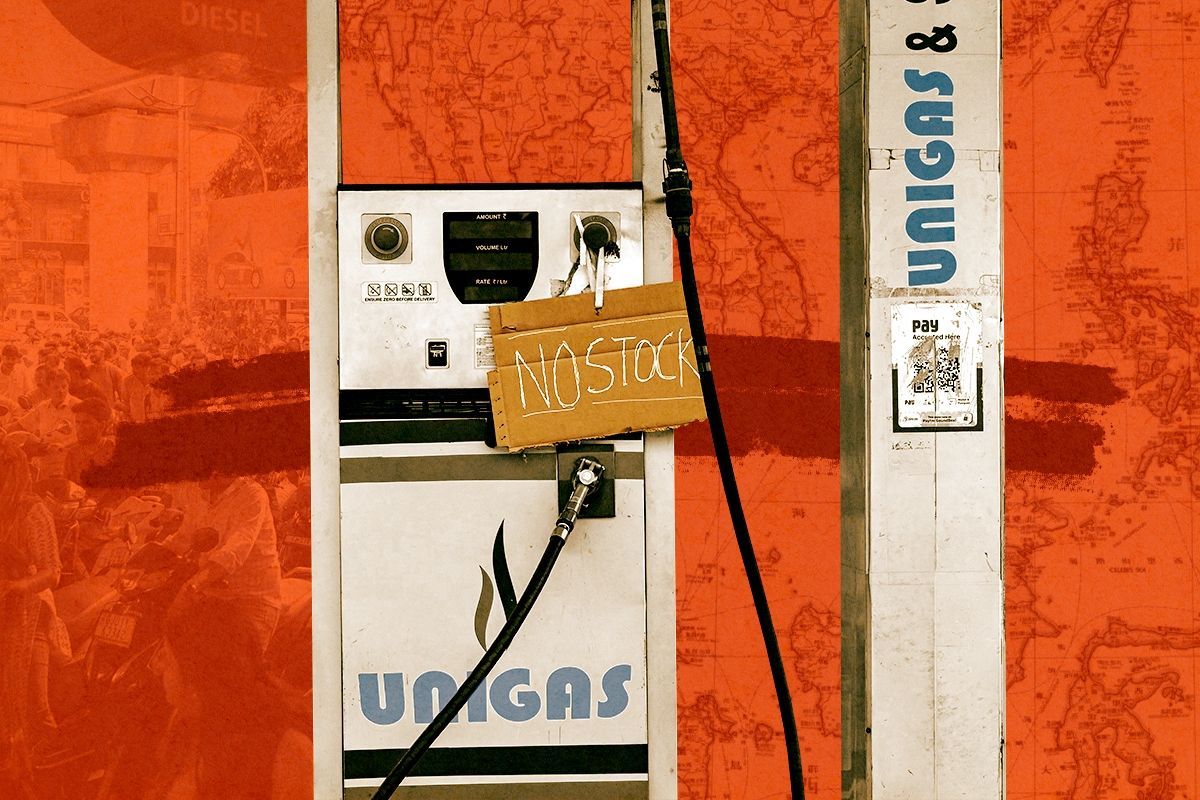
The segment was designed to encourage more than just common-sense fashion choices. Thailand is one of many Southeast Asian countries that rely heavily on the Middle East for fuel, with about 74% of its oil sourced from the Persian Gulf. The vast majority of that must pass through the Strait of Hormuz, which has been effectively closed to tanker traffic since the U.S. and Israel attacked Iran in late February. In some places, the situation is even more dire: 87% of Vietnam’s oil comes from the Persian Gulf. For the Philippines, it’s 96%.
These countries, along with others in the region, have been among the first to experience the cascading effects of the Iran War. Most have only modest emergency reserves, which will buy them a month, or maybe two. “We’re definitely in an environment where every step you can take to maximize energy conservation significantly counts,” Clara Gillispie, a senior fellow for climate and energy at the Council on Foreign Relations, told me. “The challenge is, we don’t know how bad the supply crunch is going to get.”
What we do know is that summer is approaching, and it’s likely to be another hot one. “We have heard this year could be a bad El Niño,” Jason Lee, a leading heat expert at the National University of Singapore and the chair of the Global Heat Health Information Network’s Southeast Asia Hub, told me. “We are expecting a warmer summer.” In fact, this year and next could be the hottest in human history.
Southeast Asia is particularly vulnerable: Cambodia, Myanmar, and Thailand are disproportionately affected by climate change, and could experience temperatures of 105 degrees or higher on more than 138 days a year by the end of the century. Those kinds of temperatures put a strain on the grid even in the best of times; if they arrive this spring and summer against the backdrop of a worsening energy crisis and electricity rationing, they could kill people whose survival depends on access to working AC.
Unsurprisingly in a warming world, a third of Southeast Asia’s growth in electricity use is attributable to cooling-related infrastructure, per the International Energy Agency. “Air conditioning is increasingly not a luxury in some of these places, where it makes a real, meaningful difference in terms of the livability of cities,” Gillispie told me.
But because of the energy crisis, Thailand is asking all sectors to keep air conditioners set to 80 degrees Fahrenheit — a temperature that may offer limited relief, especially given a forecasted heat index of 140 degrees in parts of the country by early April. (Health experts say that 75 degrees is the ideal temperature for the body to recover during episodes of extreme heat, especially in urban areas, where cities tend to hang onto the heat overnight.) Governments of other countries in the region, meanwhile, have instituted four-day workweeks and work-from-home policies in the name of conserving energy.
It’s a matter of life and death. One of the leading ways lower-middle-income countries have adapted to prevent temperature-related mortality is by investing in AC. “If your community has money, then you have options, and one of those options is to increase access to air conditioning,” Emily Grover-Kopec, the director of energy and climate practice at Rhodium Group and the author of a new report on heat-related mortality from the University of Chicago’s Climate Impact Lab, told me. For example, though though Djibouti and Kuwait are countries with similar climates, heat-related deaths are projected to increase by 55 deaths per 100,000 in Djibouti by 2050, “on par with the current death rate of HIV/AIDS,” the report found, while the richer country, Kuwait, is projected to see only 25 additional deaths per 100,000, or “less than half the current death rate of heart disease.”
The Climate Impact Lab’s numbers for Southeast Asia might not immediately jump off the page as particularly scary, in part because the data is designed to capture a net change in mortality. Southeast Asia’s topography varies widely, and in the more mountainous regions of the countries, researchers project a net decrease in deaths due to milder winters.
But the report also measures changes on top of a baseline that is already bad. South and Southeast Asia combine to account for half of global heat-related deaths. Counterintuitively, this baseline can sometimes dissuade governments from investing in adaptation-related measures because extreme heat is pervasive and normalized. It’s like the “effect of a smelly room,” said Lee, the GHHIN Southeast Asia chair. “After you are in the room for a long time, the stench disappears.” Similarly, many of the “most vulnerable regions are not taking serious action because [the heat] is perpetual. It was always warm and uncomfortable in Southeast Asia.”
As incomes improve, though, adaptation via air conditioning remains one of the most effective ways to save lives. In Indonesia, for example, less than 15% of households had ACs in 2024; around half are expected to have them by 2035. But it is also air conditioning that is most immediately threatened by unreliable and unaffordable energy. As fuel costs go up, utilities may ration electricity, as is already the case in Sri Lanka, another Asian country that relies heavily on imported Middle Eastern fuels.
Rationing, in turn, can lead to blackouts, meaning that even people who can afford air conditioning will lose access to it. What we know from previous extreme heat disasters is that it’s often prolonged exposure to indoor temperatures — which don’t even necessarily need to be that high — that turns deadly. That is especially true for elderly populations, which are highly concentrated in Southeast Asian countries.
What’s more, e a short war in the Middle East will have consequences for Southeast Asia at this point, Teevrat Garg, an associate professor of economics at the University of California, San Diego, who specializes in environmental policy and energy transitions in low- and middle-income countries, told me. Many nations in Southeast Asia are now backing away from their plans to phase out coal — Thailand, for example, has ordered its plants to run at full capacity, an about-face for a country that had previously explored decommissioning some of its biggest polluters. “Decarbonization goals are likely to be pushed back when you have an energy crisis of this kind,” Garg said. “The first priority is providing electricity to everybody” — especially when lives are at stake.
Running air conditioning less, or not at all, can also make keeping schools open unsafe. Pakistan, Sri Lanka, and Bangladesh have already reduced in-person classes to conserve energy. “Even when schools can stay open, there are questions about the impacts that [heat] has on students — their cognitive processes and the quality of the teaching and learning,” Gillispie of CFR told me, echoing Garg by adding that the crisis is “not a one-off. It’s something that’s going to have ripple effects for years to come.”
It’s precisely these ripples and cascades that make the energy crisis so difficult to respond to, Lee added. In Singapore, for example, where he lives and works, there are currently haze warnings due to nearby wildfires, advising people to stay indoors with the windows closed — where they’ll inevitably have to run AC. (Coal-fired plants and diesel generators will also add to regional air pollution, prompting more air quality warnings across Southeast Asia.) At the same time, the government is telling people to keep their windows open for ventilation and go to cooling malls and water fountains to deal with the heat.
“And now we have an energy crisis” on top of everything else, Lee said. Looking ahead to the summer, when temperatures will spike, and load-shedding is possible, he added, “I hope the governments are thinking about this, because if that scenario plays out, this will be devastating.”